For simple drawstring bags made from woven cotton, a domestic sewing machine with a straight stitch and a suitable zigzag or overcasting stitch is a sensible starting point; you don’t necessarily need a separate overlocker, as the BERNINA Blog also explains in its sewing guide. TÜV SÜD considers mechanical machines suitable for simple sewing tasks and occasional use. If you put your machine away after sewing or work with heavier fabrics, compare its weight and controls, and test how it feeds the fabric using a sample of your actual fabric layers.
Which sewing machine is right for you?
New to making drawstring bags
If you want to start by making simple bags from woven cotton, easy-to-use basic stitches matter more than a wide range of programmes. The BERNINA Blog recommends straight stitches for sewing drawstring bags, and zigzag or overcasting stitches to finish the edges.
Sewists who move their machine between workspaces
If you clear away your sewing space after each session, weight, footprint and storage are important considerations. The manufacturer lists the Janome 1522RD/1522BL as weighing 6 kg; compare the specifications for the exact model you’re considering.
Sewists making bags from heavier fabrics
When working with heavier fabrics or several layers, it’s important to check that your material fits under the presser foot and feeds through properly. Manufacturer claims about features such as extra presser-foot lift or suitability for heavy fabrics don’t replace testing a sample of your own fabric layers.
What should you look for when buying?
For drawstring bags made at the kitchen table, first check that the machine has the stitches you need for sewing and finishing edges. Then consider set-up, storage and fabric layers, and only then look at convenience features.
| What matters |
What to look for when buying |
Who should pay particular attention? |
| Basic stitches and edges |
Check that the straight stitch and a suitable zigzag or overcasting stitch are easy to select. |
When I’m making simple drawstring bags, I want to be able to sew the seams and finish the edges, without treating unnecessary decorative stitches as a substitute. Around 36% of consumers put basic stitches and neat edges first. |
| Set-up and storage |
Compare the weight and dimensions of the exact model, and allow for the space you’ll need for the fabric and foot controller while sewing. |
If I need to clear the kitchen table after every sewing session, I want to be able to store the machine and accessories easily. Around 29% of consumers put a flexible workspace and storage first. |
| Thicker fabric layers |
Test the presser-foot lift and fabric feed using a sample of your fabric, the right needle and a comparable seam intersection. |
When I’m sewing heavy fabrics or several folded layers, I want to know how the specific machine handles them, rather than relying on the model name alone. Around 21% of consumers say handling heavier fabric layers is their top priority. |
| Convenience when making several bags |
Check whether features such as speed control, a needle threader or a needle stop will make your work easier on the exact model you’re considering. |
When I’m making lots of similar bags, I want repetitive tasks to be more convenient; I don’t automatically need the widest possible range of stitch programmes. Around 14% of consumers put ease of use for repetitive tasks first. |
Common buying misconceptions
-
You need a separate overlocker to make your first drawstring bag
For the drawstring bag instructions described here, you can also finish an edge using a suitable stitch on a domestic sewing machine.
First check whether the machine you plan to use for the bag seams has a suitable zigzag or overcasting stitch.
An additional machine takes up more space on the kitchen table and needs its own storage space.
-
Stitch counts and stitch applications mean the same thing
SINGER distinguishes between a stitch application, meaning a technique, and a selected stitch on the Heavy Duty 4423. Numbers from different manufacturers aren’t necessarily directly comparable.
Compare the specific stitches you need for seams and edges, and how easy they are to use, rather than focusing only on the highest number.
-
“Heavy Duty” guarantees you can sew every thick seam
Manufacturer claims about denim, canvas or a powerful motor don’t show how every combination of fabric, needle and multiple layers will sew.
Check the presser-foot lift and fabric feed, and, if possible, sew a sample with a similar seam intersection. Depending on the fabric and model, you may need suitable needles or accessories; check what you’ll need before buying.
Brands and model ranges to consider
Janome
The manufacturer’s specifications for the mechanical 1522RD/1522BL are useful when weighing up storage and fabric handling.
- Janome lists the 1522RD/1522BL as weighing 6 kg, with a free arm and adjustable presser-foot pressure.
- These specifications apply to the model range mentioned and don’t show how every machine or fabric layer will sew. Check the weight and results for your needs.
bernette
bernette describes the mechanical bernette 35 as a model for beginners, with rotary dials for making adjustments.
- The manufacturer lists three rotary dials for stitch width, stitch length and stitch pattern, as well as a two-step presser-foot lifter.
- The claim that it can handle heavy fabrics comes from the manufacturer; test its suitability for your fabric layers with a sample seam.
Brother
The electronic Innov-is A16 is an option if you want to use specific convenience features on the model itself.
- For the Innov-is A16, Brother lists a needle threader, speed control and a needle up/down button.
- These features apply to this model and don’t demonstrate a general characteristic of all Brother machines, or how it will feed fabric for the seams you plan to sew.
Singer
Singer says its Heavy Duty 4423 domestic sewing machine is designed for projects using denim or canvas.
- The manufacturer lists adjustable presser-foot pressure for this model.
- Singer’s claims about fabric suitability come from the manufacturer. A “stitch application” refers to a technique and doesn’t automatically mean an additional stitch programme.
VERITAS
The mechanical Sarah and computerised Rubina cater to different preferences for how a machine is operated.
- VERITAS lists 13 stitch programmes and a four-step buttonhole for the Sarah, and 100 sewing programmes for the Rubina.
- A wider choice of programmes isn’t in itself a proven advantage for making simple drawstring bags. What matters is having the stitches you need and finding the machine easy to use.
Sewing machines for different drawstring bag projects
This selection includes electric beginner models for simple household sewing and a hand-operated machine for heavy materials. For each model, check that its specific stitches and controls suit your bag fabric and the way you plan to finish the edges.
 No image available
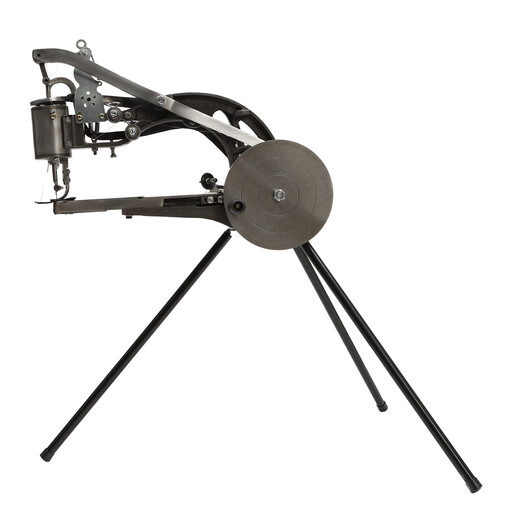
Hand-crank sewing machine for leather and heavy materials, black
This machine is described as being designed for hand-operated sewing on bags and heavier materials; its specialist hand-crank operation isn’t a proven advantage for ordinary cotton drawstring bags.
The product description lists a stitch length of up to 6 mm and 360° adjustment.
View at Joybuy
 No image available
Electric sewing machine for beginners, 12 stitch patterns
This beginner model may be suitable for simple bag seams and hems, provided its listed stitches and fabric capacity are right for your material.
The product specifications list 12 stitch patterns, two speeds and a maximum material thickness of 2.5 mm. They also mention forward and reverse sewing, a foot pedal or hand switch, and LED lighting.
View at Joybuy
 No image available
IAGREEA YASM-505A mini sewing machine, purple
This portable domestic sewing machine is an option if you want to sew basic seams and hems, then put the machine away when you’ve finished.
The product specifications list 12 built-in stitches, two speeds, reverse sewing and a foot pedal. Before buying, check whether the listed stitch selection includes the edge-finishing stitch you need.
View at Joybuy
 No image available
IAGREEA mechanical sewing machine, 6 V/1 A
This model is described as being suitable for simple sewing with a straight stitch; it can’t be used to finish drawstring bag edges with a zigzag stitch.
The product specifications list two speeds and operation with an adapter or four AA batteries. According to the product name, the package includes a bobbin, an empty bobbin, a spare needle and a needle threader; reverse sewing isn’t listed.
View at Joybuy
Frequently asked questions
Do I need an overlocker to make drawstring bags?
Not necessarily for the cotton drawstring bag instructions described here: the BERNINA Blog suggests using a zigzag or overlock stitch on a regular sewing machine to finish the edges. Check that your specific model has a suitable stitch.
How do I set up the kitchen table for sewing?
Before you start sewing, check that there’s enough room for the machine, fabric and foot controller, and that everything is positioned safely and comfortably. Set up the machine according to its instructions, keep your hands away from the needle area and switch it off before changing the needle.
What are my rights if I buy online and the machine is faulty?
When consumers in Germany buy online, they generally have a 14-day right to cancel; the Verbraucherzentrale explains that the period begins when the contract is concluded or the ordered goods are received. Your statutory rights if goods are faulty are separate and are not the same as a voluntary guarantee.
Is the CE marking an independent quality seal?
No. The European Union explains that the manufacturer uses the CE marking to declare that the product complies with the relevant regulations; no central EU body issues a general certificate for it. The applicable regulations depend on the device in question.


