For simple fabric bookmarks, a domestic sewing machine that’s easy to use and has the utility stitches you need is usually enough; a wide range of programmes isn’t an end in itself. If several people will use the machine, or you’ll be sewing folded fabric edges, try out the speed, fabric handling and settings with your own materials too.
Which controls suit different users?
Beginners taking turns at a shared work table
If you’re sharing a machine, it should be easy to find the stitch and speed settings again after someone else has used it. For occasional sewing, TÜV SÜD recommends choosing a machine that’s easy to operate and offers basic stitch types.
Those sewing narrow bookmarks and multiple fabric layers
When working with small edges and folded fabric, good fabric handling matters. Trying a sample seam with your exact fabrics and interfacing can help you choose; Janome lists adjustable presser foot pressure as a feature of the 230DC Limited Edition.
Occasional sewing groups with limited table space
If you put the machine away after each session, compare how easy it is to use, how much space it takes up and how it can be stored with the features you actually plan to use. TÜV SÜD distinguishes between basic and more advanced requirements when choosing a machine.
What matters when buying?
First, check that everyone can use the machine safely. Then sew samples using your planned fabric layers before weighing up extra features or the space the machine will need.
| Buying consideration |
What to check |
Who is it most important to? |
| Controls and speed |
Try selecting a stitch and starting and stopping the machine; check whether you can adjust the speed on the specific model. |
When we take turns at a shared table, I want to find the settings quickly and control the sewing speed; around 31% of consumers put easy-to-understand controls first. |
| Handling narrow pieces |
Sew a narrow edge seam on a sample and check your view of the seam and how the fabric feeds through. |
When sewing narrow bookmarks, I want to guide the edge neatly without being distracted by a long list of programmes; around 25% of consumers focus above all on handling small pieces of fabric. |
| Folded fabric layers |
Test the thickest section you plan to sew using your chosen fabrics; if needed, check whether the presser foot pressure is adjustable. |
If I fold fabric and interfacing together at the edge, I want to sew that exact section in advance; around 19% of consumers prioritise handling different or folded fabric layers. |
| Setting up and putting away |
Measure the space needed for the machine, fabric and operation; check the weight and any removable parts of the specific model. |
If the work table is shared, I want to be able to put the machine away after sewing; around 13% of consumers consider minimising the space needed and effort involved in packing up a priority. |
| Features |
Make a note of the projects you have planned and compare only the stitches and accessories relevant to them. |
If we’re mainly sewing simple bookmarks, I don’t want to pay for features we’re unlikely to use for our projects; around 12% of consumers prioritise a focused range of features that meets their needs. |
Avoid common buying mistakes
-
Assuming a long list of stitch programmes means it’s the right choice
Extra features aren’t automatically necessary for simple, occasional sewing. TÜV SÜD recommends choosing features to suit the projects you have planned.
First, make a note of the seams and upcoming projects you have in mind. Then compare which features you actually need for them.
-
Assuming a “Heavy Duty” label guarantees it can handle every fabric layer
Singer describes the Heavy Duty 4423 as suitable for projects ranging from denim to canvas. That doesn’t prove it can sew every specific combination of fabric, interfacing and folds without a test.
Try sewing the thickest fold you have planned and a narrow edge seam using your actual materials.
-
Overlooking the shared workspace when comparing machines
An extension table can provide extra support for the fabric, but it also takes up more worktop space when in use. Janome lists an extension table for the 230DC Limited Edition.
Allow room to set up the machine, guide the fabric and put everything away afterwards.
A larger work area may limit what else people can do at the shared table during your session.
Brands to consider
The following notes relate to the models and product ranges mentioned. They aren’t a general assessment of the brands or a statement about availability.
W6 Wertarbeit
The mechanical N 1235/61 is worth considering if you need a straightforward set of basic features, while the computerised N 3300 Pro is aimed at users who need more functions.
- W6 lists continuously adjustable stitch length and width for the N 1235/61.
- Check which features you actually need for your bookmarks; the models differ in the range of functions they offer.
Veritas
The mechanical Sarah may appeal if you prefer using dials, while the Rubina is a computerised sewing machine with a different set of features.
- Veritas lists 13 programmes and an adjustable stitch length of 0 to 4.2 mm for the Sarah.
- Try the specific machine to see whether everyone in your sewing group can understand the settings; the manufacturer’s information is no substitute for trying the controls yourself.
Janome
The 230DC Limited Edition may be worth considering if different users need speed control or settings for different fabrics.
- Janome lists a speed controller, adjustable presser foot pressure, an extension table and a weight of 5.6 kg for this model.
- Before choosing, consider whether these extra features suit your test seams and any other projects you have planned.
Brother
The Innov-is A16 is an electronic domestic sewing machine. Your sewing group can try out its controls on the specific model.
- Brother describes the A16 as a machine for learning to sew.
- This description from the manufacturer doesn’t establish that it’s particularly suitable for narrow fabric bookmarks; sewing your own test seams is key.
Singer
The Heavy Duty 4423 may be a better option if you’re planning projects with thicker materials as well as bookmarks.
- Singer describes the model as suitable for sewing projects ranging from denim to canvas.
- The manufacturer’s information isn’t a guarantee that it can handle every specific combination of layers. If you’re making simple, lightweight bookmarks, its focus on heavier projects alone isn’t a reason to buy it.
Joybuy models for simple sewing projects
The following Joybuy options are described as domestic or mini sewing machines for simple sewing projects. Try them with your fabrics to see whether the controls and test seam suit your project.
 No image available
Domestic mini sewing machine, 12 stitch types
The two listed speed settings may be worth considering if different people will use the machine.
The product name lists 12 stitch types, single- and twin-needle options, two speed settings and sewing accessories.
Joybuy
 No image available
Electric sewing machine, 12 stitch programmes
Both a foot pedal and a hand switch are listed as control options, which may be useful to consider when sharing the machine.
The product name lists two speeds, forward and reverse sewing, an LED light and accessories. According to the product description, battery operation requires four AA batteries, which aren’t included; a mains adapter is also mentioned.
Joybuy
 No image available
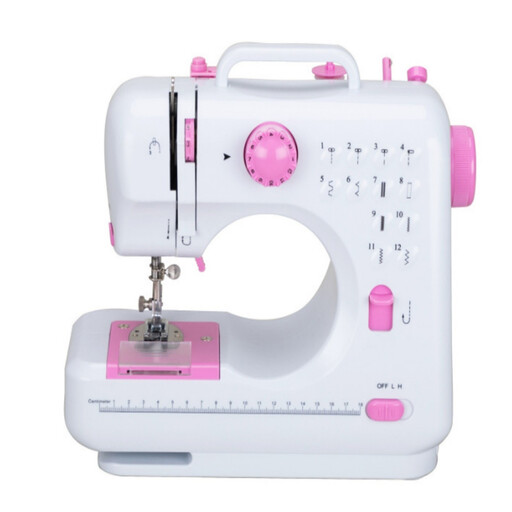
Portable mini sewing machine, 12 stitches, pink
The portable design may suit a workspace where the machine is put away after each session.
The product name lists 12 stitches, dual power, an LED light, pink colour and accessories. The description also mentions two speed settings and foot pedal and hand controls.
Joybuy
 No image available
IAGREEA mini sewing machine, 12 stitches
The portable size and two listed speed settings may be useful when sewing at a shared table.
The product name lists 12 stitches, dual power and an LED light; the description also mentions push-button operation.
Joybuy
 No image available
IAGREEA YASM-505A mini sewing machine
Foot pedal or button operation and two speed settings are worth considering if different people will use the machine.
The description lists 12 built-in stitches and reverse sewing. According to the product description, battery operation requires four AA batteries, which aren’t included; a mains adapter is also mentioned.
Joybuy
Frequently asked questions
Do we need an overlocker for fabric bookmarks?
An overlocker isn’t essential for ordinary seams on small projects. TÜV SÜD describes overlockers as specialist machines that cut, sew and neaten fabric edges at the same time; choose a machine based on the seams you actually plan to sew.
What should we do before changing a needle or presser foot at a shared table?
Switch the machine off before carrying out these preparations and follow the instructions for the specific model. The Veritas Sarah manual also says to unplug the machine when it’s unattended; this instruction for one model doesn’t automatically apply to other machines.
How do I remove lint from a sewing machine?
Clean the machine according to the instructions for the model you’ve bought. The Veritas Sarah manual says to unplug the machine before cleaning or carrying out maintenance.
Is a manufacturer’s guarantee the same as your statutory rights?
No. According to the Verbraucherzentrale, if a product is faulty, your statutory rights are against the seller; a guarantee is an additional voluntary service with separate terms and conditions.
What should I look for in a sewing machine’s CE marking?
Check the marking and the manufacturer’s information for the specific machine. According to information from the European Union, CE marking is required for products covered by relevant harmonised EU rules that require it; it’s the manufacturer’s declaration, not an official quality mark.


