Beginners sewing napkins
If you mainly want to sew straight hems, look for straightforward controls and basic stitch types. TÜV SÜD highlights these as important features for beginners.


For sewing mostly straight hems on fabric napkins, a user-friendly domestic sewing machine with a straight stitch and adjustable stitch length is a sensible place to start; there’s no proven benefit to having lots of decorative stitches for this task. When you’re sewing at the kitchen table, workspace and storage matter too, while adjustable presser-foot pressure or a speed limiter can be useful for folded corners. Check the rated voltage and CE marking on the specific product listing, and test the machine on your chosen fabric.
If you mainly want to sew straight hems, look for straightforward controls and basic stitch types. TÜV SÜD highlights these as important features for beginners.
If you’ll only set up the machine for occasional projects and put it away afterwards, make sure the work surface, fabric feed and storage suit your space. Janome lists the 1522 LIMITED EDITION as weighing 6 kg, while bernette describes an extension table that requires extra space.
If you want to sew more than simple hems, including thicker or multiply folded sections, consider adjustable presser-foot pressure or controllable speed. Janome and bernette list these features on certain models; it’s still important to test the machine on your own fabric.
Start by checking the straight stitch and stitch length, then consider how much space the machine needs. Extra adjustment options are most useful if you’ll be working with different fabric layers or want more control while sewing.
| What you need | What to check | Who is it important to? |
|---|---|---|
| Straight hems on napkins | Check that the specific model has a straight stitch, adjustable stitch length and reverse sewing. TÜV SÜD recommends basic stitch types and easy-to-use controls for beginners. | If I mainly sew straight hems, I want to be able to set the basic functions easily and test the stitch on my chosen fabric. Around 36% of consumers prioritise a simple hem on a napkin. |
| Setting up and putting away | Check there’s room for the machine, fabric and foot control, as well as space to store it. Janome lists the 1522 LIMITED EDITION as weighing 6 kg; bernette specifies an extension table. | If I put the machine away after each project, it needs to fit my kitchen table when set up and be easy to store. Around 29% of consumers prioritise space and storage. |
| Folded hem corners | Check whether the specific model has adjustable presser-foot pressure, and test a folded corner on a scrap of fabric. Janome specifies three pressure settings; bernette describes adjustable presser-foot pressure. | If I sew different fabric layers or folded corners, I want to test the settings on my own fabric. Around 21% of consumers prioritise working with different fabric layers. |
| Speed control | Check whether you can limit the maximum speed on the specific model. bernette lists a half-speed mode for the 05 ACADEMY. | If I prefer to sew slowly around corners, controllable speed matters more to me than a wide choice of stitches. Around 14% of consumers prioritise speed control. |
A high number of programmes doesn’t tell you how well a machine will sew your chosen fabric or a folded corner. For a simple hem, the basic functions and the right settings are what matter.
Check the straight stitch and stitch length on the specific model, then test it on your fabric and a folded corner.
An extension table takes up extra table space. If you regularly put the machine away, its weight and storage requirements matter too.
Check that your table and storage space are suitable for the specific model and its accessories.
An overlocker is designed to trim and neaten fabric edges. It doesn’t replace straight-stitching a folded napkin hem.
First decide whether you want to stitch down a folded hem or trim and neaten fabric edges, then choose the right type of machine.
A voluntary guarantee and your statutory rights when goods are faulty have different terms and points of contact. The Verbraucherzentrale explains that a guarantee doesn’t replace your statutory rights.
If something is faulty, first check your rights with the seller, then read any separate guarantee terms.
The N 1235/61 is worth comparing for straightforward everyday sewing projects.
The Marie is a mechanical model worth comparing for simple sewing tasks and basic functions.
The 1522 LIMITED EDITION is worth comparing if adjustable presser-foot pressure is important to you.
The 05 ACADEMY is worth comparing if you want a speed limiter and adjustable presser-foot pressure.
The Joybuy products below are intended for simple sewing tasks and hems. Compare ease of use, speed, adjustment options and space requirements to find what suits your needs.
 No image available
For straight hems if you want two speed settings and reverse sewing. The product description lists 12 stitch patterns, a foot pedal or hand switch, LED light and a thread cutter. The maximum fabric thickness is listed as 2.5 mm; test a folded hem corner on a scrap of fabric.
 No image available
For simple hems and sewing tasks if you want a choice of two speeds. The product description lists forward and reverse sewing, as well as mains or battery power; check that the power supply suits how you plan to use it before buying.
 No image available
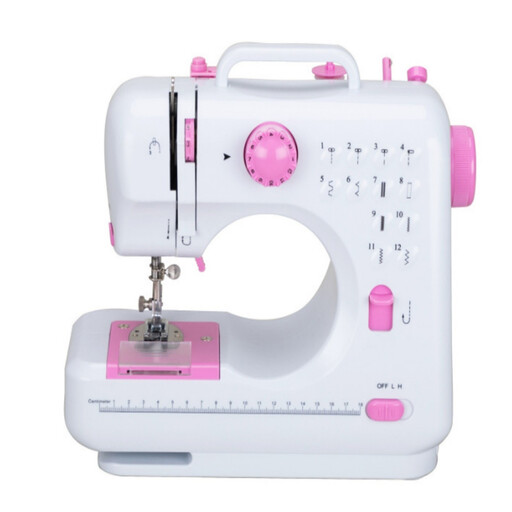
For hems and household sewing if you’re looking for a portable machine with two speed settings. The title and product description list 12 stitch patterns, dual power supply and LED light; the description also mentions a carry handle.
 No image available
For a simple straight stitch if fixed settings are all you need. The product description lists a fixed stitch width and length, and no reverse sewing button; it also specifies foot-pedal operation.
 No image available
For hems if reverse sewing and a choice of stitch patterns suit your needs. The title lists 12 stitch patterns and reverse sewing; the product description gives cotton, linen, chiffon and denim as examples of suitable fabrics.
Not just to sew a folded hem with a straight stitch. An overlocker is mainly used to trim and neaten edges; for the task described, a suitable domestic sewing machine is a good place to start.
Make room for the machine, fabric and foot control, then set up the machine according to its instructions. Test it on a piece of your chosen fabric, including a folded corner, before you start on the napkin.
First, check the threading, bobbin and presser foot using the instructions. Singer notes that using the wrong type of bobbin can damage its machines; don’t assume that information about Singer bobbins applies to other brands.
For a typical online purchase by a consumer, you generally have 14 days from receiving the goods to cancel; you must notify the retailer that you wish to cancel. The Verbraucherzentrale distinguishes this right from your statutory rights if goods are faulty and from a voluntary manufacturer’s guarantee.
For a new mains-powered sewing machine with a rated voltage within the scope of 50 to 1,000 V AC, check the relevant EU conformity requirements and the CE marking required for that specific product. The European Commission explains that CE is a declaration by the manufacturer, not a certificate issued by a central EU body. The Bundesnetzagentur also recommends checking the product identification, manufacturer details, and instructions and safety warnings in German.