
Lieferung heute & morgen

Qualitätsgarantie

Willkommens-Angebote freischalten: KOSTENLOSE Lieferung | Bis zu 80 % RABATT | Kostenlose 30-Tage-JoyPlus-Testphase
App herunterladen
Starting your sewing journey is a creative process, but choosing your first machine can quickly become overwhelming. The market is flooded with models that promise a multitude of features. However, many of these extras are not only unnecessary for beginners but often lead to frustration and needless expense. Before you make a decision, it's crucial to understand the common pitfalls that can trip up newcomers.
A frequent mistake is buying a machine with an overwhelming number of stitch programs. Models with 100 or more stitches seem tempting, but in practice, only a few basic stitches are needed for 95% of all everyday sewing projects and repairs. You end up paying for features that go unused. Another pitfall is extremely cheap "mini sewing machines," whose mechanics are often only designed for a single layer of thin cotton fabric. Attempting to hem a pair of jeans with one of these often ends in a broken machine. Finally, the compatibility of accessories like needles and bobbins is an often-overlooked point. Some manufacturers use proprietary formats, making replacements hard to find and expensive.
To make an informed decision, you should focus on a few crucial technical parameters. These determine whether a machine is suitable for your needs and will bring you long-term satisfaction.
For starting out and for most common projects like hemming, sewing cushion covers, or making simple garments, a selection of 10 to 15 stitch types is perfectly adequate. A good basic sewing machine should master the following stitches:
A home sewing machine should be able to do more than just handle thin fabrics. The ability to manage multiple layers of fabric or tougher materials like denim or canvas is a clear hallmark of quality. This is less a matter of motor power in watts and more about the mechanical construction. A sturdy internal metal frame ensures smooth operation and provides the necessary force to drive the needle through thicker materials. A sewing machine for repairs must meet this requirement to be versatile.
Intuitive operation is crucial, especially for beginners. Printed threading guides, a clear layout of controls, and good illumination of the sewing area with an LED light are practical features. Some models also offer two speed settings, which makes getting started easier. A compact sewing machine often scores points for its portability. If you plan to transport the machine frequently or use it in places without a direct power outlet, a battery-powered sewing machine is an option worth considering. Ensure that battery operation is a supplement to mains power to guarantee maximum flexibility.
Based on these objective criteria, we have identified a few models that are suitable for the different needs of beginners.

Why This Fits Their Persona: Ideal for those who want to try sewing without a major investment. Perfect for simple repairs and first small projects where basic functionality is key.
This model focuses on the essentials. It avoids the pitfall of paying for dozens of unused stitch programs. Its operation is streamlined to the basics.
Supports both mains and battery power for high flexibility. Its compact size and low weight make it extremely portable.
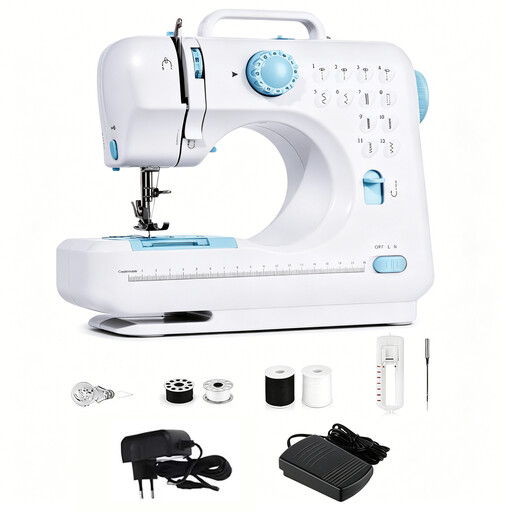
Why This Fits Their Persona: Suitable for users who want to do more than just repairs. The selection of stitches enables creative DIY projects, from decorative items to simple garments.
With 12 stitch patterns, it offers a meaningful upgrade without being overwhelming. According to the manufacturer, a sturdy metal hook improves performance on thicker fabrics, thus avoiding a "toy-like" feel.
Two speed settings for controlled sewing. Integrated features like an LED light and thread cutter add to the convenience.

Why This Fits Their Persona: A great choice for shared craft projects. Its simple operation and clear instructions make it a suitable sewing machine for kids under supervision.
It prevents frustration with an exceptionally beginner-friendly design. According to the manufacturer, threading guides are printed directly on the machine, which significantly simplifies getting started.
The combination of a foot pedal and button control offers different operating options. The two speed levels allow you to start slowly and increase the pace.
We've compiled a complete, up-to-date list of products that fully meet these strict selection criteria and all relevant safety standards.
The ability to sew denim depends on the machine's mechanical stability and motor. Very basic models are often not designed for this. However, models that the manufacturer states have a reinforced hook or a robust build can certainly repair a single seam on a pair of jeans or hem them. For regular work with heavy fabrics, however, a larger home sewing machine is more suitable.
A battery-powered sewing machine offers unparalleled portability. It's ideal for people who sew in different locations, attend workshops, or simply don't have a dedicated sewing space. The downside can be lower and diminishing power over time compared to mains operation. A good solution is models that offer both options. This allows you to use the consistent power of the mains at home and switch to batteries when you're on the go.
Price isn't the only criterion. A very cheap machine that breaks after a short time is a poor investment. A good entry-level model offers a balance of price, functionality, and durability. Instead of focusing solely on the lowest price, you should pay attention to the core parameters mentioned above: a sensible stitch selection, stable mechanics, and simple operation. A solid model for beginners can often be found in an affordable price range without compromising on fundamental quality.