Sewing through thick seams
You sew stiff or multiply folded fabrics and want to keep your work under control, especially where seams cross. BERNINA describes multiple layers and intersecting seams as an added challenge.


For occasional cushion covers, an easy-to-use domestic sewing machine with the essential utility stitches may be all you need – provided it can feed your thickest fabric sample, including where the seams cross. BERNINA points out that multiple layers and intersecting seams are more challenging than flat fabric, so a wide range of decorative stitches is no substitute for testing the machine with your own materials. If you often sew bulky or thick seams, it’s also worth comparing the presser-foot pressure, feed options and workspace of the specific model.
You sew stiff or multiply folded fabrics and want to keep your work under control, especially where seams cross. BERNINA describes multiple layers and intersecting seams as an added challenge.
You mainly want to sew covers using simple utility stitches and choose a machine that’s easy to use. TÜV SÜD recommends an easy-to-use machine with basic stitch types for beginners.
You often work with bulky pieces or want extra help feeding layers of fabric. The right option depends on the specific machine model.
Start by testing the thickest seam in your planned cover on a fabric sample. Then you can decide whether basic features are enough, or whether adjustable presser-foot pressure, extra feed assistance or more space next to the needle would be useful for your projects.
When making layered cushion covers, what matters most depends on the part of the sewing process you’re most concerned about.
| Priority | What to look for when buying | Who is this important to? |
|---|---|---|
| Thick seams | Test the thickest seam intersection with a suitable needle and check whether the presser foot can be guided over it. Schmetz recommends jeans needles for sturdy fabrics such as canvas and twill. | If I’m sewing several layers of sturdy or folded fabric where seams cross, I want to be able to keep working in a controlled way. Around 36% of consumers put handling thick seams first. |
| Basic features and ease of use | Check that the machine has the utility stitches you need and can sew a simple test seam through your fabric layers. | For occasional covers, I want straightforward controls and only the stitch types I’ll actually use. Around 29% of consumers prioritise ease of use and basic features. |
| Even fabric feed | Check the difference between a built-in walking foot and an additional walking-foot attachment, and make sure it’s compatible with the exact model. | If my fabric layers shift against each other as I guide them through, I want to know which feed aid will make the job easier. Around 21% of consumers prioritise even feeding. |
| Workspace and accessories | Compare the space available on the specific model and check whether the presser feet you need are included or compatible. | When working with large cover pieces, I want enough room to guide the fabric and the right feet for the fastenings I plan to use. Around 14% of consumers prioritise workspace and accessories. |
A label or a claim about suitable fabric types doesn’t tell you how a machine will feed your specific folded seam.
If possible, test a piece of fabric with exactly the same number and arrangement of layers. Check the needle, stitch formation and feed as you sew.
Built-in feed systems, optional accessories and what’s included vary by model.
Check the accessories list against the full model name and make sure any additional presser foot is specifically compatible.
You may need to buy a compatible presser foot separately, adding to the cost of accessories.
A voluntary guarantee doesn’t replace your statutory rights against the retailer. Your Europe explains the EU-wide minimum rules for statutory guarantees.
Keep your proof of purchase and model details, and check who you should contact if something goes wrong.
The N 1235/61 is a mechanical machine with basic and utility stitches. For the N 1235 Pro, the manufacturer lists features including adjustable presser-foot pressure.
The manufacturer markets the mechanical Heavy Duty 4432 as suitable for a range of fabrics. The stated accessories include a zip foot.
For the BERNINA 435, the manufacturer lists features including adjustable presser-foot pressure and a zip foot among the standard accessories shown.
For the Memory Craft 6700 Professional, Janome lists a large throat space and an extension table. For the Continental M7 Professional, the manufacturer describes a model-specific dual feed system.
The following Joybuy products vary considerably in their intended use. Compare the listed stitch functions and material limits with your fabric layers. Being described as a sewing machine doesn’t prove that a product can handle every thick seam in a cushion cover.
 No image available
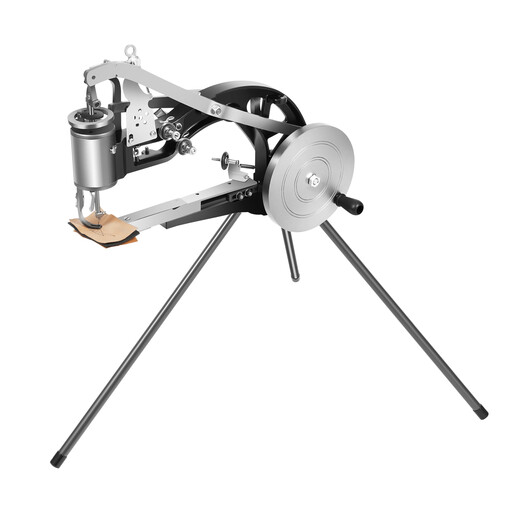
The description positions this hand-operated machine for leather and shoe repairs; it isn’t a typical domestic machine for cushion covers.
It lists a stitch length of up to 6 mm and a material thickness of 3–5 mm. Canvas is listed as a suitable material, and the machine is hand-cranked without electricity.
 No image available
The listed forward and reverse functions and range of stitch patterns may be useful for simple sewing projects, but be sure to test a seam on your own fabric.
The description says it can sew up to six layers of lightweight denim and lists a maximum material thickness of 2.5 mm. These figures are no substitute for testing it with your specific fabric layers.
 No image available
The listed forward and reverse functions are designed for basic sewing. Test a fabric sample to see whether the machine can handle the layered edges of your cover.
The description lists two speed settings and mains or battery operation.
 No image available
A fixed straight stitch may suit simple straight seams, but this machine doesn’t have a reverse function.
The product information says the stitch width and length are fixed. If you want to sew in reverse to secure your seams, this limitation is important to consider when choosing.
 No image available
The listed forward and reverse functions are useful for basic household sewing. For layered covers, test whether the machine can feed your thickest seam sample.
The machine has 12 stitch patterns, two speed settings and a buttonhole function. According to the description, you can operate it using either the foot pedal or a button; it also has a built-in work light.
Schmetz recommends a jeans needle for sturdy fabrics such as canvas and twill. Choose the type and size to suit your fabric, thread and machine, and test the seam on a scrap piece. The needle alone doesn’t prove that the machine can handle any number of layers.
First, check the needle, stitch length and presser-foot pressure using the instructions for your specific model. For sturdy fabrics folded over several times, BERNINA recommends checking the stitch length and presser-foot pressure, among other things. Not every machine offers the same adjustment options.
For applicable distance sales, you generally have 14 days from delivery to cancel your purchase; exceptions and possible return costs may apply. In addition, when you buy from a trader, EU guidance provides for a statutory guarantee of at least two years from receipt. This is separate from a voluntary manufacturer’s guarantee.
The Bundesnetzagentur lists correct CE marking and identifiable manufacturer details among the things it checks when monitoring the market. Also check that the user manual contains the required information. Markings don’t prove that a machine can sew through your particular fabric layers.