What should you look for when buying?
Mechanical domestic sewing machine
A good fit if: you mainly sew simple lining and bag seams and prefer clearly visible, manually adjusted functions.
Things to consider: Depending on the model, you’ll need to check and adjust the stitch length and other settings manually.
Electronic or computerised domestic sewing machine
A good fit if: you want to sew slowly and carefully around corners, or several people will be using the machine. Brother lists a speed control slider and needle up/down button for the Innov-is A16; W6 lists adjustable speed and a selectable needle stop for the N 3300 Pro.
Things to consider: Extra programmes are not essential for simple lining seams. What matters is whether the specific model has the functions you need and what comes in the box.
An overlocker as an additional machine
A good fit if: you also want to neaten fabric edges. TÜV SÜD describes an overlocker as a machine that cuts and sews edges at the same time.
Things to consider: It is not necessarily a substitute for a domestic sewing machine for the construction and topstitching seams of a lined bag.
For lined fabric bags, first check the actual number and type of fabric layers. Then consider how easy the machine is to use at a shared table, and finally make sure the machine and its accessories will fit.
| What matters |
What to check before buying |
Who is this important for? |
| Fabric feed over thick seams |
Test the thickest seam you plan to sew using your outer fabric, lining, thread and a needle suitable for the machine. Only assume the presser-foot pressure is adjustable if this is documented for the model. |
If I’m combining a sturdy outer fabric with lining, I want to know how the thickest seam will sew. Around 33% of consumers prioritise thick bag seams. |
| Ease of use when users take turns |
Check the stitch selection, speed limiter, needle position and instructions for the specific model. |
If several people will be sewing, I want to be able to check the speed and settings easily before starting. Around 27% of consumers prioritise ease of use when people take turns. |
| Work space at a shared table |
Check the available space with and without an extension table, and confirm what comes with the exact model variant. |
If the table is only free occasionally, I need enough room to support the fabric without taking up too much space all the time. Around 20% of consumers mainly consider the available table space. |
| Simple lining construction |
Check your pattern to see whether you’ll need a straight stitch, reverse sewing, stitch-length adjustment and, if applicable, a free arm or zip foot. |
If I mainly want to join and topstitch the outer and lining pieces, easy-to-use basic functions matter most to me. Around 20% of consumers prioritise simple lining seams. |
Joybuy products for sewing bags
The following Joybuy products include a compact domestic mini sewing machine and hand-operated leather sewing machines for bag and canvas projects. Before buying, check that the design and operation suit the lining and construction seams you plan to sew.
 No image available
Domestic mini sewing machine, 12 stitch types, single and twin needle, 2 speed settings, sewing kit
Described as a compact domestic sewing machine with two speed settings. Check how it operates and test the seam with your own fabric layers.
12 stitch types; single and twin needle; two speed settings; sewing kit included according to the product name.
View at Joybuy
 No image available
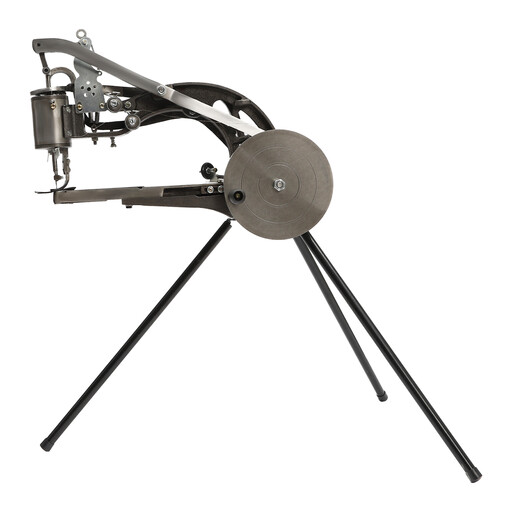
Hand-cranked leather sewing machine, 6 mm stitch length, for materials 3–5 mm thick
Described as a hand-operated leather sewing machine for uses including bags and canvas. Before buying, check that the hand-cranked operation and design suit your sewing project.
The product details list a 6 mm stitch length, material thicknesses of 3–5 mm and a head that rotates through 360°. The description recommends regularly lubricating moving parts.
View at Joybuy
 No image available
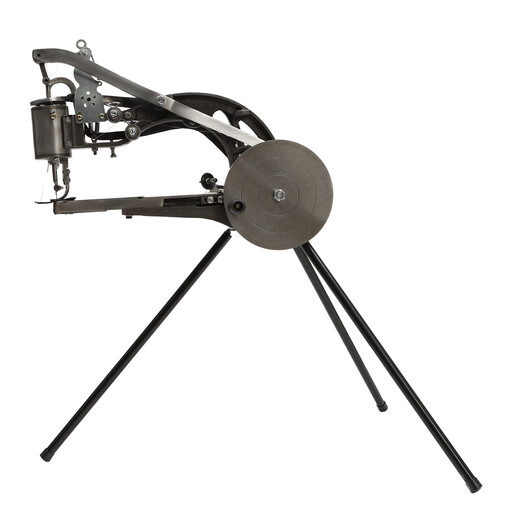
Hand-operated heavy-duty leather sewing machine for thick canvas and repairs
This hand-operated leather sewing machine is described as suitable for thick materials and bag and canvas projects. Check that its design and operation suit the seams you plan to sew on your bag.
The description lists a stitch length of up to 6 mm, material thicknesses of 3–5 mm and a three-legged base with non-slip pads. Moving parts should be lubricated before use.
View at Joybuy
Frequently asked questions
Do I need an overlocker to sew the lining of a fabric bag?
Not just because you’re sewing a lining. TÜV SÜD describes an overlocker as mainly used for cutting, sewing and neatening edges at the same time. A lined bag may also need construction and topstitching seams. Before choosing a machine, check which seams your pattern requires.
Which needle is suitable for canvas and thick bag seams?
SCHMETZ lists system 130/705 H-J jeans needles for materials including canvas and for thick seams in bags. Choose a needle size to suit your fabric and check which needle system your machine requires. A suitable needle alone doesn’t guarantee that every combination of fabric layers will feed through the machine.
What should I check when someone else takes over at the sewing table?
Check the stitch, stitch length, speed and needle position again, rather than assuming the previous user’s settings are right. Follow the safety instructions in the manual for the specific model when changing the needle or presser foot, or when cleaning the machine.
What are my rights if my sewing machine develops a fault in Germany?
For a consumer purchase, the statutory rights you have against the seller are separate from any voluntary guarantee. The Verbraucherzentrale gives the standard period for goods to be free from defects at the time of purchase or delivery as two years. If a fault arises, the first step may be having the item repaired or replaced. The purchase date and type of contract may affect how your situation is assessed.
Is the CE mark an independent safety test?
No. The European Commission explains that, where CE marking is required for a product, the manufacturer declares that it meets the relevant requirements. There is no central EU body that routinely issues a certificate for this. For a specific electrical model, also check the manufacturer’s information and safety guidance.


