If your fabric layers shift against each other as you sew, first look for a feed aid that’s compatible with the specific model, then test it with your fabric and wadding. For large quilt sandwiches, you’ll also need space to the right of the needle; for smaller panels, a suitable foot and easy-to-control speed may matter more. Before buying, check what’s included and which EU requirements apply to the machine on offer.
Which features matter to you?
For anyone sewing layers that tend to slip
If you’re sewing fabric, wadding or layers with different textures together, controlled feeding is an important factor to consider. Check whether the specific model has an integrated feed system or offers a compatible walking foot.
For patchworkers sewing precise panel seams
When you have lots of short seams to join, a clearly visible fabric edge and a suitable patchwork foot can help you guide the fabric. Sewing slowly and steadily is particularly useful at corners and along short seams.
For quilters working on large pieces
If you’re quilting large panels with wadding and backing, you’ll need to guide the work to the right of the needle. Compare the space available on the specific model with the size of your projects.
What should you look for when buying?
First decide whether you mainly need even feeding, precise panel seams or space for large quilt sandwiches. You should also check that the accessories and controls suit the projects you actually plan to sew.
| Buying priority |
What to check |
Who will find this most important? |
| Even feeding of multiple layers |
Check whether the specific model has an integrated feed system or offers a walking foot that’s explicitly listed as compatible. Test it with your fabric and wadding. |
When I sew several layers of fabric together, I want to stop the top layer and the layers underneath from shifting against each other. Around 36% of consumers put even feeding of multiple layers first. |
| Precise panel seams |
Check whether a patchwork foot compatible with the model is available, and whether you can guide the fabric edge and seam allowance easily. |
When joining lots of short seams, I want to be able to guide edges and corners with control. Around 29% of consumers prioritise precise seams when piecing their panels. |
| Space for large quilts |
Compare the stated throat space and any extension table with the size of your work. Extra space alone doesn’t guarantee more even feeding. |
When guiding a large panel, wadding and backing under the machine, I need enough room to move the work around. Around 21% of consumers put this need for space first. |
| Easy to get started and useful accessories |
Check what’s included, whether the feet you need are compatible and how speed is controlled on the exact model. |
When I’m planning to start with simple panel seams, I want to know which features are included and what extra accessories I’ll need. Around 14% of consumers prioritise an easy start and having the necessary accessories. |
Common selection mistakes
-
Assuming a wide choice of stitch programmes means the machine feeds multiple layers well
When sewing multi-layer panels, fabric control, the needle, the presser foot and space for your work all matter. The number of stitch programmes won’t tell you how the machine handles your layers.
First compare the feed system and compatible foot using the full model name. Then choose convenience features according to whether you’ll actually use them for your projects.
-
Assuming a walking foot is always included or fits every machine
Manufacturers list presser feet for specific models, or sell them separately. General compatibility information may also have exceptions.
Read the included accessories and compatibility information for the exact model you’re planning to buy.
You may need to buy a compatible foot separately; what’s included and the cost depend on the specific offer.
-
Thinking more space to the right of the needle will stop layers from shifting
A larger throat space and an extension table make it easier to guide a large piece of work. They’re separate from the machine’s ability to feed multiple layers.
Consider space and feed assistance separately, and sew a test piece using your own layers.
Brands to consider
Janome
For the Memory Craft 6700 Professional, Janome lists a 25.5 cm throat space, an extension table, AcuFeed Flex and adjustable presser foot pressure.
- These model-specific features may be relevant for larger projects and sewing multiple layers.
- The features listed aren’t an independent performance comparison. Janome offers walking and patchwork feet for specific models; check the accessories and compatibility for the model you’re considering.
BERNINA
For the BERNINA 570 QE, BERNINA lists Dual Transport and a patchwork foot as standard accessories.
- These details relate to this specific model and its documented features.
- They don’t automatically apply to other models. A manufacturer’s information about fabric feeding doesn’t prove how the machine will handle your own layers.
Brother
For the Innov-is F560, Brother lists a 190 mm throat width, adjustable presser foot pressure and a knee lifter.
- You can compare these model-specific features with the space you need and how you prefer to operate the machine.
- This doesn’t confirm that the F560 comes with a standard walking foot or integrated dual feed. Check separately which foot you need and what’s included.
W6 Wertarbeit
For the N 3300 Pro, W6 lists speed control and adjustable presser foot pressure; a walking foot is available separately.
- Speed control may be useful when sewing short seams with precision.
- The foot is listed separately, and the compatibility information names an exception. Check the specific offer and test it with your own layers.
Joybuy products
The products below include beginner and domestic sewing machines with a range of stitch and speed specifications. Compare the details with the specific layers you plan to sew; they don’t automatically prove that a machine can handle a large quilt sandwich. Before buying, also check which EU requirements apply to the machine on offer and whether any marking is required. A CE marking is a manufacturer’s declaration, not an independent quality mark.
 No image available
Electric beginner sewing machine, 12 stitch programmes
The product details list two speed settings and operation via foot pedal or hand switch. According to the description, this model can sew up to six layers of lightweight denim and has a stated maximum material thickness of 2.5 mm. Test it with your own fabric layers on a scrap first.
View at Joybuy
 No image available
Portable mini sewing machine, 12 stitch patterns
The product details list 12 stitch patterns, two speed settings, an LED light and dual power supply. If you’re sewing multiple layers, check first that the specifications suit your materials and project.
View at Joybuy
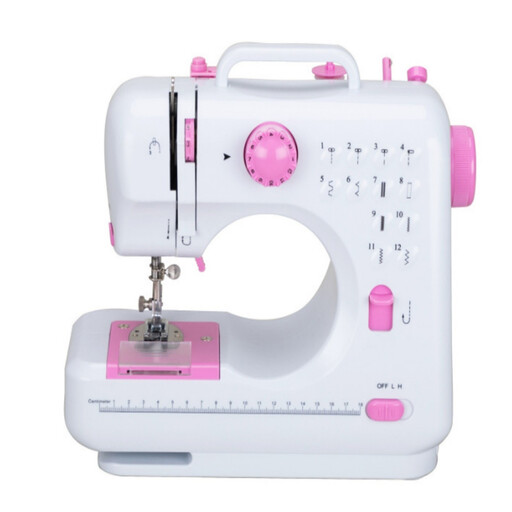 No image available
IAGREEA mini sewing machine, 12 stitch patterns
The product details list 12 stitch patterns, two speed settings and dual power supply. If you’re using it for patchwork, test it with your fabric layers and check whether a suitable foot is included.
View at Joybuy
 No image available
IAGREEA portable mechanical sewing machine, 6V, 1A
The product details list a fixed straight stitch and two speed settings. Power options are mains electricity or four AA batteries; the description also mentions a foot pedal. According to the product details, there’s no reverse stitch function, so bear this in mind when planning your seams.
View at Joybuy
Frequently asked questions
What accessories do I need for three layers: the quilt top, wadding and backing?
A walking foot compatible with your sewing machine model can help feed the layers evenly. First test the actual fabric and wadding on a scrap, and check whether the foot is included or available separately.
Which needle is suitable for sewing multiple layers?
Brother Sewing Machines Europe lists quilting or Sharps needles as possible options for multiple layers. Choose the needle and size to suit your fabric and test it on a scrap first; general advice can’t guarantee suitability for every combination of materials.
What should I bear in mind when changing the needle or presser foot?
Follow the instructions for the specific model. A Janome instruction manual advises switching off the machine when working around the needle area; don’t assume that individual maintenance or safety steps apply to other models without checking.
What happens if an item bought from a business seller in Germany is faulty?
The Verbraucherzentrale explains that sellers are generally responsible for faults that were present when new goods were handed over, for two years after purchase. Statutory consumer rights are separate from a voluntary manufacturer’s warranty; if there’s a fault, the first step may be to ask the seller to repair or replace the item.
What should I check about the conformity of an electric sewing machine?
Check the specific offer to see which EU requirements apply to the machine and whether they require CE marking. The European Union explains that CE marking is only required for products covered by relevant harmonised EU rules that require it; it’s a manufacturer’s declaration, not an independent quality mark.


