What should you look for when buying?
First, check whether you can achieve the seam allowance you need with a suitable foot. Then assess how the machine feeds fabric at your thickest seam intersections, and only after that consider how much extra space or which additional features you really need.
| What matters when buying |
What to check |
Who is this important for? |
| Consistent seam allowance |
Check that the seam allowance required by your pattern works with a compatible foot; measure several test seams. |
If I’m joining lots of pre-cut pieces to make panels to sell, I want to keep the seam allowance consistent every time. Around 33% of consumers prioritise seam allowance accuracy. |
| Feeding fabric across intersections and multiple layers |
Try sewing your thickest planned fabric combination and check which walking-foot system is compatible with the specific model. |
If my panel has wadding and a backing, I want the layers to feed smoothly and under control, even at seam intersections. Around 27% of consumers prioritise this. |
| Room for larger panels |
Consider the panel size, available table space, space to the right of the needle, and whether an extension table is included or available separately. |
If I’m handling larger pieces or quilting as well, I need enough room around the machine and on the table. Around 20% of consumers prioritise workspace and room for their projects. |
| A straightforward set of features |
Compare the standard accessories with compatible optional feet; check the controls and terms of use for your planned market production. |
If I mainly sew straight stitches, I don’t want to pay for features I’ll hardly use, but I still want the right foot. Around 20% of consumers prioritise this. |
Joybuy products on this topic
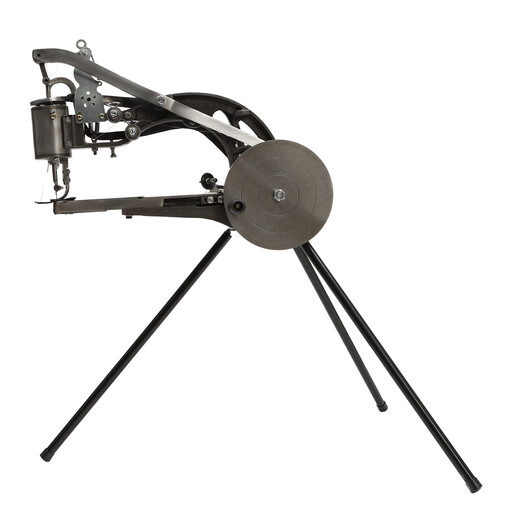
The Joybuy item listed is a hand-cranked sewing machine whose product title mentions leather and repairs to thick canvas and rubber. Check whether it is suitable for accurately sewn patchwork panels by trying it with your fabric scraps.
 No image available
Hand-cranked sewing machine for leather, thick canvas and rubber, black
According to the product title, this hand-operated machine is designed for leather and repairs to thick canvas and rubber. That doesn’t establish that it is suitable for precise patchwork seam allowances.
Before buying, check that the stitch type, seam guide and fabric feed work for your test pieces.
View at Joybuy
Frequently asked questions
Do I need a quilting machine for patchwork panels?
No. If you’re only joining pre-cut fabric pieces to make a quilt top, first check the straight stitch, suitable seam guide and fabric feed. If you also quilt the top, wadding and backing together, space and the ability to feed multiple layers become more important.
Is a patchwork foot always included?
No, it depends on the model and the specification on offer. Janome lists the 1/4-inch foot for the 1522RD/1522BL as optional; BERNINA lists foot #37 as a standard accessory for the 475 QE. Compare the full model name with the specific machine’s list of included accessories.
What should I check if I’m sewing panels to sell at a market?
Check the terms of use for the specific machine model in relation to your planned use. The Janome manual for the 230DC Limited Edition describes this model as designed for private use; that statement cannot be applied to other machines as a rule.
Do I need to label patchwork panels I sell?
For textile products covered by EU textile labelling rules and made up of at least 80% textile fibres by weight, details of fibre composition are generally relevant. EU guidance lists exceptions, which need to be checked for the specific product and how it is sold. Labelling applies to the textile product being sold, not to your choice of sewing machine.
Do cancellation rights and warranty cover still apply if I use the machine to make items for a market?
This depends, among other things, on whether you buy the machine mainly for private use or for your business or self-employed work. Under § 13 BGB, consumer status depends on the predominant purpose of the transaction. The Verbraucherzentrale distinguishes statutory rights from a voluntary guarantee and says that online purchases by consumers generally come with a 14-day right to cancel. If you’re buying mainly for business use, check the contract and applicable rights separately.


