What to look for when buying
Easy-to-use mechanical domestic sewing machine
A good fit if: You occasionally sew bags from woven fabric and lining, and prefer to adjust the settings yourself. Janome lists three-step adjustable presser-foot pressure and an extra-high presser-foot position for the 1522 Limited Edition.
Keep in mind: You’ll set the stitch and guide the fabric yourself. These features don’t replace a test-sew at the thickest point of your seam.
Mechanical machine with speed control
A good fit if: You want to guide thicker edges deliberately and at a slower pace. bernette says the 05 ACADEMY has adjustable presser-foot pressure, a speed limiter and a height compensation tool included.
Keep in mind: The extra adjustment options are most useful when you tailor them to a test piece of your fabric.
Domestic machine for other sturdy fabrics
A good fit if: You often sew denim or canvas as well as peg bags. Singer describes the Heavy Duty 4423 as suitable for these materials and lists adjustable presser-foot pressure.
Keep in mind: The “Heavy Duty” label doesn’t guarantee a particular number of layers. A high speed doesn’t tell you how easily you can control the machine over a specific raised seam.
When making lined bags, what matters is how well the machine feeds your thickest edge and whether its controls suit the way you sew.
| What you need |
What to check |
Who should consider this? |
| Seam junctions |
Test-sew the outer fabric, lining and folded edge in the same combination; check that the fabric feeds evenly. |
When I sew lined bags with turned-up hems, I want to know whether the machine will feed through the thickest junction. Around 37% of consumers say handling these seams is their top priority. |
| Ease of use |
Check how easy it is to thread the machine, access stitch selection and control the speed, and whether the instructions are easy to follow. |
For an occasional bag, I want basic functions that are easy to use rather than lots of programmes I’ll never use. Around 27% of consumers prioritise ease of use. |
| Controlled fabric feed |
Check whether you can adjust the presser-foot pressure and speed, and whether the layers shift against each other at the test point. |
If I regularly combine sturdier fabrics with lining or interfacing, controlled fabric feed matters to me. Around 18% of consumers put guiding the fabric layers first. |
| What’s included and accessories |
Compare the presser feet and needles included with the exact model variant, and check whether any accessories you want are compatible. |
If I need suitable needles or a particular presser foot, I want to know in advance what comes with the machine. Around 18% of consumers place the included accessories and compatible extras at the top of their list. |
An extra-high presser-foot position or adjustable presser-foot pressure can make it easier to work with different fabric thicknesses, but neither specifies the maximum material thickness for your finished bag. SCHMETZ recommends its 130/705 H-J jeans needle for sturdy fabrics and thick seams. Choose the needle size and type to suit your fabric and thread, and follow your machine’s instruction manual.
Related products at Joybuy
This selection at Joybuy includes hand-operated and electric sewing machines for basic sewing and sturdy materials. If you’re making a lined bag, pay particular attention to whether a machine can handle your specific seam junction.
 No image available
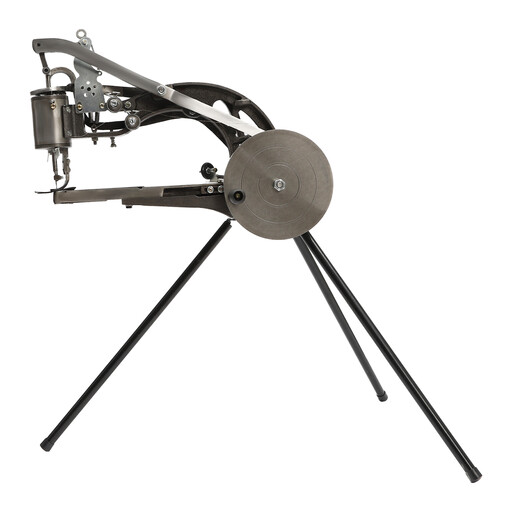
Hand-operated leather sewing machine, stitch length up to 6 mm
According to the product description, this hand-operated machine is designed for bags, canvas and repairs. Before buying, check whether its stitch mechanism and fabric feed are suitable for a lined peg bag.
The description specifies material thicknesses of 3–5 mm and 360° rotation. Moving parts should be oiled regularly, and the handle should be turned clockwise.
Joybuy
 No image available
Electric beginner sewing machine, 12 stitch programmes
The product details mention lightweight denim as a suitable material for sewing several layers. If you’re making a lined bag, test the thickest seam yourself.
The description specifies up to six layers of lightweight denim and a maximum material thickness of 2.5 mm. It also lists two speeds, forward and reverse sewing, a foot pedal and a hand switch.
Joybuy
 No image available
Mini sewing machine, 12 stitches, pink
The product description presents this machine as suitable for simple repairs and sewing at home. If you’re making a multi-layer bag, check whether it feeds your thickest section well enough.
The title lists 12 stitches, a double-thread system and forward and reverse sewing. The description specifies two speeds, a foot pedal or manual button, and an LED light.
Joybuy
 No image available
IAGREEA electric domestic sewing machine, 6 V, 1 A
The straight stitch described is intended for simple sewing at home. Test-sew a sample to see how well the machine handles your bag’s folded edge.
The listed features include two speeds, a double-thread system, and a foot pedal or hand switch. According to the product name, it can be used with mains power or four AA batteries. The listed accessories also include a thread looper, an empty looper, a replacement needle and a needle threader.
Joybuy
 No image available
IAGREEA YASM-505A mini sewing machine, purple
The description lists sewing and mending at home. If you’re sewing multi-layer bag edges, test the machine with your actual combination of fabrics.
Listed features include 12 stitches, reverse sewing, two speeds, an LED light and a thread cutter. Denim is given as an example of a fabric the machine can feed, but that doesn’t mean it will handle every thick seam.
Joybuy
Frequently asked questions
Do I need an overlocker to make a lined peg bag?
Not for the construction in Wunderbunt’s tutorial. It uses a straight stitch for the folded edges and a domestic sewing machine to join the outer fabric and lining. TÜV SÜD describes an overlocker primarily as a machine that trims, sews and finishes fabric edges at the same time.
Which needle is suitable for sturdy outer fabric and thick seams?
SCHMETZ recommends the 130/705 H-J jeans needle for sturdy fabrics such as canvas and for thick seams. Choose a needle size to suit your fabric and thread, and follow your machine’s instructions. One size won’t automatically suit every combination of materials.
How should I look after my sewing machine after making several bags?
Follow the instructions for your specific model when cleaning and maintaining it. bernette refers users to the manual for each model; don’t apply oil or cleaning instructions from another machine without checking first.
What should I do if I find a fault after buying a machine in Germany?
Your statutory rights against the seller are separate from any voluntary manufacturer’s or retailer’s guarantee. The Verbraucherzentrale explains that the first step when a product is faulty is to request a remedy, which may be a repair or replacement. Also check the terms of any guarantee offered.
What should I look for when buying an electric sewing machine for use in Germany?
For electrical equipment covered by the EU Low Voltage Directive, EUR-Lex specifies 50 to 1,000 V AC or 75 to 1,500 V DC, as well as requirements for conformity assessment, CE marking and safety information. Check the details on the specific machine. The European Commission explains that CE marking is a declaration by the manufacturer, not a central EU-issued test certificate.


