First-time costume makers
If you’re sewing a simple school cape for the first time, clear controls and basic stitches are especially important. TÜV SÜD lists ease of use and basic stitch types among the buying considerations for beginners.


For a simple cape made from easy-to-handle woven fabric, a user-friendly domestic sewing machine with the basic stitches you need is a good starting point. A wide range of decorative stitches isn’t a deciding factor. If you’re sewing several long hems, or the lining and outer fabric shift against each other, check the work area, speed control and fabric feed by sewing a sample with your materials. These are buying considerations, not a practical test of your specific cape.
If you’re sewing a simple school cape for the first time, clear controls and basic stitches are especially important. TÜV SÜD lists ease of use and basic stitch types among the buying considerations for beginners.
When you’re making several capes with long edges, it can help to support the fabric properly on the work surface and control the sewing speed. Check that the specific features suit your work table and planned sewing process.
If you’re working with lining, smooth woven fabric or stretch fabric, test the feed using exactly those layers. Choose a needle that’s suitable for both the fabric and the machine’s needle system.
| What matters | What to check when buying | Who will find this especially important? |
|---|---|---|
| Getting started easily | Basic stitches, easily accessible controls and instructions; if children will use it, also check the guidance for the specific model. | If I want to sew simple seams for a first school project without a long learning curve, ease of use and a clear choice of stitches are my priorities. Around 33% of consumers put ease of use first. |
| Sewing long hems | Space on the work table, fabric support and, where needed, an extension table or speed control. | When making several capes, I want to guide long fabric edges with control, without the fabric hanging awkwardly beside the machine. Around 25% of consumers focus mainly on fabric handling. |
| Several layers of fabric | Sew a sample with all the planned layers and the thickest part of the hem; check presser foot pressure or a walking foot if applicable. | When lining and outer fabric, smooth fabric or folded hems are involved, I want to see in advance how the layers will feed. Around 25% of consumers make fabric feed their main consideration. |
| Cost of a one-off project | Consider whether you’ll use the machine again later; check which presser feet are included and which needles you’ll need for your fabric. | If I’m mainly sewing for this school project, I don’t want to choose features I won’t need for the seams I have planned. Around 17% of consumers focus mainly on the cost of buying a machine. |
A wide choice of stitch programmes doesn’t prove that the machine will feed the thickest folded hem evenly.
Choose based on the seams you need and how easy the machine is to use. Test it with a folded sample of your actual fabric.
Manufacturer claims about heavier fabrics such as denim or canvas don’t prove that every combination of outer fabric, lining and multiple hem layers will sew smoothly.
Try your planned fabric at its thickest point and check whether the layers stay in place as you sew.
An overlocker is designed for different tasks from a domestic sewing machine used to join and topstitch fabric. Presser feet and what’s included also vary from model to model.
First decide whether you want to join seams, hem the fabric or also neaten the edges. Then check what’s included with the exact model.
The mechanical Sarah is an example of a straightforward machine for simple costume seams.
The 1522 LIMITED EDITION and 230DC Limited Edition offer model-specific options for adjusting to different fabrics and controlling sewing speed.
The mechanical bernette 35 offers utility and decorative stitches, while the bernette 37 also includes features such as speed control.
The Heavy Duty 4423 is a mechanical alternative if you’re planning to work with heavier woven fabrics as well as make a cape.
The computerised N 3300 Pro is an option if you’d like to use the machine beyond this one school project.
The products below are compact sewing machines whose names mention simple sewing jobs and hems. If you’re making a lined cape or a thick hem, check in advance whether the machine can feed your specific fabric layers.
 No image available
Could be suitable for simple hems and repairs; before starting your project, check whether it can handle your planned fabric layers.
The product name lists 12 stitch patterns, Dual Power, LED light and accessories.
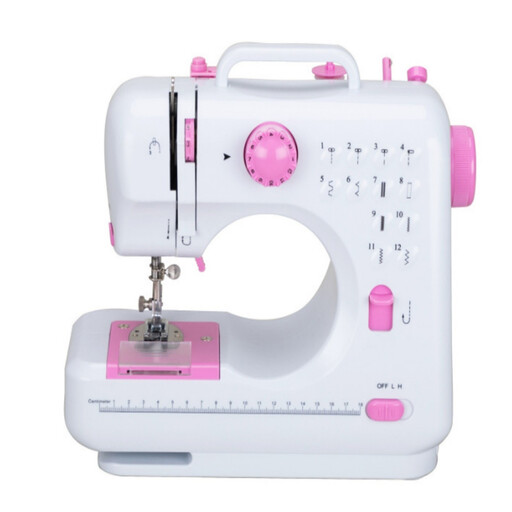 No image available
This compact model could be worth considering for simple sewing jobs; test the fabric layers for your cape before deciding.
The product name lists 12 stitch patterns, Dual Power and LED light.
 No image available
The beginner-friendly design mentioned in the product name could suit simple seams and hems; it’s still worth testing the machine with your planned fabric.
The product name lists 12 built-in stitch patterns, reverse sewing and the colour Purple.
For joining seams and topstitching, first check that a domestic sewing machine has the functions you need. TÜV SÜD describes overlockers as machines that cut, sew and neaten edges at the same time. Whether you also need one depends on your fabric and any other projects you have in mind.
SCHMETZ lists Microtex needles for fabrics including taffeta and lining taffeta, and Jersey needles for knitted fabrics. For highly stretchy fabric, the manufacturer recommends a Stretch needle instead. Also check the needle system and sew a test piece using your specific machine and fabric.
Follow the instructions for the specific model and make sure there’s appropriate supervision. The instructions for the Janome 230DC Limited Edition call for particular care when children use the machine and say to switch it off before making adjustments around the needle. This is a model-specific manufacturer instruction, not a general legal age recommendation.
Don’t use a long cord with loose ends around the neck without considering the risk of strangulation. A German EU Safety Gate alert describes this risk in a garment for children that was investigated. It doesn’t establish a legal classification for a school cape made at home.
No. The European Union explains that the manufacturer is responsible for meeting the applicable requirements and applying the CE marking. You can’t tell from a product listing heading alone which regulations apply to a specific machine or whether it meets them.