Beginners making skirts
If you’re starting with simple skirts, a clear selection of utility stitches and controllable speed can make sewing easier.


For making simple skirts at the kitchen table, a clear choice of stitches, controllable speed and the right utility stitches matter more than having as many programmes as possible. If you’ll be setting the machine up and putting it away frequently, you’ll also need to consider its weight and footprint. For jersey, the right stretch stitches and whether the specific model is suitable for the fabric are key. A mechanical domestic sewing machine may be enough for occasional sewing with simple woven fabrics, while an overlocker is more of an extra for finishing edges.
If you’re starting with simple skirts, a clear selection of utility stitches and controllable speed can make sewing easier.
If you set up your machine on the kitchen table and put it away afterwards, you’ll need to think about ease of use, weight, footprint and space for accessories.
For jersey and other stretch fabrics, check that the machine has suitable stitches and that the specific model is appropriate for the fabric you plan to use. TÜV SÜD recommends stretch stitches if you mainly sew clothes.
A good fit if: you want to adjust the speed and choose stitches easily, and work on more than just straight seams, such as zips, buttonholes or stretch seams.
The trade-off: A large number of programmes alone won’t guarantee the right seam. Ease of use, weight and available table space still matter.
A good fit if: you sew simple woven fabrics occasionally and want to adjust settings such as stitch length yourself.
The trade-off: You won’t have the same level of convenience when selecting the speed or programme.
A good fit if: you often finish fabric edges or work with stretch materials, and can use a suitable machine for the other sewing steps.
The trade-off: Its main purpose is to trim and finish edges at the same time; it won’t automatically replace every step involved in making a skirt.
| What matters | What to look for | Who it matters most to |
|---|---|---|
| Ease of use and speed | Check the speed control, stitch selection, display and threading route on the specific model. | If I’m new to sewing, I want to be able to adjust the stitch and speed easily; around 31% of consumers prioritise clear, straightforward controls. |
| Space and storage | Compare the weight and dimensions of the exact version. Allow extra room for fabric, the foot pedal and, if needed, an extension table. | If I regularly carry the machine from storage to the kitchen table, I also need to consider the space required to set it up and put it away; around 25% of consumers prioritise footprint and portability. |
| Fabric and stitches | Decide whether you’ll mainly sew woven fabrics or jersey. Check for suitable utility and stretch stitches, presser feet and test results for the specific model. | If I’m making a skirt from a particular woven or knitted fabric, I want to know how the seam will work on that exact material; around 25% of consumers put fabric suitability first. |
| Accessories and service | Compare what’s included with the exact version, the warranty terms and how to access customer service. A voluntary warranty does not replace your statutory rights against the seller if goods are faulty. | If I’m weighing up the accessories I need and after-sales support, I want to choose the right overall package for my project; around 19% of consumers prioritise equipment costs and service. |
A wide choice of programmes doesn’t prove that a machine will make the seam you want on your skirt fabric. CHIP reported that the VERITAS Rubina model it tested had weaknesses with several fabrics and stitch types.
Check that it has the utility and stretch stitches you need, and look for results for the exact model. Once you have the machine, test it with your chosen fabric and a suitable needle.
You’ll also need room for fabric, the foot pedal and, if required, an extension table. According to the manufacturer, the Janome 230DC Limited Edition comes with an extension table.
Measure your workspace and storage area, and take into account the accessories included with the specific version.
For consumer purchases, your statutory rights relating to faulty goods are against the seller. A warranty is an additional voluntary promise with its own terms. Verbraucherzentrale and Your Europe explain the difference.
Keep your proof of purchase and warranty terms, and contact the seller first if something is faulty.
The computerised Innov-is A16 is worth considering if a straightforward stitch selection and controllable speed matter more to you than a particularly wide choice of programmes.
The N 3300 Pro is an option if you’re looking for adjustable speed and presser foot pressure, as well as extra programmes.
The 230DC Limited Edition is worth considering if a portable machine with adjustable presser foot pressure and an extension table suits your available space.
The computerised Rubina is an option if you need utility and stretch stitches, as well as a larger stitch library.
The 335 is a well-equipped alternative. If you’re only making a few simple skirts, it’s worth considering whether you’ll use the extra features.
The following Joybuy listings are electric sewing machines described in their product titles as beginner or portable models, or as a household mini sewing machine.
 No image available
The product title lists 12 stitch programmes and two speed settings for simple sewing projects.
A foot pedal and hand switch are also listed, along with a twin-thread system, forward and reverse sewing, an LED light, a thread cutter and accessories.
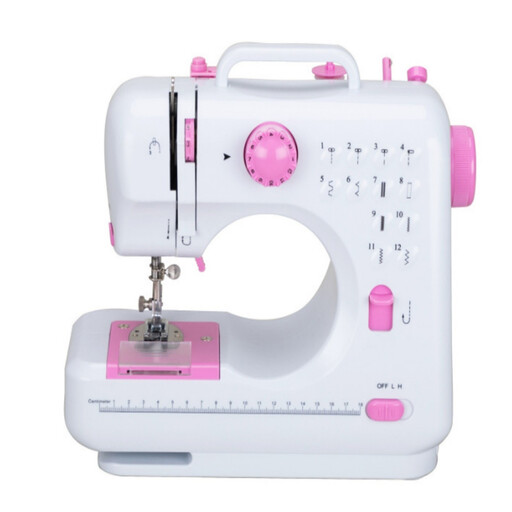 No image available
The product title lists 12 stitches for DIY projects, repairs and sewing clothes.
It describes the model as portable and lists two power options and an LED light.
 No image available
The product title lists 12 stitch types and two speed settings.
It also lists single and twin needles, as well as a sewing kit.
No. The fabric and pattern are the first things to consider. Utility stitches are important for simple sewing projects; stretch fabrics also need suitable stretch stitches. A high number of decorative stitches won’t answer these questions.
Make sure you have a suitable surface and enough room to guide the fabric as you sew. Also read the instructions for your specific model: the Janome 230DC Limited Edition manual says to unplug the machine after sewing and before cleaning it.
For a consumer purchase from a business seller, your statutory rights relating to faulty goods are against the seller. Your Europe explains that goods in the EU have a minimum two-year guarantee from the date you receive them. A voluntary warranty is separate. Online purchases usually come with a separate 14-day right to withdraw from the contract; check the terms and deadlines of your specific agreement.
In Germany, old electrical appliances must not go in household rubbish. Take yours to an appropriate return point or collection centre instead. The Umweltbundesamt explains how to dispose of old electrical appliances.