For long, mostly straight seams, controllable speed, a suitable edge guide and enough space to handle the fabric matter more than a wide choice of stitches. A straight-stitch machine is a good fit for regular panel-making; if you also need other stitch types, consider a versatile domestic sewing machine. Test the planned seam allowance using all the fabric layers you intend to sew, and check fire-safety requirements separately with the venue.
Who should take particular care when choosing a machine?
Making narrow seams along long panels
You need to maintain a specified narrow seam allowance over a long distance, so you’ll need a guide suited to the fabric and a speed you can control easily. Janome, BERNINA and W6 Wertarbeit describe relevant guiding or adjustment features.
Working with heavy or slippery fabrics
You want to stop the layers shifting against each other as you join them. The focus should be on fabric feed, presser-foot pressure and testing a sample with all the layers you plan to use. JUKI, BERNINA and Janome list relevant adjustment or feeding features.
Versatile sewing for a stage workshop
You sew projects other than straight backdrop panels, so you’ll need to weigh the benefits of extra stitch types against the specialisation of a straight-stitch machine. TÜV SÜD recommends choosing a machine to suit your main sewing needs.
What to look for when buying
Straight-stitch machine
A good fit if: You regularly join long, straight panels and don’t need other stitch types such as zigzag or buttonholes. Janome lists a large throat space and an edge guide among the standard accessories for the HD9 PROFESSIONAL; JUKI gives the TL-2200QVP MINI’s throat space as 215 × 150 × 219 mm and says a sewing table is included.
The trade-off: Specialisation doesn’t replace testing your fabric or checking that the guide and accessories suit your required seam allowance.
Versatile domestic sewing machine
A good fit if: You need stitch types beyond straight seams or work with different fabric layers. BERNINA describes the 570 QE as having Dual Transport and a working area of 21,50 cm.
The trade-off: A large working area and fabric-feed function don’t remove the need to support large panels externally. Compatible accessories aren’t necessarily included.
All-round machine for occasional panel-making
A good fit if: Stage panels make up only part of your sewing. W6 Wertarbeit lists adjustable speed and presser-foot pressure for the N 3300 Pro.
The trade-off: These features don’t prove that long, narrow seams will feed smoothly through your particular stage fabric.
| Priority |
What to check when buying |
Who it matters most to |
| Guiding a narrow seam allowance |
Mark the seam allowance on the actual fabric; check that the presser foot and needle plate work together, then sew a longer test seam. |
If I need to maintain a narrow allowance over a long distance, I look for a suitable guide and a speed I can control easily. Around 36% of consumers put precise seam guidance first. |
| Feeding fabric layers |
Sew a test using all the intended layers, and check presser-foot pressure, the upper feed and accessory compatibility. |
With slippery or uneven layers, I want to stop the fabric edges shifting against each other. Around 29% of consumers prioritise even feeding of the layers. |
| Handling large panels |
Check the throat dimensions and the table included with the exact model; plan how you’ll handle the fabric in your intended workspace. |
If I regularly sew long or large panels, I need space to guide the fabric beside and behind the needle. Around 21% of consumers pay particular attention to space and handling when sewing in batches. |
| Weighing specialisation against versatility |
List the stitch types you need and check the presser foot, edge guide, table and service conditions for the specific model on offer. |
If I also want to use the same machine for other sewing projects, I compare the stitch types I need with the cost and effort of sourcing accessories. Around 14% of consumers say versatility and the associated effort are their main concerns. |
Avoiding common misconceptions
-
Assuming a high stitch speed means a precise narrow seam
A machine’s stated maximum speed doesn’t tell you whether you can maintain the seam allowance accurately on your fabric.
Test all the intended fabric layers with your chosen seam allowance, at a speed you can control comfortably.
Extra test seams and possible alterations take time.
-
Assuming accessories are compatible or included
Manufacturers distinguish between standard accessories, optional accessories and model-specific compatibility. A suitable needle plate or guide isn’t automatically included.
Ask the seller to confirm which parts are included with the exact model variant and which ones suit your planned seam allowance.
-
Assuming your choice of machine proves the stage fabric is permitted
Fire-safety requirements apply to the material and how it’s used at the venue, not to the sewing machine.
Check the material’s classification and the specific venue’s requirements separately from your machine purchase.
If unsuitable material is used, it may need to be replaced.
Relevant brands at a glance
Janome
The HD9 PROFESSIONAL is a straight-stitch option for long seams and larger projects.
- Janome lists a large throat space, adjustable speed and an edge guide among the standard accessories.
- These details don’t prove that the machine is suitable for every narrow seam allowance or type of stage fabric.
JUKI
The TL-2200QVP MINI is a straight-stitch option for large, straight sewing projects.
- JUKI lists a throat space of 215 × 150 × 219 mm and an included sewing table; speed and presser-foot pressure are adjustable.
- This model isn’t designed for zigzag stitching or buttonholes.
BERNINA
The 570 QE combines a range of sewing functions with Dual Transport.
- BERNINA lists a working area of 21,50 cm. A straight-stitch plate is listed as a compatible accessory for the 570 QE; foot #53 has guides for 3 and 6 mm.
- Compatibility doesn’t mean an accessory is included. Check which presser foot suits your fabric and required seam allowance.
W6 Wertarbeit
The N 3300 Pro is a versatile computerised sewing machine for buyers planning to tackle other sewing projects too.
- W6 lists adjustable speed and presser-foot pressure.
- These features alone don’t prove that the machine is suitable for long, narrow seams in a particular type of stage fabric.
Related products on Joybuy
The following Joybuy products are domestic and hand-operated sewing machines. Test them with your fabric to check they’re suitable for your required seam allowance.
 No image available
Mini domestic sewing machine, 12 stitch types
The stitch types mentioned in the product name could be useful for projects beyond panel-making. Test the machine to check it suits your fabric and narrow seam allowance.
12 stitch types; single- and twin-needle options; 2 speed settings.
View on Joybuy
 No image available
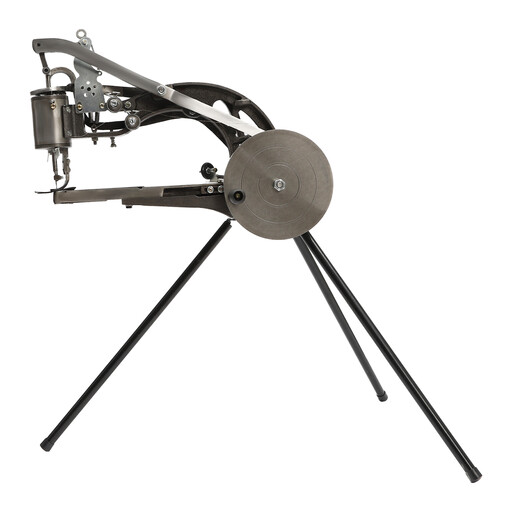
Hand-operated leather sewing machine, 6 mm stitch length
The product description mentions leatherwork and repairs to shoes, canvas and tents; this doesn’t confirm that the machine is suitable for stage panels. Test the planned fabric layers and seam allowance on a sample.
Stitch length up to 6 mm; material thickness 3–5 mm; rotates 360°.
View on Joybuy
Frequently asked questions
Is a high maximum stitch speed essential for narrow panel seams?
No, not on its own. What matters is whether you can guide the machine slowly at the start of the seam and along the planned narrow allowance. A manufacturer’s stated maximum speed doesn’t measure the seam quality you’ll get with your fabric.
How do I test a machine before sewing a long panel seam?
Sew a longer test piece using all the intended fabric layers, and check the edge guide and fabric feed as you go. Janome recommends an even-feed foot for multiple layers and materials that are difficult to feed or slippery; check that the accessory is compatible with your exact machine model.
What should I check about accessories and what’s included?
Compare what’s actually included with the edge guide, needle plate and working area you need. Janome lists an edge guide among the HD9’s standard accessories, while BERNINA specifies needle-plate compatibility by model. Compatible doesn’t automatically mean included.
Does a theatre backdrop fabric have to be flame-retardant in Germany?
That depends on the specific venue and the material’s classification. Section 33 of the Bavarian Ordinance on Places of Assembly, in the version that came into force on 1 September 2018 and remains in force until 31 December 2028, requires curtains used on stages and performance areas within its scope to be made from at least flame-retardant material; subsection 2 contains a provision about stage decorations. You’ll need to check whether your backdrop is classed as a curtain or stage decoration, and which rules apply at the venue, for your specific use. The sewing machine doesn’t certify the finished fabric’s fire classification.


