To make a tool roll at the kitchen table, first test your thickest seam junction on a sample piece. Then decide how much help you need with slow stitching and corners. A mechanical domestic sewing machine may be enough for occasional projects with mostly straight seams. If your design has lots of pockets, speed control and a needle stop can make it easier to sew around corners, while the machine’s weight, footprint and compatible accessories all affect day-to-day use.
What different shoppers should look for
For sewing through thick layers
If you’re planning to make a tool roll from canvas, denim or several folded layers, pay particular attention to how the machine feeds fabric across seam junctions. CHIP’s sewing machine buying guide highlights adjustable stitch length and presser foot pressure as important features to check.
For tool rolls with lots of pockets
If you’re sewing several narrow pockets and changing direction often, look for a machine that gives you control over speed and needle position. Brother describes these features on the Innov-is A16 as useful when sewing corners.
For sewing without a dedicated workspace
If you regularly set up your machine on the kitchen table and put it away afterwards, consider its weight and the space it takes up when in use and in storage. TÜV SÜD’s advice includes intended use as part of the buying decision.
What to look for when buying
Start by testing the thickest seam junction you plan to sew, then consider how easily you can guide the machine along short seams around pockets and corners. CHIP’s sewing machine buying guide highlights adjustable stitch length and presser foot pressure as important features to check. Brother describes its speed controller and needle stop as useful for sewing corners. These features can help you narrow down your options, but they don’t show how a particular combination of layers will feed through the machine.
| What you need |
What to check when buying |
Who it matters most to |
| Feeding fabric through thick layers |
Check the presser foot lift and adjustable presser foot pressure on the exact model; sew a sample piece using the outer fabric, lining and a folded edge. |
If I’m sewing canvas and folded layers where pockets join the main piece, I want to know how the fabric feeds through the thickest junction. Around 33% of shoppers put fabric feed at the top of their list. |
| Corners and narrow pockets |
Check the speed control, needle up/down function and reverse sewing on the specific model. |
With lots of narrow pockets, I want to sew slowly and turn neatly at every corner. Around 27% of shoppers make corner control their main priority. |
| Setting up and putting away |
Consider the weight and dimensions of the exact model, as well as space for the tool roll, cable and foot pedal. |
If I have to clear the machine from the kitchen table after sewing, how easy it is to move and store matters to me. Around 20% of shoppers prioritise the space it takes up. |
| Accessories and maintenance |
Check what’s included and whether optional presser feet are compatible with the exact model. |
If you’re planning to buy a particular presser foot or replacement parts, check compatibility and what the specific offer includes. Around 20% of shoppers pay particular attention to accessories and future maintenance. |
Common buying misconceptions
-
“Heavy Duty” or lots of stitch applications automatically mean the machine can sew through any combination of layers
How well fabric feeds through the thickest junction depends on more than a product label or the number of programmes. Singer distinguishes between stitch applications and stitch programmes in its specifications.
Make a sample using the outer fabric, lining, pockets and folded edge. Check the needle, presser foot and settings you need before committing to a particular combination of materials.
-
An even-feed foot is always included and fits every machine from the same brand
Accessories and compatibility vary by model; an optional foot won’t necessarily come as standard.
Check the exact model variant against the compatibility list and confirm what’s actually included.
-
You only need to make room for the machine on the kitchen table
When you’re sewing, you’ll also need space for the unfolded tool roll, cable and foot pedal. Afterwards, you’ll need to be able to put the machine away or move it.
Measure the available work and storage space, and check whether the specific machine is easy to move when you regularly set it up and put it away.
Brands to consider
Janome
For the mechanical 1522 Limited Edition, Janome Germany lists three-step presser foot pressure adjustment, an extra-high presser foot lift and a weight of 6 kg.
- These specifications give you specific model features to consider when sewing a sample and planning your set-up.
- An even-feed foot is an accessory; check compatibility and what’s included for the exact model. The manufacturer’s specifications don’t prove that the machine is suitable for every combination of layers.
Brother
Brother describes the Innov-is A16 as having a speed controller and a needle up/down button to help you change direction with control.
- These features may be useful if you’re sewing lots of narrow pockets and corners.
- The manufacturer’s claim about sewing heavier layers isn’t an independent test of your planned tool roll. Electronic convenience features aren’t essential for simple, straight seams.
Singer
Singer describes the Heavy Duty 4423 as suitable for denim and canvas and lists adjustable presser foot pressure.
- The listed materials and adjustable settings may be useful points of reference when narrowing down your options.
- Test the machine with a sample of your own fabric and lining before deciding whether it’s suitable. The 97 stitch applications listed by the manufacturer are applications, not 97 different stitch programmes.
Elna
For the mechanical 3210 “designed for jeans”, Elna lists adjustable presser foot pressure, an extra-high presser foot lift and a machine weight of 9.3 kg.
- The specific details about the presser foot and weight can help you assess your fabric layers and how easy the machine will be to set up and put away.
- Bear the weight in mind if you’ll often be moving the machine off the kitchen table. The manufacturer’s description of sewing thick fabrics doesn’t prove it’s suitable for every tool roll.
W6 Wertarbeit
For the mechanical N 1235/61, W6 lists adjustable stitch length and width. W6 also lists model-specific replacement parts and an inspection service.
- Adjustable stitch length and width are specific features of the machine mentioned.
- Replacement parts and servicing apply to the models and services listed; they don’t amount to a general claim that the machine is suitable for making tool rolls.
Joybuy products for this sewing project
This selection includes hand-cranked cobbler’s machines, as well as compact electric and portable models. Compare each machine’s design and stated material thickness with your planned layers; sewing a sample is still important for your specific tool roll.
 No image available
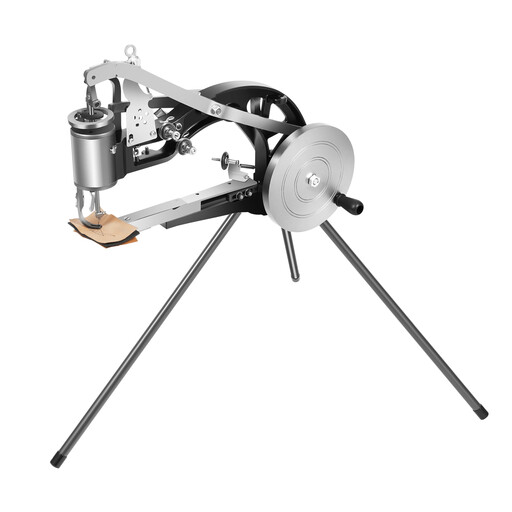
Hand-cranked leather cobbler’s sewing machine, 360° adjustable
Consider this only if you’re specifically looking for a hand-cranked cobbler’s machine for your sewing project.
The product description lists canvas and materials 3–5 mm thick as suitable uses, and a maximum stitch length of 6 mm. It also specifies adjustable thread tension and 360° adjustment, which the description says allows you to change direction without turning the workpiece.
View at Joybuy
 No image available
Mini sewing machine, 12 stitch programmes, dual power, pink
This portable model may be worth considering for occasional sewing at the kitchen table, provided your planned seam construction is within the stated material limit.
The product description specifies a maximum material thickness of 2.5 mm and up to six layers of lightweight denim. It also lists two speed settings and forward and reverse sewing. Bear the material limit in mind when sewing thicker junctions on a tool roll.
View at Joybuy
 No image available
IAGREEA YASM-505A mini sewing machine, purple
This portable domestic machine may be an option for short seams and changes of direction, provided its design and settings suit your fabric.
The product description lists 12 built-in stitches, two speed settings and reverse sewing. A metal hook is specified to help feed thicker materials such as denim. Power options include a mains adaptor or batteries.
View at Joybuy
 No image available
IAGREEA compact electric sewing machine, 6V, 1A
A fixed straight stitch may suit simple, straight seams, as long as you don’t need a reverse function for your project.
The product description specifies a fixed stitch with no reverse sewing, two speeds and foot pedal operation. It also lists mains or 4 AA battery power, plus a thread spool, an empty bobbin, a replacement needle and a needle threader.
View at Joybuy
 No image available
Electric sewing machine, 12 stitch programmes, twin thread
Hand or foot operation and two speeds may be useful for short seams at the kitchen table, provided the material limit suits your project.
The product description lists forward and reverse sewing, an LED light, a maximum material thickness of 2.5 mm and up to six layers of lightweight denim. Bear this stated limit in mind when sewing thicker seam junctions.
View at Joybuy
Frequently asked questions
Is a mechanical sewing machine enough for making tool rolls?
A mechanical domestic sewing machine may be enough for occasional tool rolls with mostly straight seams. The key is to test a sample using the thickest seam construction you’ll actually sew; a label such as “for jeans” is no substitute for this check.
Do I need a special presser foot for the pockets?
Not necessarily. If different layers slip against each other, a compatible even-feed foot may be an option. Check the accessories list for the exact machine model and whether the foot is included.
How should I clean my sewing machine after sewing?
Unplug the machine before cleaning it, and follow the instructions for your specific model when cleaning the hook and casing or oiling the machine. Brother includes this safety advice in its care information; it isn’t a general guide to taking every machine apart.
What rights apply when buying a sewing machine online in Germany?
According to Verbraucherzentrale, consumers buying online generally have a 14-day right to cancel from the date they receive the goods; you must notify the retailer that you wish to cancel. Statutory rights relating to faulty goods are separate from any additional manufacturer’s guarantee.
Is CE marking a quality test for a sewing machine?
No. The Federal Institute for Occupational Safety and Health describes CE marking and conformity assessment as part of the requirements for making machinery available in Germany. It is therefore not an independent assessment of how well a particular model can sew thick tool rolls.


