Makers of canvas tool rolls
You want to sew sturdy cotton fabric, folded pockets and fastening tapes together. Pay particular attention to the seams where several layers meet.


For simple tool rolls made from sturdy cotton fabric, an easy-to-use domestic sewing machine is generally all you need to sew neat straight stitches for the pockets and fastening tape. The Initiative Handarbeit guide covers these sewing steps, while TÜV SÜD recommends basic, easy-to-use features for simple projects. For folded canvas seams, check the actual fabric stack and make sure you have room to guide the fabric and store accessories in your small craft room.
You want to sew sturdy cotton fabric, folded pockets and fastening tapes together. Pay particular attention to the seams where several layers meet.
You want to put the machine and accessories away after sewing, or you have little room to guide the fabric beside the needle. An extension table only helps if you have space to set it up.
You’re sewing short dividers and narrow hems, and want good control over the speed and fabric feed.
First check that the machine can handle your fabric stack, then compare the workspace you’ll need, how easy it is to use and what accessories are required.
The Initiative Handarbeit guide covers sturdy cotton fabrics such as canvas, as well as stitched pocket dividers and attached tapes. The percentages show which concern consumers consider first when making this purchase.
| Buying criteria | What to look for | Who will find it most important? |
|---|---|---|
| Seams through multiple layers | Make a test stack using your fabric, a folded pocket and the fastening tape. Check how the specific model feeds and handles it. | When sewing canvas, folded pockets and fastening tape together, I want to know whether the fabric feeds smoothly. Around 33% of consumers put these seams first. |
| Workspace and storage | Measure the workspace with the fabric in position, and check how much room you need with and without an extension table. | When I put my machine away after sewing, I still need room for the fabric to pass through while I work. Around 27% of consumers prioritise workspace and storage. |
| Control over short seams | Check that you can easily select a straight stitch and start slowly on the model you’re considering. | For short pocket seams, I want to control the speed and sew close to the edge. Around 20% of consumers put control over short seams first. |
| Accessories, repairs and rights | Check what’s included, which consumable parts are compatible and what repair options are available for the exact model name. Distinguish a voluntary warranty from your statutory rights against the seller. | If I need to buy accessories or arrange a repair, I want to know the exact model variant and who to contact. Around 20% of consumers give accessories and after-sales service the greatest weight. |
A stated maximum speed doesn’t prove that a machine can handle your particular stack of canvas, folded pocket and fastening tape.
Make a test stack using the thickest seam you plan to sew, then check how it handles on the exact model.
An extension table takes up extra room when set up.
The Initiative Handarbeit guide includes stitched pocket dividers and attached tapes. An overlocker is a separate option for finishing edges and won’t automatically cover these sewing tasks.
First check whether the machine can sew the required topstitching and attachment seams. Treat finishing raw edges as a separate requirement.
If you want to cover both tasks, an additional machine may need extra storage space.
The notes below relate to the models named and their stated features. Before deciding, check your own fabric stack and the space you’ll need.
The mechanical N 1235/61 is an option for occasional tool-roll projects with straightforward settings. It is not the same model as the N 1235 Pro.
The 230DC Limited Edition offers documented settings for fabric feed and speed.
The mechanical 05 ACADEMY combines adjustable presser foot pressure with a speed limiter.
The mechanical Heavy Duty 4432 could be an option if you often work with sturdy fabrics, but you should test it with your own fabric layers.
Brother describes the XQ3700 as suitable for light sewing and beginner projects, so it’s more likely to suit simple tool rolls without particularly thick layers.
This selection includes hand-operated and electric machines for sewing and repairs. For tool rolls, compare the stated material limits with the fabric stack you’ll actually be using.
 No image available
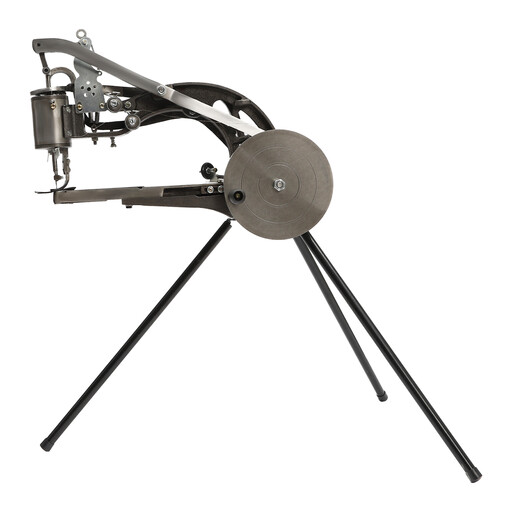
Could suit anyone who works with canvas and wants to sew without a power supply; compare your planned fabric stack with the stated material thickness.
The product name specifies a stitch length of 6 mm and a material thickness of 3–5 mm.
Hand-cranked operation: according to the product description, turn the crank clockwise and oil the moving parts regularly.
 No image available
The product description lists simple seams and hems as suitable uses. Check your fabric stack before using it to sew pockets and tapes.
The product name lists two speeds, forward and reverse sewing, double-thread sewing, a foot pedal and hand switch, LED light, thread cutter and accessories.
The maximum material thickness is stated as 2.5 mm; thicker seams are outside this stated range.
 No image available
The product description lists hems and simple repairs as suitable uses. For tool rolls, check the layers at the pockets and fastening tape separately.
The product name lists 12 stitch programmes, dual power, LED light and accessories for beginners.
The stated maximum material thickness is 2.5 mm. Check whether your fabric stack falls within this range.
 No image available
The product description positions this model for basic domestic sewing. Before making a tool roll, check that its fixed stitch type is suitable for the seams you plan to sew.
The product name lists mains power or operation with four AA batteries, as well as a foot pedal. The accessories listed include a bobbin case, an empty bobbin, a spare needle and a needle threader.
The description specifies a fixed stitch type and no reverse stitch function.
 No image available
The product description lists simple seams and hems. Test a fabric sample to see whether the machine is suitable for the seams in your tool roll.
The product name lists 12 built-in stitch types and reverse sewing.
No, lots of decorative stitches aren’t essential for the steps described. The Initiative Handarbeit guide focuses mainly on stitched pocket dividers, attaching tape and a narrow hem. What matters more is being able to sew the required seams with control on your own fabric.
Before you start, sew a sample using the same fabric layers, a folded pocket and the tape you plan to use. Compare the stack with the specifications for the exact model and check whether the fabric feeds smoothly.
Measure more than just the machine’s footprint: allow room for the fabric as you guide it and, if needed, an extension table. Check the workspace with everything set up, and assess your available storage separately.
Follow the instructions for your model. The Janome 230DC Limited Edition manual says to unplug the machine after use and before cleaning, and to switch it off before working around the needle.
No. The German Consumer Advice Centre distinguishes your statutory rights against the seller from an additional, voluntary guarantee. Check the guarantee terms and the responsible seller separately.