Sewing thicker layers of fabric
If you’re planning to make baskets from canvas, twill or denim with a lining and interfacing, the key consideration is how the machine handles the thickest seam junctions.


For simple baskets made from woven cotton, an easy-to-use domestic sewing machine is a good place to start. When working with canvas, interfacing and several layers, sewing a test seam at the thickest junction matters more than the number of stitch programmes. If you need to put your machine away often, also consider its weight and footprint. Adjustable presser-foot pressure and controllable speed are worth looking for if you work with a variety of fabrics or heavier materials, but they’re no substitute for testing the machine with your own fabric.
If you’re planning to make baskets from canvas, twill or denim with a lining and interfacing, the key consideration is how the machine handles the thickest seam junctions.
If you use your work table for other crafts and often put your machine away, its weight, footprint and the space available for your fabric all matter.
If you’re starting with smaller baskets, clear controls and a steady sewing speed may matter more than a wide choice of programmes.
First, check that the machine can sew your actual combination of fabrics and layers. Then consider its dimensions, ease of use and what’s included to find the right fit for your workspace and how you like to work.
| What matters | What to check before buying | Who it matters most to |
|---|---|---|
| Feeding fabric layers | Sew test seams using your planned fabrics at the thickest junction; check you have the right type of needle and enough clearance under the presser foot. | If I’m combining canvas, lining and interfacing, I want to know whether the machine can feed the thickest seam junction. Around 36% of consumers put handling multiple fabric layers first. |
| Workspace and storage | Measure the available worktop and storage space, including room to guide the fabric, use the foot pedal and, if needed, attach an extension table. | If I put the machine away after sewing, I need space to set it up, guide the basket and store it afterwards. Around 29% of consumers prioritise workspace and storage. |
| Ease of use | Try threading the machine, selecting a stitch, starting slowly and sewing a curve. | As a beginner, I want to sew slowly and control curves without having to work through lots of unnecessary settings. For around 21% of consumers, ease of use is the top priority. |
| Accessories and support | Check what’s included, whether accessories are compatible with the model, and how to get spare parts or make a claim if needed. | Before buying, I want to know what’s included and how to get the right needles or spare parts. Around 14% of consumers put accessories and after-sales support first. |
More layers can meet at a folded edge than on a flat fabric sample. A general manufacturer’s description doesn’t give you a reliable limit for your specific combination.
Test the thickest seam junction you plan to sew with a suitable needle before relying on the model description to tell you whether it’s up to the job.
Depending on the fabric and layer combination, you may need suitable extra needles or to adjust your project construction.
On a small work table, you’ll also need space for the fabric basket so you can guide it alongside the machine.
Measure your workspace and storage with the accessories you actually plan to use.
If a product is faulty, your statutory rights generally apply against the seller; a voluntary guarantee may have its own terms and conditions.
Make a note of who is selling the specific offer, and check the guarantee terms separately from your statutory rights.
The M30A and Sewist 40DC cater to different priorities: a lighter machine and features that let you adjust for different fabrics.
The mechanical Heavy Duty 4423 is worth comparing if you often work with sturdy woven outer fabrics.
The mechanical 05 ACADEMY may appeal if you want to adjust presser-foot pressure and speed.
The mechanical N 1235/61 is another option for beginners.
The range includes everything from a hand-operated specialist machine to compact domestic models. For a fabric basket, pay particular attention to fabric thickness limits and how many layers meet at the thickest seam.
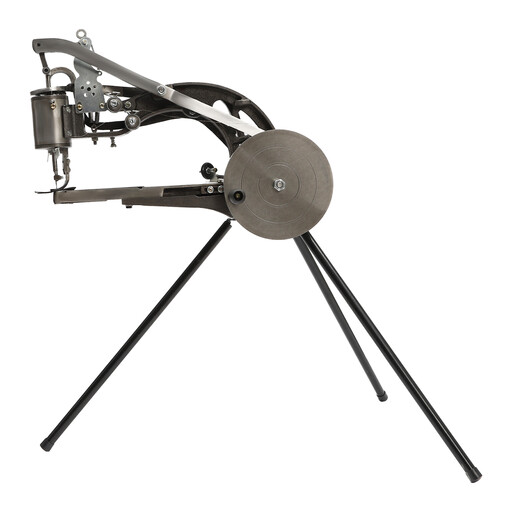 No image available
This hand-operated specialist machine is a niche option for canvas and changing sewing directions, but it isn’t a standard electric domestic sewing machine.
The product name specifies a 6 mm stitch length and a head that rotates 360°.
 No image available
The portable mini design may suit simple sewing tasks in a small workspace.
According to the description, it has one fixed stitch type and length, and doesn’t have a reverse stitch function.
 No image available
This portable mini model is designed for small sewing and craft projects. The reverse stitch function may come in handy for reinforcing seams.
The product description lists 12 stitch patterns, a choice of speeds and reverse sewing.
 No image available
Described as a portable model for smaller sewing projects; its stated fabric thickness limit is particularly important when working with sturdy basket layers.
The product details list 12 stitch programmes, two speeds, and forward and reverse sewing.
The maximum material thickness is 2.5 mm, according to the description. The claim of up to six layers specifically refers to lightweight denim.
An overlocker isn’t the obvious choice as your only machine for this project: TÜV SÜD describes it primarily as a machine for cutting and finishing fabric edges at the same time. Plan to use a domestic sewing machine for the seams needed to join and topstitch the basket.
SCHMETZ lists the Jeans Needle 130/705 H-J for sturdy fabrics such as canvas, twill and denim. Check which needle system your machine requires, then test the needle and thread with the actual fabric layers you’ll be using.
For consumer purchases in Germany, statutory rights generally apply against the seller. The Verbraucherzentrale gives a period of two years from delivery and distinguishes this from an additional guarantee. Changes to repair law that have applied since 31 July 2026 have their own requirements; you shouldn’t assume that sewing machines are covered by a specific right to repair against the manufacturer.
CE marking isn’t an independent quality mark, nor does it mean that a product was made in the European Economic Area. According to the European Commission, it’s only required for products covered by relevant harmonised EU rules that expressly require it. Check the details for the specific offer and model.
The German Environment Agency advises against putting waste electrical equipment in household waste, packaging waste, bulky waste or scrap metal. Find out about separate collection and local take-back options.