For simple glasses cases, a straightforward domestic sewing machine is often enough. What matters is whether you can guide the fabric layers and sew narrow seams comfortably. If you’re using a firm outer fabric, lining or wadding, test the needle, presser-foot clearance and feed on a sample using your thickest seam. If you’ll be sewing lots of corners, speed control can make the machine easier to handle. And if your sewing space is small, make sure you have room to work and store the machine.
Which machine is right for you?
Beginners with limited space
If you’d like to sew simple fabric cases now and again, clear basic settings and a suitable place to set up and store your machine are important. TÜV SÜD highlights ease of use and basic stitch types as key features for beginners.
Cases with multiple or padded layers
When you’re working with a firm outer fabric, lining and wadding, the key question is how the needle and feed handle the thickest part of the seam. A glasses case sewing example on the BERNINA blog uses outer fabric, lining and wadding; SCHMETZ also recommends jeans needles for thick bag seams.
Lots of short seams and corners
If you sew small cases frequently, adjustable speed and a needle-stop position can make it easier to guide your fabric and turn at corners. Brother lists these features for the Innov-is A16.
What should you look for when buying?
Clear, basic functions are often enough for occasional case-making. If you’ll be sewing lots of corners, speed control can help, while a test seam is the best way to assess how a machine handles padded layers.
| What matters |
What to check before buying |
Who should pay particular attention? |
| Seams with multiple layers |
Test the thickest seam you plan to sew using fabric scraps. Check the needle, presser-foot clearance and feed on the specific model. |
If I’m combining a firm outer fabric, lining or wadding, I want to know whether the machine can guide the thickest part reliably. Around 36% of consumers prioritise the machine’s ability to handle multiple layers. |
| Set-up and storage space |
Measure the table space, the room needed to guide the fabric and the intended storage area. |
If my sewing space is small, I need room beside the machine for the case while I’m sewing. Around 27% of consumers focus above all on whether the machine and work surface will fit in the available space. |
| Short seams and corners |
Check whether the exact model variant has speed control and a needle-stop function, then try them out on a sample. |
If I often sew short seams and turn at tight corners, I want good control over the speed and needle position. Around 27% of consumers prioritise this level of control. |
| Purchase and support |
Check what’s included, which spare parts are available and the terms of any extended warranty for the specific variant. |
If I only sew a case occasionally, ease of use and reliable support matter more to me than extra features. Around 10% of consumers put cost and service first. |
Common buying misconceptions
-
“Heavy duty” or a high stitch count means it’s suitable for every case
Manufacturer details about motor power or stitch count don’t tell you how a particular combination of outer fabric, lining and wadding will feed through the thickest part of a seam.
Sew a sample using the materials you plan to use, and test the needle, presser foot and feed on the specific model.
Depending on the fabric, you may also need a suitable needle or presser foot. Check what’s included before you buy.
-
Only the machine’s width matters when you have a small sewing space
Even a compact machine needs room for you to guide the fabric. An extension table can also change how much work surface you need.
Measure the table, including the space in front of and behind the needle, as well as the intended storage area.
-
An overlocker is always a substitute for a domestic sewing machine
TÜV SÜD says an overlocker’s main purpose is to cut and neaten fabric edges at the same time. That doesn’t automatically cover every sewing step in a case pattern.
Check each sewing step in your pattern before choosing an overlocker as your only machine.
If other steps require a different machine, you may need to buy an additional one.
Brands and suitable models at a glance
The notes below refer to the named models and their stated features. To find out whether a model is right for your case, test it with the combination of materials you plan to use.
W6 Wertarbeit
The mechanical N 1235/61 is an option if you want to adjust the basic settings yourself and sew simple cases from time to time.
- W6 lists adjustable stitch length and width, as well as a needle threader, for this model.
- These features don’t prove that every combination of fabric, lining and wadding will work at a thick seam. Test your materials first.
Brother
The electronic Innov-is A16 is worth considering if you’d like adjustable speed and a choice of needle position for short seams.
- Brother lists a speed controller and a button to set the needle to the up or down position for this model.
- Regardless of these features, you should test the machine on a sample using your specific combination of outer fabric, wadding and lining.
Janome
The mechanical Sewist 25S is worth a look if your cases use different types of fabric and multiple layers.
- Janome lists adjustable presser-foot pressure and extra-high presser-foot lift for this model.
- These features don’t tell you the maximum thickness of material the machine can sew in a finished case. Test your thickest planned seam.
Singer
The Heavy Duty 4423 is an option to consider for projects using firm outer fabric.
- Singer lists 23 stitch programmes and a speed of 1,100 stitches per minute for this model.
- The stated speed doesn’t prove that sewing at a high speed will help you make small cases accurately.
Bernina
The B 325 (Gen. 2) may suit a small sewing space if you need an extra surface to support your fabric.
- Bernina describes the B 325 (Gen. 2) as including an extension table and a narrow free arm.
- Measure the space needed, including the extension table, and check the model designation to make sure you don’t confuse Gen. 2 with Gen. 1.
Joybuy products for small sewing projects
The models below range from hand-operated machines for leather and canvas to portable and compact sewing machines. For glasses cases, pay particular attention to the stated material thickness and test your thickest seam using your own fabrics.
 No image available
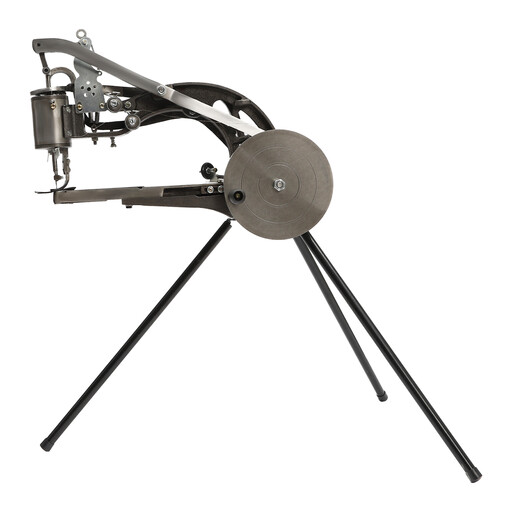
Hand-operated leather sewing machine, stitch length up to 6 mm
According to the product description, this machine is designed for leather and canvas projects. Check whether it’s suitable for your case material and narrow seams.
Hand crank and 360° rotating head. The product description states that it handles material up to 5 mm thick and has a stitch length of up to 6 mm.
View at Joybuy
 No image available
Electric sewing machine for beginners, 12 stitch patterns
The two speed settings and the option to use a foot pedal or hand switch may be useful for short sewing jobs. Try guiding your own glasses case through the machine.
The product description lists forward and reverse sewing, as well as an LED light. It says the machine can sew up to six layers of lightweight denim, while also giving a maximum material thickness of 2.5 mm. Test your specific fabric combination with a sample seam.
View at Joybuy
 No image available
Portable sewing machine, 12 stitch patterns, pink
This portable model may suit a small sewing space. Measure the space you have available first, and check whether the machine can handle your case seams.
According to the product description, the machine measures approximately 28 × 12 × 24 cm. It also lists two speed settings, an LED light and a needle threader.
View at Joybuy
 No image available
IAGREEA YASM-505A mini sewing machine, purple
This machine is described as portable and may be suitable for simple case seams. Try it out on a sample to see whether its features suit your pattern.
The product title lists 12 built-in stitches and reverse sewing.
View at Joybuy
 No image available
IAGREEA portable mechanical sewing machine, 6 V, 1 A
The fixed straight stitch may work for simple straight seams, provided your case pattern doesn’t require any other stitch types.
According to the product description, there’s no reverse stitch and the stitch width and length can’t be adjusted. The product title lists mains or four AA batteries as power options, as well as a foot pedal.
View at Joybuy
Frequently asked questions
Do I need lots of decorative stitches for a glasses case?
Not necessarily. Start by considering the fabric layers, the basic seams you need and how easy the machine is to use. Decorative stitches matter if you’d like to use them to personalise your case.
Which needle is suitable for firm outer fabric?
SCHMETZ recommends a jeans needle for thick bag seams too. Choose a needle to suit your fabric, thread and machine, and test the specific seam using your materials.
What should I look for when making a case with lining and wadding?
Test the thickest part using the materials you’ll actually be sewing with. A higher presser-foot lift and adjustable presser-foot pressure are features worth checking, but they don’t guarantee that every combination of materials will work.
When buying in Germany, what’s the difference between a warranty and your statutory rights for faulty goods?
An additional manufacturer’s warranty is offered alongside your statutory rights for faulty goods and is subject to its specific terms. For ordinary goods, claims for defects generally become time-barred two years after delivery under § 438 BGB; § 439 BGB covers remedies including subsequent performance.
What does the CE marking on an electric sewing machine mean?
By affixing the CE marking, the manufacturer declares that the product meets the relevant EU requirements. It isn’t an official endorsement of sewing results. The regulations that apply depend on the machine’s electrical specifications. For example, the Low Voltage Directive covers equipment with a rated voltage of 50 to 1,000 V AC or 75 to 1,500 V DC; Your Europe explains manufacturers’ responsibilities for CE marking.


