What should you look for when buying?
When making multi-layer shoe bags, your test seam should replicate the actual materials, including seam allowances and the thickest junction. This lets you choose a machine for the job at hand rather than relying on a general label such as “Heavy Duty”.
| Consideration |
What to check when buying |
Who should consider this? |
| Bulky seam junctions |
Sew a test seam using the full layer build-up at the thickest junction; check the needle system and needle size against your machine’s instructions. SCHMETZ lists its Jeans needle 130/705 H-J for firm fabrics such as canvas. |
If my main priority is sewing the thickest junction reliably, I check that exact material build-up; around 36% of consumers focus first on whether the machine can handle seam points like these. |
| Even feeding of multiple layers |
Check whether the presser-foot pressure is adjustable and whether a walking foot you want is explicitly compatible with the model. JANOME Deutschland GmbH lists these feet as accessories for certain models. |
If the outer fabric and lining might shift against each other while sewing, even feeding of both layers matters to me; around 29% of consumers put this first. |
| Short seams and corners |
Check the specific model for a speed controller and a selectable needle position when stopping. Brother describes a speed controller and a needle-stop button for the Innov-is A16. |
When sewing short sections and turning at corners, I want to be able to control the speed easily; around 21% of consumers prioritise this handling. |
| Accessories and ongoing costs |
Check what is included, which needle system is approved and whether any additional presser foot you might need is compatible before choosing a model. |
If I want to keep the accessories I need to a minimum, I compare what is included and what I might need to buy separately; around 14% of consumers give this consideration top priority. |
Sewing machines at Joybuy
The selection includes a hand-operated machine for leather and canvas, as well as compact electric domestic models. For the electric models, pay particular attention to the stated material thickness they can handle for your project, and always check suitability with a test seam.
 No image available
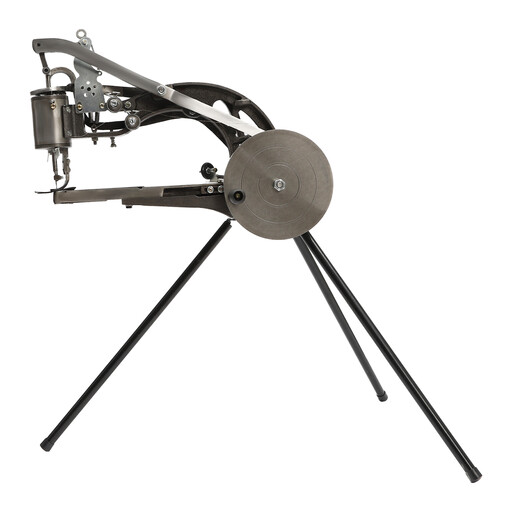
Hand-operated leather sewing machine with a 6 mm stitch length
The product description lists leather, canvas, shoes and bags as suitable uses; check the machine against the actual material build-up of your bag.
Features listed include a stitch length of up to 6 mm, a head that adjusts through 360° and material thicknesses of 3–5 mm. The description says the hand crank allows you to control the speed manually.
View at Joybuy
 No image available
Compact sewing machine with 12 stitch programmes
The product description lists easy operation and two speed settings. These may be useful when guiding short seams, but say nothing about the thickest seam junction in your bag.
The title lists 12 stitch programmes, Dual Power, an LED light and accessories. The description lists denim as a fabric it can handle, and mentions a foot pedal or button start.
View at Joybuy
 No image available
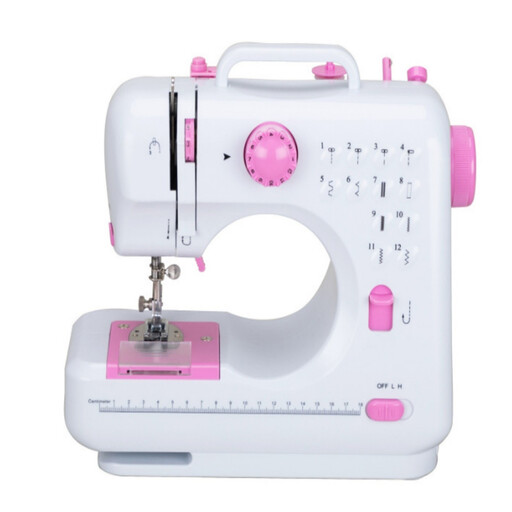
IAGREEA mini sewing machine with 12 stitch patterns
For short seams, the product description lists a switch between low and high speed. It gives hems and jeans as examples of suitable uses; test whether your material build-up is suitable first.
Features listed include 12 stitch patterns, two speed settings and an LED light.
View at Joybuy
 No image available
IAGREEA mechanical domestic sewing machine, 6 V, 1 A
The product description lists basic sewing jobs around the home and two speed settings. Test the thickest section before choosing this model for multi-layer bags.
The title says it can run from the mains or on 4 AA batteries; a foot pedal, two bobbin cases, a spare needle and a needle threader are also listed.
View at Joybuy
 No image available
Beginner sewing machine with 12 stitch programmes
The stated material limit is important when choosing: the product description says it can sew up to six layers of lightweight denim, but limits material thickness to 2.5 mm. This does not prove it is suitable for every bulky seam junction.
Features listed include 12 stitch programmes, two speeds, forward and reverse sewing, and foot-pedal and hand operation.
View at Joybuy
Frequently asked questions
Which needle should I consider for a shoe bag made from sturdy canvas?
Check whether a Jeans needle is suitable for your fabric and machine. Ferd. SCHMETZ GmbH lists canvas and thick bag seams as suitable uses for the Jeans needle 130/705 H-J, and offers it in various sizes. The right size depends on the fabric and thread; you should also follow the approved needle system for your machine.
Do I need to buy a walking foot straight away for sewing multiple layers?
Not necessarily. If the layers shift against each other during a test seam, a walking foot that is explicitly compatible with your machine may be worth considering. JANOME Deutschland GmbH describes its use for multiple layers of different materials and surface textures, and lists compatible feet as optional accessories for certain models.
How should I care for my sewing machine if I use it often?
Remove lint, and clean or oil the machine only as instructed in your model’s manual. In its sewing guide, Bernina recommends regular cleaning and refers users to the relevant instruction manual for oiling; this does not establish a single maintenance schedule for all machines.
Who is responsible if a fault develops after purchase in Germany?
The seller is generally responsible for statutory liability for defects. Under § 438 BGB, the standard limitation period for claims relating to defects in goods is two years from delivery. § 439 BGB covers repair or replacement as subsequent performance, along with the associated costs. An additional manufacturer’s warranty is voluntary and has its own terms; the Federal Ministry of Justice and the Federal Office of Justice provide the relevant legislation.
What should I look for to check the safety of an electric sewing machine?
Check the product’s identity and the manufacturer’s information, and look for instructions in German that include safety warnings. Also look for a CE mark if one is required for the specific appliance under the relevant EU regulations. The Federal Network Agency refers to this information as part of its market surveillance; the European Union explains that CE is a manufacturer’s declaration, not an independent quality mark.


