Anyone sewing thick tool-roll seams
If you work with sturdy fabrics, pockets and multiple folded layers, a test seam at the thickest junction matters more than a large number of decorative stitches.


Choose a machine based first on the thickest seam junction on your tool roll, then on how easy its settings are for your team to use. A straightforward mechanical domestic sewing machine may be enough for basic seams; adjustable speed and presser foot pressure offer extra control, but everyone will need to learn how to use them. If you have lots of long straight seams to sew, a specialist straight-stitch machine may be worth considering, but it won’t replace a versatile domestic sewing machine.
If you work with sturdy fabrics, pockets and multiple folded layers, a test seam at the thickest junction matters more than a large number of decorative stitches.
If several people with different levels of sewing experience use the same machine, easy-to-reach controls, settings that are simple to understand and a shared induction are important.
If you sew lots of long seams, weigh up the work surface, controllable speed and maintenance requirements against the machine’s versatility.
First decide how your seams will be constructed and which stitch types you need. Then check that the controls and speed will suit everyone who’ll use the machine. If you regularly sew long straight seams, a specialist machine may be an option if you can do without other utility stitches.
| Consideration | What to check when buying | Who it matters most to |
|---|---|---|
| Feeding fabric over thick junctions | Use your own fabric, interfacing and folded edges to sew a test seam at the thickest junction; check that the needle system is suitable. | If I’m sewing several layers together at an edge, I want to see how the machine feeds that exact combination. Around 36% of consumers put thick junctions at the top of their list. |
| Ease of use for a team | Try selecting stitches, adjusting the speed, reverse sewing and changing the needle with several users; agree and record the basic settings together. | When different people use the machine, I want to be able to adjust the settings easily and find them again after someone else has used it. Around 29% of consumers prioritise controls that are easy for the whole team to understand. |
| Fabric handling and precision | Guide the roll at the intended workstation and test slow sewing around corners; assess the work surface and clearance separately. | When I sew longer sections of a roll, I need enough room to guide the fabric and a speed that lets me control the corners. Around 21% of consumers prioritise fabric handling and precision. |
| Maintenance and accessories | Check the needle system, compatible presser feet, what’s included and how to get servicing for the exact model; follow the relevant instruction manual. | Before the team starts using the machine, I want to know which consumables and maintenance tasks apply to that specific model. Around 14% of consumers put maintenance, accessories and ongoing costs at the top of their list. |
Depending on how they’re constructed, sturdy fabrics and tool rolls can have seam junctions of varying thickness. A general claim about suitable materials or a high stitch count doesn’t prove that the machine can feed the exact layers you plan to sew.
Sew the thickest junction you expect to encounter using your own materials and a suitable needle that’s compatible with the model. Don’t decide based on motor or programme specifications alone.
Unsuitable needles and extra material testing can lead to additional sourcing and coordination work.
W6 says that the extension table for the N 3300 Pro and N 5000 Pro increases the sewing surface, but does not change the maximum clearance.
Try guiding the roll at your fully set-up workstation, and assess the work surface and clearance separately.
The Janome HD9 PROFESSIONAL uses HLx5 needles; a SCHMETZ Jeans needle for domestic sewing machines is listed as system 130/705 H-J. So check compatibility with the specific model rather than choosing by fabric type alone.
Keep a separate list of compatible needles, bobbins and presser feet for each model.
Depending on the model, you may need separate needles or presser feet, so plan your accessory purchases accordingly.
The mechanical N 1235/61 and computerised N 3300 Pro suit different preferences, so compare them based on the features of each model.
The mechanical Sarah is an option for teams that mainly need basic seams and functions that can be adjusted directly.
Singer specifically describes the mechanical Heavy Duty 4423 as suitable for working with denim and canvas.
The 1522 LIMITED EDITION is a domestic sewing machine, while the HD9 PROFESSIONAL is designed for straight-stitch sewing.
Joybuy product selection for manually controlled sewing with sturdy materials such as canvas.
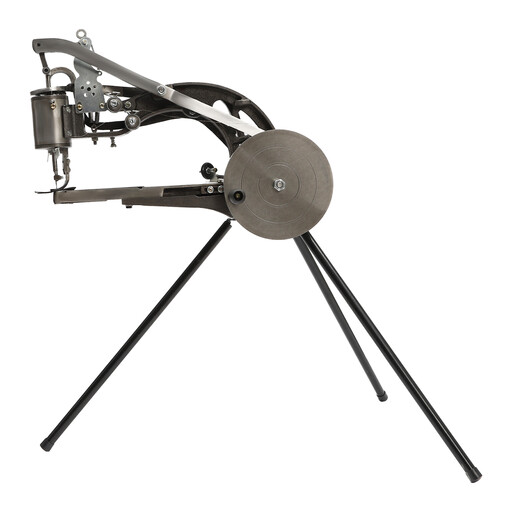 No image available
According to the product description, the hand crank lets you control the speed manually. Before buying, check that the design and accessories are suitable for the seams on your tool roll.
The product title specifies a stitch length of 6 mm, material thicknesses of 3–5 mm and a head that rotates through 360°.
SCHMETZ lists canvas and sailcloth as suitable fabrics for its Jeans needle 130/705 H-J. Choose a needle size to suit your fabric and thread, and check your machine’s needle system first; the Janome HD9 PROFESSIONAL uses HLx5.
Don’t plan to use an overlocker as the only machine for the whole project: TÜV SÜD describes its main use as neatening and trimming edges at the same time. For pockets, topstitching and fastening points, check that you have a suitable standard sewing machine.
For the VERITAS Sarah, the model’s instruction manual says to switch off the machine before changing the needle or presser foot, and to unplug it before maintenance and whenever leaving it unattended. Agree responsibilities as a team and follow the relevant instructions for other models.
Not simply because the workshop is shared. The DGUV states that company management must carry out a risk assessment if the workshop operates as a business. The operator must establish whether this applies to your workshop.
For a consumer purchase, your statutory rights against the seller are separate from any voluntary guarantee; if there’s a fault, the first step is for the seller to put things right. If the machine is bought by a commercial workshop operator, you shouldn’t assume that consumer rights apply without checking.