
Same-day & Next-day Delivery

Quality Guaranteed

Unlock Your Welcome Offers: FREE Delivery | Up to 80% OFF | Free 30-day JoyPlus trial
Download the APP
Coloured, highlighted or bleached hair does not automatically require a particularly expensive product. What matters is whether the shampoo for colour-treated hair suits your hair’s current condition and the type of care you want. A colour-protecting shampoo can make cleansing gentler, while a silver shampoo is designed specifically to visually balance out warm tones. However, these two types of product serve different purposes.
If you focus only on terms such as “Colour Save”, “professional” or “long-lasting hair colour”, you can easily overlook important details. The following criteria will help you assess marketing claims and choose a suitable product.
A classic colour-protecting shampoo is designed for coloured hair and aims to incorporate hair washing into your care routine as gently as possible. A silver shampoo, on the other hand, contains violet or blue pigments. On bleached, white or grey hair, these can visually neutralise warm yellow or orange tones.
A shampoo designed to prevent colour fading does not automatically replace a silver shampoo. If you have brown, red or copper-coloured hair, you generally do not need violet pigments. For these hair colours, cleansing and conditioning formulations without tint are often the more suitable choice.
A sulfate-free shampoo for colour-treated hair may appeal to people who prefer particularly gentle cleansing. However, sulfates are not inherently unsuitable. The specific formulation is what matters in the ingredients list: some products containing Sodium Laureth Sulfate or Sodium Lauryl Sulfate cleanse more intensively, while other formulations use surfactants such as Sodium Cocoyl Isethionate, glucosides or sulfosuccinates.
Very intensive cleansing can feel uncomfortable on dry or porous hair. At the same time, people with a scalp that becomes greasy quickly may need a product that removes residue more thoroughly. Your own washing routine is therefore more important than a single buzzword on the front of the bottle.
Silicone-free formulations may appeal to users who want to avoid certain ingredients. Silicones, on the other hand, can spread over the surface of the hair and make it easier to comb. For stressed, colour-treated hair, you should therefore not decide based solely on the term “silicone-free”. More important factors include the combination of surfactants, humectants and conditioning polymers, as well as whether you use a conditioner afterwards.
For bleached, white or grey hair, violet pigments such as those found in a silver shampoo are relevant. According to the product description, SWISS-O-PAR Silver Shampoo is intended for bleached or grey hair and contains a violet active ingredient to neutralise unwanted yellow tones. The recommended leave-in time is 1 to 3 minutes; it is intended for use once or twice a week, or as required.
If your hair is sensitive or very porous, it is advisable to start with a short leave-in time on an inconspicuous strand. Pigmented products can work differently depending on your starting colour and hair structure. If the product comes into contact with your eyes, follow the relevant safety instructions.
The first positions in the INCI list indicate which cleansing substances are present in the greatest quantities. If you are looking for a gentle shampoo for stressed, colour-treated hair, you can look for surfactant combinations containing, for example, Sodium Cocoyl Isethionate, Disodium Laureth Sulfosuccinate or Decyl Glucoside. This is not proof of quality on its own, but it can make it easier to narrow down your options.
Ingredients such as glycerin, panthenol and conditioning polymers may also be worth looking for if your hair feels dry or difficult to comb after washing. People with known intolerances should check fragrances and fragrance allergens that must be declared. The ingredients list on the packaging supplied with your order is always the decisive reference, as formulations can change.
A 1,000-ml bottle may look attractively priced at first glance, but it is not practical for every household. If you wash your hair infrequently or have short hair, a smaller pack may be more suitable. Travel sizes such as 70 ml are ideal for trying a product or taking it with you, without buying a large quantity straight away.
With a silver shampoo, how often you use it is also important. It is generally not needed for every wash. A regular colour-protecting shampoo can handle daily or regular cleansing, while the pigmented product is used only as a supplement.
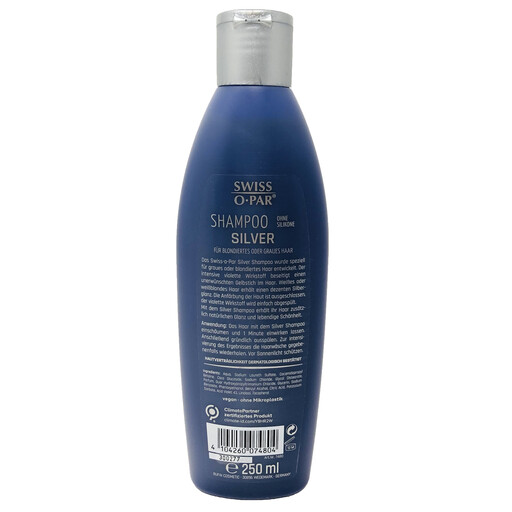
Why this product suits this profile: A manageable 250-ml size for bleached, white or grey hair when you want to specifically reduce yellow tones.
The product description specifies the intended hair type, pigment effect and a precise leave-in time, rather than claiming general suitability for every colour treatment.
Violet active ingredient, silicone-free formulation and use once or twice a week according to the product information.
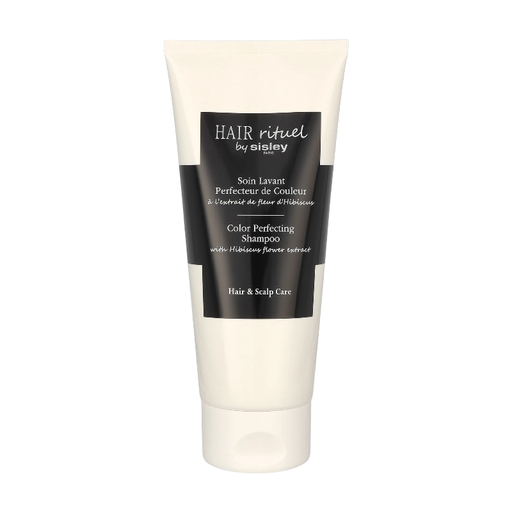
Why this product suits this profile: Suitable for coloured and highlighted hair when you want more than cleansing and are looking for a well-conditioned feel.
The product description specifically mentions coloured and highlighted hair. The INCI list is provided so you can check your personal tolerance.
200-ml size, hibiscus flower extract according to the product description, and a formulation containing several conditioning ingredients.
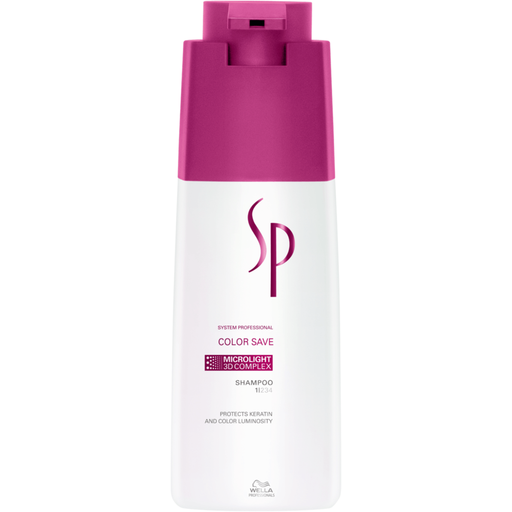
Why this product suits this profile: The 1,000-ml bottle is aimed at households that wash their hair regularly, or at people who prefer to buy in bulk.
The large quantity is clearly stated. This makes it possible to compare the price per 100 ml with smaller packs, rather than looking only at the bottle price.
1,000 ml contents, intended for coloured hair and regular use according to the product information.
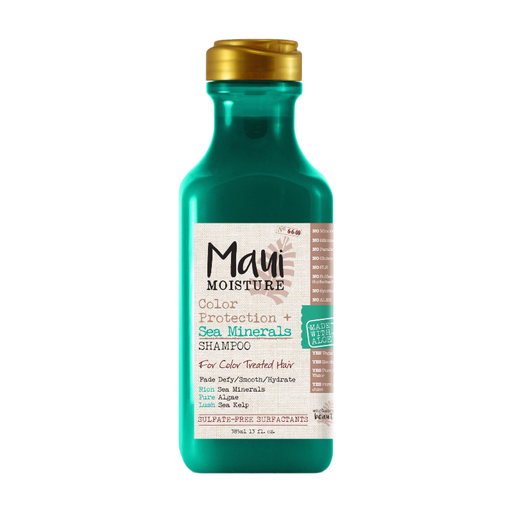
Why this product suits this profile: The product description states that it has a vegan, silicone-free and SLS-sulfate-free formulation for coloured hair.
The product information explicitly lists key exclusions such as silicones, parabens, sulfates and gluten.
Vegan and free from silicones, parabens, sulfates and gluten according to the product description; with algae and sea minerals.
We have put together a complete, regularly updated list of products that fully meet these strict selection criteria and the safety regulations applicable in the EU.
This depends on your scalp, hair length and styling routine. A regular colour-protecting shampoo can be used whenever you need to wash your hair, provided the packaging does not state otherwise. A silver shampoo is generally used less often, for example once or twice a week or as required. If your hair is dry, it may be sensible not to shorten the intervals between washes unnecessarily.
A colour-protecting shampoo may be suitable for everyday cleansing. To tackle unwanted yellow tones, a violet-pigmented silver shampoo is the more appropriate product category. Its effect depends on your starting colour, hair porosity and leave-in time. If your hair is severely stressed, you should also take care to follow up with a conditioning treatment.
A shampoo cannot preserve hair colour indefinitely. How long the colour lasts and how it changes are influenced by factors including washing frequency, UV radiation, heat, water quality and the colour treatment used. Claims about how long the result will last should therefore always be viewed as product information provided by the manufacturer, rather than a general guarantee for every hair type.