
Lieferung heute & morgen

Qualitätsgarantie

Willkommens-Angebote freischalten: KOSTENLOSE Lieferung | Bis zu 80 % RABATT | Kostenlose 30-Tage-JoyPlus-Testphase
App herunterladen
A women’s shapewear bodysuit can create a smoother silhouette under dresses, blouses or figure-hugging trousers. To avoid ending up with an unworn garment, however, you should consider more than just the colour and vague “tummy-control” promises. The key factors are the cut, size specifications, pressure distribution, fastening and intended use.
A tummy-control bodysuit that is too small can dig in, feel uncomfortable when sitting or show at the edges. There is also a risk that the fabric will shift upwards or downwards. The correct size should therefore be selected using the size chart for the specific model. For measurements between two sizes, the available product information recommends ordering the larger size.
A seamless shaping bodysuit reduces visible edges, but the neckline, straps, leg openings and fastening may still show beneath thin fabrics. For close-fitting clothing, a thong cut, flat edges and a neckline that matches the outer garment are important.
A highly elastic fabric may initially feel comfortable. Without sufficient shaping zones for the stomach, waist, buttocks or thighs, however, the effect may be uneven. Pay attention to which areas of the body are actually addressed in the product description. A butt-lifting bodysuit with a mid-thigh leg, for example, uses a different construction concept from a lightweight thong bodysuit.
For a shaping bodysuit, waist and hip measurements are usually more informative than dress size alone. Check the following:
Especially with plus-size shapewear, the fabric must provide sufficient length through the torso as well as enough width. Otherwise, the crotch fastening may create uncomfortable pressure.
The product data for the models featured here primarily lists nylon and spandex. These fibres are associated with elastic, body-hugging constructions. Nevertheless, the exact specifications should be read carefully: On some listings, the percentages vary or do not add up to a complete material composition. The final product labelling and care label should therefore be treated as authoritative.
The following differences are particularly relevant when choosing a model:
A V-neck bodysuit is often well suited to blouses, wrap dresses or tops with a plunging neckline. A round-neck style is easier to wear under high-neck clothing. Adjustable spaghetti straps can help reduce shifting.
For the crotch fastening, the number and placement of the snaps are important. A simple fastening makes bathroom visits easier. On lace styles, a multi-snap closure may provide additional support. Also check whether the fastening lies flat beneath clothing.
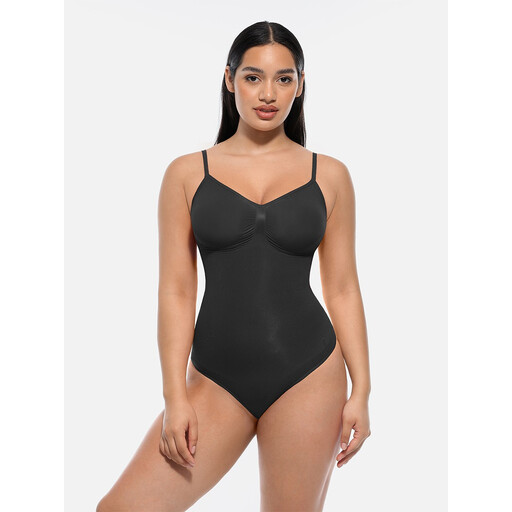
Why is this model a good fit? The lightweight, seamless tank-style construction is well suited to customers looking for an easy everyday introduction to black shapewear.
The size selection is based on waist and hip measurements. The thong cut minimises visible lines beneath close-fitting clothing.
77% nylon and 23% spandex according to the product information, a lightweight seamless construction and a snap crotch fastening.
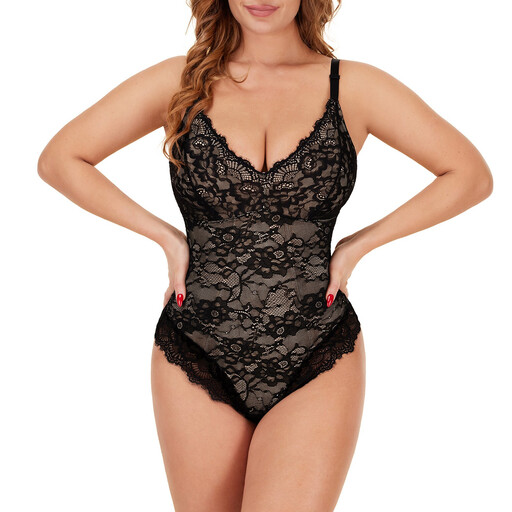
Why is this model a good fit? This lace bodysuit combines a V-neckline with adjustable straps and can be worn as lingerie or as a visible layering piece.
The design is clearly specified: V-neckline, adjustable straps and a fastening with 11 snaps. This makes it easier to assess how and where the bodysuit can be worn.
Outer material consisting of 87% nylon and 13% spandex according to the product description, a lining with its own material specification and scalloped lace edges.
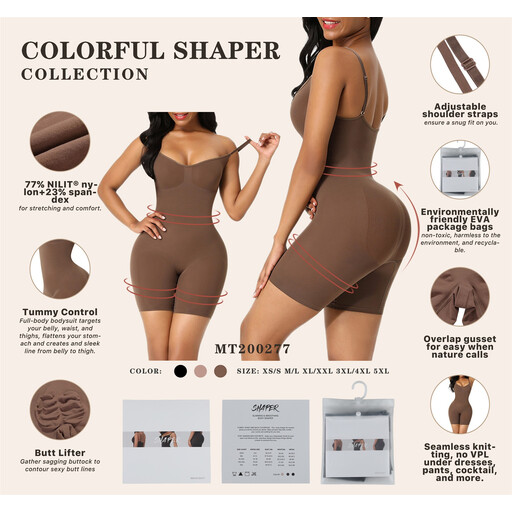
Why is this model a good fit? The mid-thigh leg and broader size range appeal to customers who want to smooth the stomach, hips and thighs beneath dresses or skirts.
Coverage to mid-thigh explicitly addresses the leg area. For measurements between two sizes, the larger option is recommended.
Seamless construction, adjustable spaghetti straps and a crossover crotch area according to the product description.

Why is this model a good fit? The plunging V-neckline and U-shaped back are designed for tops, dresses and layered looks with a lower neckline.
The neckline, back shape, unpadded cups and snaps are clearly specified. This makes it easier to check whether the bodysuit will work with the intended garment.
Stretch tulle panels at the stomach and back, unpadded cups, a cotton gusset and snap fastening according to the product description.
The durability of a shaping bodysuit depends largely on care, frequency of wear and mechanical stress. Hand washing is recommended for the FeelinGirl models mentioned above. Based on these instructions, avoid dry cleaning, ironing, bleaching and tumble drying. Gently reshape the bodysuit and leave it to air-dry flat.
Before wearing it for an extended period, it is advisable to try it on briefly with the intended outfit. Check for:
If you have sensitive skin or experience discomfort, stop wearing the garment. Shapewear is not a substitute for medical care and should not be marketed or used with claims of health-related effects.
The category features an ever-expanding selection of figure-enhancing styles organised by cut, size, colour and intended use.
A skin-tone shaping bodysuit may be less visible beneath light fabrics than black shapewear. However, the weight and opacity of the top’s fabric also matter. Under dark clothing, a black bodysuit is usually easier to style.
The bodysuit should lie close to the body without causing pronounced pressure points or restricting breathing or movement. If the fabric rolls up or the crotch fastening pulls tightly, the size or torso length may be unsuitable. Always use the product-specific size chart.
First and foremost, follow the care label. Hand washing is recommended for the models mentioned above. Afterwards, gently reshape the bodysuit and allow it to air-dry. Heat, bleach and direct contact with an iron can damage elastic fibres and lace materials.