People preparing materials at a quiet shared desk
You prepare materials alongside other people and want to keep clicking noise to a minimum without compromising on everyday usability.


When choosing a mouse for a shared desk, first check that it connects to the computer you’ll actually use, consider how loud its clicks are, and think about how it fits your hand. If you often switch computers, make sure the connection options are compatible. For longer sessions, choose a shape that suits the person using it. A mouse designed specifically for one hand won’t necessarily suit everyone.
You prepare materials alongside other people and want to keep clicking noise to a minimum without compromising on everyday usability.
You use different computers for schedules, presentations or materials, so you need a connection that suits each workstation.
You work on documents for extended periods and want a mouse whose size and shape suit your hand and the layout of your desk. The Federal Institute for Occupational Safety and Health (BAuA) recommends leaving enough space to position the mouse and keyboard flexibly.
A good choice if: you use a fixed computer with a suitable free USB port and prefer a direct connection.
The trade-off: The cable limits how freely you can position the mouse. CHERRY notes that glass and reflective surfaces are unsuitable for the MC 2000.
A good choice if: you switch between computers with different connection options and can connect the mouse via Bluetooth or a compatible USB receiver. CHERRY lists both connection types for the MW 9100.
The trade-off: Check whether each computer has Bluetooth or a suitable USB port, and whether charging or pairing steps fit into your routine.
| Criteria | What to look for | Who will find this most important? |
|---|---|---|
| Click noise | Check the manufacturer’s claims about quiet clicks and the specific model. | If I click frequently while preparing materials, I want to disturb others at the desk as little as possible; around 33% of consumers put quiet clicks first. |
| Computer connection | Check Bluetooth, compatible USB ports, the receiver and any power requirements. | If I switch between computers, the connection needs to work with every workstation I use; around 27% of consumers give switching between computers top priority. |
| Fit for your hand | Check the mouse’s shape against your hand size and which hand you use; allow enough space for the mouse and keyboard. | For longer document sessions, I want a mouse that suits my hand; around 20% of consumers put a personalised fit first. |
| Different users’ dominant hands | Consider whether the mouse will be shared or brought in for personal use, and whether an ambidextrous shape is needed. | If people who use different hands share the same desk, the shape shouldn’t exclude anyone; around 20% of consumers place the greatest importance on a mouse that works for different dominant hands. |
Having several connection options doesn’t automatically mean Bluetooth pairing or a USB receiver will be available on every shared computer.
Before buying, check the ports and which pairing options are allowed at the workstation.
Switching computers may mean extra pairing steps or having to carry the receiver with you.
The Logitech Lift is described as suitable for small to medium-sized hands; other models are designed specifically for left-handed users. A shape like this won’t necessarily suit everyone at the desk.
If you’ll be using it personally, choose a mouse that suits your own hand. If it will be shared, consider users’ different dominant hands and hand sizes.
A wired mouse can be a straightforward option at a fixed USB workstation, but it needs room to position it and a suitable port. CHERRY says the MC 2000 isn’t suitable for glass or reflective surfaces.
Check the cable route, USB port and desk surface, just as you would check pairing and power requirements for a wireless mouse.
The product ranges mentioned include quiet everyday mice in different sizes and versions for different dominant hands, a vertical mouse and a model with extra features.
The MW 9100 is a wireless option with two connection types, while the MC 2000 is a wired alternative for a fixed USB workstation.
The HP 430 is a model to consider if you want to check multi-device use and surface compatibility.
The Pro Fit Ergo models mentioned cater for different connection and dominant-hand requirements.
The Bayo+ is a vertical wireless option if you’re looking for this style of grip and multiple connection options.
This selection includes wireless models with different connection options, as well as versions whose product names describe them as quiet or vertical. Before choosing, check that the connection and shape suit the people using the desk.
 No image available
The vertical shape may be worth considering if it suits the user’s hand.
The product title lists Bluetooth and 2.4 GHz connectivity, as well as USB-C charging. Three DPI settings are specified: 800, 1200 and 1600.
 No image available
If you need different connection options for different computers, the options listed in the title may be worth considering.
The product title lists 2.4 GHz, Bluetooth and USB-C, five programmable buttons and a charging dock. The specified DPI is 22,000.
 No image available
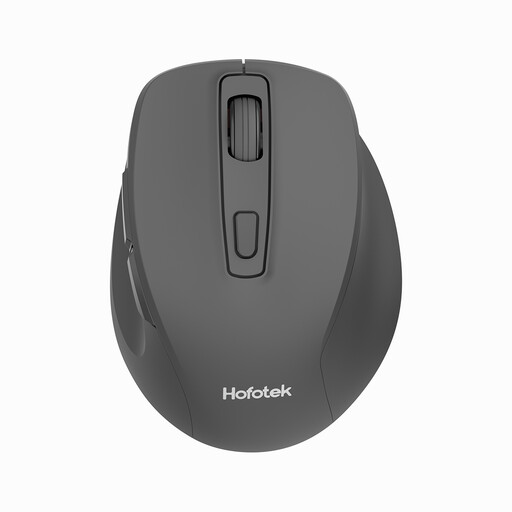
This could be an option for a shared desk if you’re looking for a quieter mouse; the product name describes it as a Silent Office Mouse.
The product title lists a 2.4 GHz connection.
 No image available
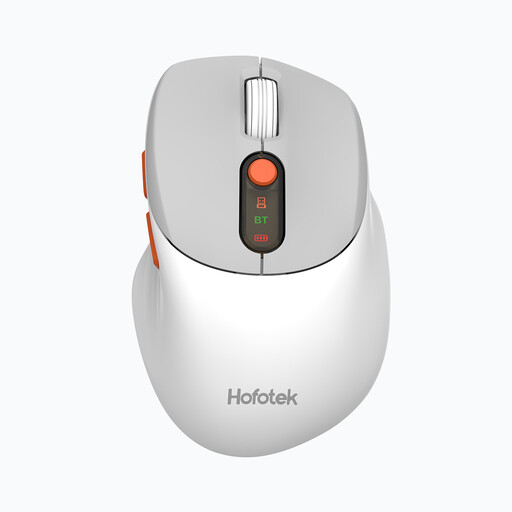
The product name describes it as a Silent Office Mouse. It may be worth considering if you’re looking for this type of mouse and its connections suit your computer.
The title lists 2.4 GHz, Bluetooth and 1 × AA as the battery specification.
 No image available
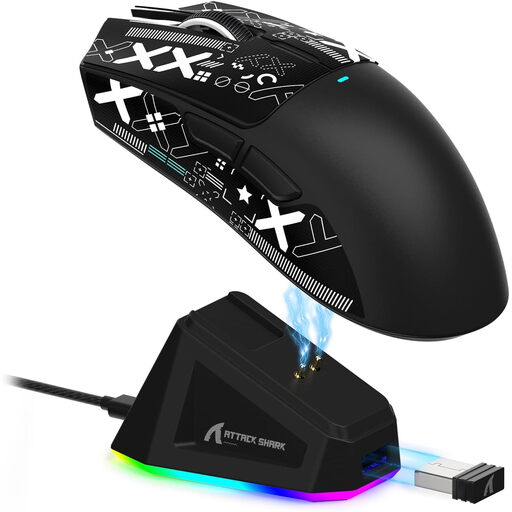
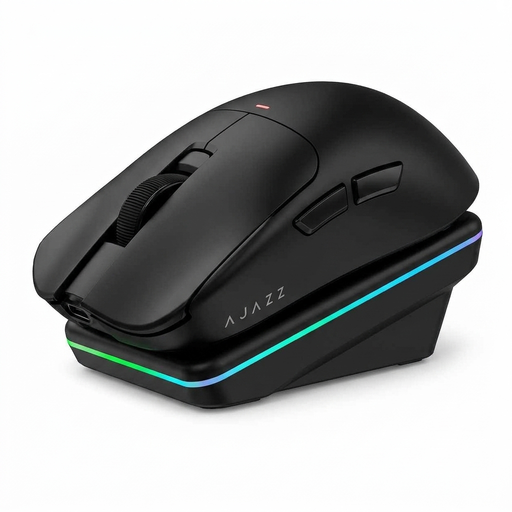
If you want to use different connection types as well as working in the office, check that the listed connections are compatible with the computers you use.
The product title lists Bluetooth, 2.4 GHz and USB-C, as well as a charging dock. The specified DPI is 24,000.
First, check the connections on the computer you’ll actually use. CHERRY lists Bluetooth and a 2.4 GHz USB receiver for the MW 9100; the CHERRY MC 2000 is wired. At a shared workstation, you should also consider which connection types are allowed and whether pairing is possible.
Leave enough space beside the keyboard to position the mouse in a way that suits your hand and arm posture. The Federal Institute for Occupational Safety and Health recommends positioning the mouse and keyboard flexibly and leaving enough room for your hand and arm. This is ergonomic guidance, not a promise that a particular model will prevent discomfort.
Agree on who will clean the mouse and follow the care instructions for the specific model and its materials. Logitech provides cleaning guidance; the tests described for selected education products don’t automatically apply to every mouse.
The European Union’s consumer information states that purchases of goods from traders are generally covered by a legal guarantee of at least two years from receipt; this is separate from any additional manufacturer’s guarantee. Online purchases generally come with a 14-day right to cancel, subject to exceptions. The information from Your Europe and the Council of the European Union relates to consumer rights; check the terms for the specific seller and purchase.
ASR A6 doesn’t impose a general requirement to choose a wireless or vertical mouse for a shared desk. The rule covers computer workstations within its scope and the design of workplaces. If you’re using a workplace provided by your employer, you can check the workstation requirements with them.