If you’re reading alone and can stay close to the microphone, a directional dynamic USB microphone is a sensible starting point. Whether it works at a shared desk is something you can only establish by recording a test there. A USB condenser microphone may be a better fit if you need to sit further away and the room is quiet enough. You’ll also need to consider level control, a practical mounting option and a connection that works with your recording device.
Who this selection is for
Reading alone at a busy desk
If you can read close to the microphone and from a fixed direction, check its orientation and try recording it in the spot where you plan to use it. Audio-Technica describes the ATR2100x-USB as having a cardioid pickup pattern, which picks up less sound from the sides and rear. This doesn’t guarantee a noise-free workspace.
Readers with wide variations in volume
For quiet and emphatic lines, it’s important to be able to adjust the input level and listen back to a test recording. Sennheiser lists a gain indicator and monitoring for the Profile USB, but you should still test your loudest passage in your usual reading position.
Readers with limited desk space
Check whether a desk stand, arm or clamp will fit alongside your text and work equipment, and whether it can be secured properly. Audio-Technica lists a table stand for the ATR2100x-USB; the RØDE PodMic USB requires a suitable mount or stand.
What to look for when buying
At a shared desk, the main things to consider are how close you can sit to the microphone, how to control louder lines, and whether the mount and connection are suitable.
| What matters |
What to check before buying |
Who should pay particular attention |
| Picking up your voice despite background noise |
Check the pickup pattern, speaking direction and achievable speaking distance; try a test recording in the intended spot. |
If I’m reading alone at a shared desk, I want my voice to come through clearly without assuming that conversations around me will be filtered out. Around 36% of consumers put speech clarity in noisy environments first. |
| Level for quiet and loud lines |
Check for gain controls or a level indicator, and headphone monitoring; test your loudest passage in advance. |
If I switch between quiet and emphatic lines, I want to control the recording level and listen back to a test recording. Around 29% of consumers prioritise level control. |
| Space for the mount |
Check the space available, the clamping point and what’s included with the specific model. |
If my text and work equipment already take up space, I need a mounting option that won’t get in the way of how I read. Around 21% of consumers put a suitable setup first. |
| Connection and setup |
Consider your recording device, the cables you need and whether you already have an interface or mixer. |
If I want to connect the microphone to my recording device, I’ll first check whether USB will work directly or whether using XLR requires extra audio equipment. Around 14% of consumers prioritise the connection type. |
Common misconceptions about microphones at a shared desk
-
‘Directional’ doesn’t mean ‘only picks up my voice’
A cardioid pickup pattern can pick up less sound from outside the speaking direction, but it won’t make a shared workspace silent. Other noises may still be audible in your recording while you’re reading.
Test the microphone while the desk is being used as usual. Don’t record other people’s private conversations without their permission: section 201 of the German Criminal Code (StGB) covers the recording of non-public speech.
-
Planning for the microphone but not how to position it
A desk stand needs clear space. If the microphone is designed for stand mounting, you’ll need a suitable stand or arm. What’s included and how it can be mounted varies by model and version.
Measure the space available or the clamping point, then compare it with what’s included with the specific version before deciding how to position it.
-
Relying on automatic processing instead of checking the levels
Quiet and loud lines put different demands on the input level. According to Audacity, clipping that has already occurred can’t be undone afterwards.
Read your loudest planned passage in advance, check the level indicator and listen back to the test recording—even if the microphone has an automatic level function.
Microphone brands to consider
Audio-Technica
The ATR2100x-USB is a specific option for close-up voice recording, with USB and XLR connections and a table stand included.
- Audio-Technica says the cardioid pickup pattern picks up less sound from the sides and rear. The listed contents include a headphone socket and two USB cables.
- The table stand takes up desk space and needs to suit the way you read. These features apply to the ATR2100x-USB, not the brand as a whole.
RØDE
The PodMic USB combines a dynamic end-address design with USB and XLR; the separate PodMic is an XLR-only option.
- RØDE lists an internal pop filter, shock mounting and a headphone output for the PodMic USB. The manufacturer recommends positioning this model close to you.
- The PodMic USB requires a suitable stand or arm. The manufacturer’s specifications don’t independently confirm how the microphones will sound at your desk.
Sennheiser
The Profile USB is a condenser alternative with a cardioid pickup pattern and a table stand included.
- Sennheiser lists a gain indicator, monitoring and USB-C.
- A test recording will show whether a greater distance and the room acoustics work for reading poetry. The pickup pattern doesn’t guarantee a quiet workspace.
Shure
The MV7+ is a USB-C/XLR microphone for voice recording, with digital processing and a headphone output.
- Shure describes Auto-Level and digital processing for background noise and plosive sounds on this model. These are manufacturer claims, not a guarantee of noise-free recordings.
- The German product page we checked also offers a version without a stand. Be sure to check what’s included with the specific version.
Microphones for voice recording at Joybuy
The products below include dynamic USB/XLR microphones, USB condenser models and a wireless lavalier system for voice recording. For each model, check that its design, mounting option and connection suit your shared desk.
 No image available
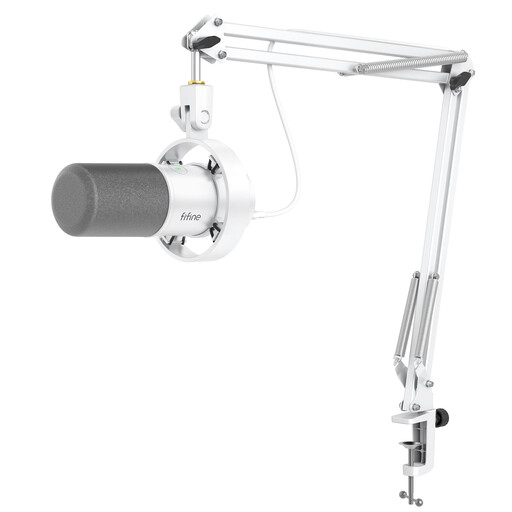
FIFINE K688CTW with boom arm, USB/XLR, white
If you want to keep the microphone in a fixed position at your desk, the arm named in the product title can make it easier to position. The listing specifies USB-C and XLR; it says the C-clamp is designed for desks less than 2 inches thick. An XLR cable isn’t included.
View at Joybuy
 No image available
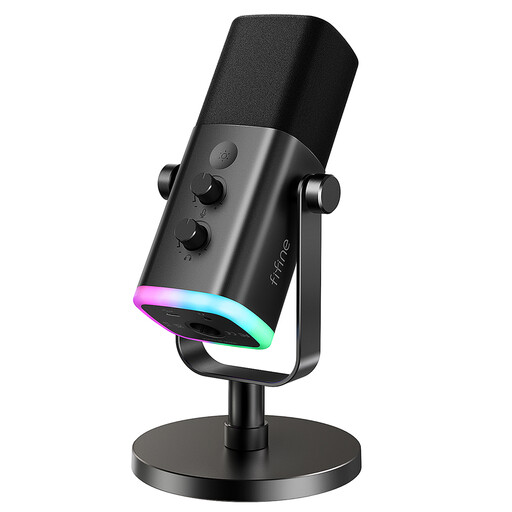
FIFINE AM8 USB/XLR with table stand
If you’d rather use a table stand than a separate arm, this version is designed for that, according to the product title. The title also specifies USB/XLR and a headphone socket. The listing says that RGB lighting and microphone functions are available only over USB. An XLR cable and microphone arm aren’t included.
View at Joybuy
 No image available
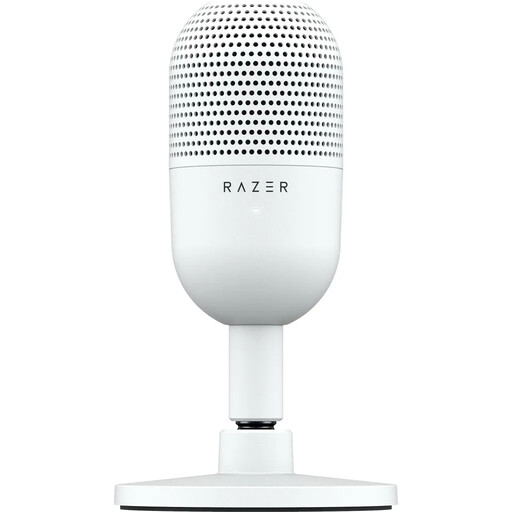
Razer SEIRÉN V3 MINI White
If you’re looking for a compact USB microphone with a table stand, the listing says it comes with an adjustable stand and a USB-C cable. Other listed features include a supercardioid pickup pattern and tap-to-mute. A test recording will show how it picks up noise in your workspace.
View at Joybuy
 No image available
DJI Mic Mini 2S (2 TX + 1 RX + Charging Case)
If you’re looking for a system that clips to your clothing rather than a desk microphone, the listing describes a lavalier system with clip or magnetic attachment. It includes two transmitters, a receiver and a charging case; the listing also specifies internal 32-bit float recording and lists PCs as compatible devices. Check that it connects to your specific recording device.
View at Joybuy
 No image available
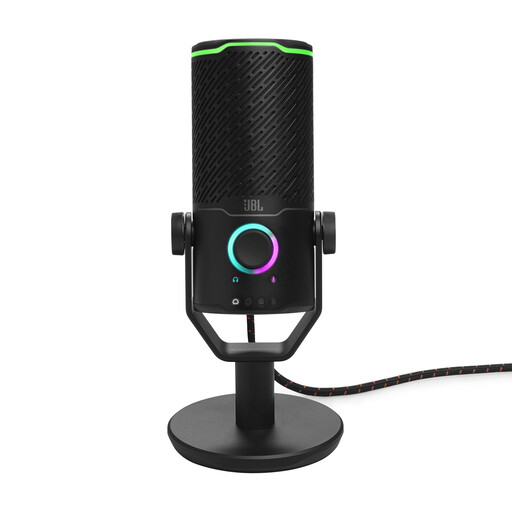
JBL Quantum Stream Studio USB-C
If you want to monitor your voice while recording, the listing specifies direct monitoring. It also lists selectable pickup patterns, including a cardioid option for solo recording, as well as flexible mounting. A test recording in your intended spot will help you assess how it sounds with the background noise there.
View at Joybuy
Frequently asked questions
How should I position the microphone for reading poetry?
Point the intended speaking side towards your mouth and make a test recording in the spot where you’ll actually be reading. With the PodMic USB, you speak into the end of the microphone; RØDE recommends a distance of around 5–10 cm for this model. Also check that you have room for your text and the microphone without having to sit uncomfortably.
How can I prevent distortion on louder lines?
Read your loudest planned passage in advance and watch the level indicator. If the level reaches the limit, lower the recording level and try again. According to Audacity, clipping that has already occurred can’t be undone afterwards.
Do I need extra equipment for USB or XLR?
The USB models described here connect to a suitable recording device via USB. For an XLR connection, you’ll need a compatible microphone input, such as one on an interface or mixer. Also check whether the stand, cables and headphones are included with the specific version.
What should I know about returns and customer service when buying online?
According to the Verbraucherzentrale, online purchases generally come with a 14-day right to cancel; check for possible exceptions and the specific contract information before buying. Keep a record of the product version and what was included in case you need help with a fault or missing accessories.
Can I record other people’s conversations at a shared desk?
Section 201 of the German Criminal Code (StGB) makes it a criminal offence to record another person’s non-public speech without permission. Make sure your recording doesn’t capture these conversations, or get the other people’s agreement beforehand. A directional capsule doesn’t give you legal permission to record.
Can I publish a recording of someone else’s poem online?
You can’t decide this based on the microphone purchase alone. Section 19a of the German Copyright Act (UrhG) covers making works available to the public; under section 64 of the UrhG, copyright generally expires 70 years after the author’s death. Check the rights for the specific poem and the planned publication rather than assuming that a private recording gives you permission to publish it.


