Solo speakers at a shared desk
If you can find a few quiet moments to record a take, built-in microphones make it easy to get started without a separate mic. Zoom and Tascam both offer models with built-in microphones for recording on your own.


If you record on your own during quiet periods, a compact recorder with built-in microphones is the easiest place to start. If other voices or keyboard noise are present at the same desk, it becomes more important to position a microphone close to your voice. You’ll need a recorder with the right input, as well as some additional accessories. According to Zoom and Tascam, 32-bit float makes it easier to manage recording levels, but it won’t remove noise that’s already been captured.
If you can find a few quiet moments to record a take, built-in microphones make it easy to get started without a separate mic. Zoom and Tascam both offer models with built-in microphones for recording on your own.
If someone is typing or speaking while you record, it’s particularly useful to be able to position a microphone close to your voice. RØDE describes microphone placement and direction as factors in managing background noise.
If you switch between quiet and loud characters and edit your takes on a computer, look for level control, monitoring and a file or software workflow that suits you. Zoom and Tascam list 32-bit float as a recording option on the models covered here.
Ideal if: you mostly speak on your own and want to get started without a separate microphone.
The trade-off: A simple set-up won’t stop room noise or other voices from being recorded.
Ideal if: you want to position a suitable external microphone close to your voice.
The trade-off: A microphone, cable and possibly a mount mean extra set-up, and an external mic doesn’t guarantee a noise-free recording.
Ideal if: you want to adjust the direction of the built-in microphones to suit your recording environment.
The trade-off: Directional control isn’t a substitute for a nearby microphone when there’s constant background noise at the desk.
| Buying criterion | What to check | Who is it important to? |
|---|---|---|
| Other voices and desk noise | Check whether you can position a microphone close to your voice and whether the recorder has the right input. | If other people are speaking or typing at the desk, you’ll want to capture your own voice as clearly as possible. Around 36% of consumers put reducing background noise first. |
| Quick to start recording | Compare the built-in microphones, how the recorder is positioned and whether you can play back a take straight away. | If you use short breaks to record character voices, you’ll want to record without having to set up an extra microphone. Around 28% of consumers prioritise a simple start. |
| Changing vocal volume | Check the recording format and whether you can listen back to a test recording. | If your characters switch between quiet and loud voices, you’ll want to be able to check the levels and the take. Around 22% of consumers prioritise this kind of control. |
| Editing files afterwards | Check the recording formats, computer connectivity and compatibility with your workflow. | If you want to edit individual character takes on a computer, you’ll need a suitable way to transfer and process the files. Around 14% of consumers prioritise a computer-based workflow. |
32-bit float affects how recording levels are managed. Other voices and room noise can still be recorded.
Record a short test and listen back before settling on a microphone position and recording time.
You may need to spend extra time finding a quieter place to record or adjusting the microphone position.
XLR/TRS inputs are connection options; they don’t mean that a suitable vocal microphone is included.
Check the microphone connection, power requirements and what’s included as parts of the same set-up.
An external set-up may also require a compatible microphone, cable and desk mount.
Under § 201 StGB, recording another person’s private conversation without their permission may be a criminal offence.
Limit recordings to agreed speaking times and get everyone’s agreement before making a planned recording together.
The H1essential is a compact option with built-in microphones, while the H4essential also offers XLR/TRS inputs for external microphones.
The DR-05XP is designed for standalone recording with built-in stereo microphones, while the DR-40XP adds adjustable microphones and XLR/TRS inputs.
The LS-P5 is a standalone recorder with internal storage and adjustable direction for its three-microphone system.
The ICD-TX660 is a compact dictaphone-style alternative for straightforward voice recordings.
This selection features compact voice recorders with built-in microphones for recording takes on your own. Stated microphone ranges or noise-reduction features don’t prove that other voices can be separated out at a shared desk.
 No image available
The built-in microphones let you record without a separate mic. If you’re recording character voices at a shared desk, try out the recording position with a test take.
Specifications include 64 GB of storage, up to 30 hours of continuous recording and four MEMS microphones. The device is described as compatible with Android and iOS.
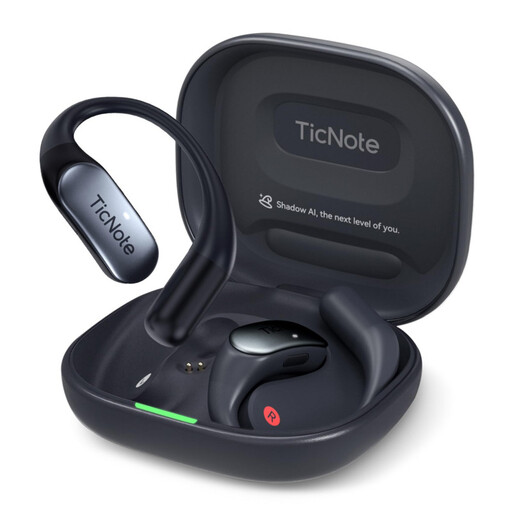 No image available
The built-in microphone array is designed for standalone voice recording. A stated recording range doesn’t prove that other voices can be filtered out at a shared desk.
Specifications include 32 GB of local storage and one-button recording. The product description also mentions app connectivity and automatic transcription.
 No image available
The described three-microphone system lets you record without a separate mic. If there’s noise at the desk, check that the position works for your voice by recording a test take.
Specifications include 64 GB of storage and up to 25 hours of continuous recording. The product description also mentions file transfer and several recording modes.
 No image available
The described one-button recording is handy for short takes on your own. The omnidirectional recording is designed to capture sound from a wide area, so it doesn’t prove that other voices will be separated out.
Specifications include a 16 GB TF card, up to 22 hours of recording and headphone playback.
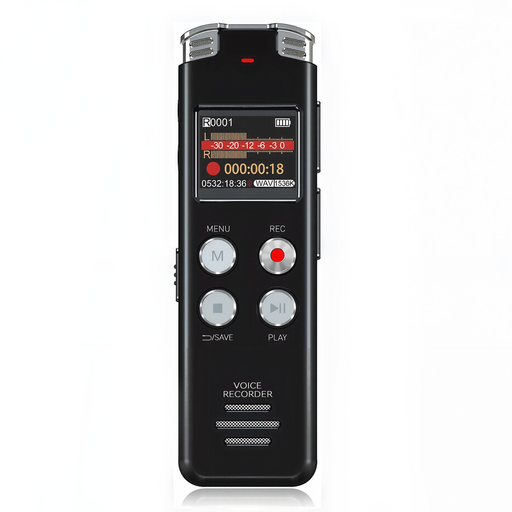 No image available
This recorder is described as suitable for voice recording and repeated playback. The product’s noise-reduction claim isn’t independent proof that other voices can be filtered out at a shared desk.
Specifications include MP3 and WAV formats, A-B playback and USB-C file transfer. The product description also mentions a dynamic microphone.
Start by recording a short test and listening back to it. Position the microphone as close as possible to the person speaking and, where you can, avoid others typing or speaking at the same time. A suitable stand can help keep the microphone in place and reduce the direct transfer of desk vibrations.
No, 32-bit float isn’t essential for recording character voices. Zoom and Tascam list it on the relevant models as an aid to managing recording levels. Still, listen back to test takes with both loud and quiet voices: the recording format won’t remove room echo or other voices.
You’ll need a suitable input on the recorder for an external microphone. Depending on the microphone you choose, you may also need a cable, a mount and a power supply. Check the specific connection and what’s included before choosing your set-up.
Recording your own character voices is not the same as recording other people’s conversations. Under § 201 StGB, recording another person’s private conversation without their permission is a criminal offence. Make sure you don’t record other people’s private conversations without permission, and get everyone’s agreement before making a planned recording together.