A washer-dryer is a good fit for a shared house if there’s no suitable drying space or room for two appliances, and the planned bedding load fits the drying capacity of the chosen programme. For a complete wash-and-dry cycle, it’s the lower drying capacity that matters. The Verbraucherzentrale also recommends comparing the energy use of the full cycle. If you regularly have large loads and have enough space, a washing machine with a separate tumble dryer or a suitable place to air-dry your laundry are important alternatives.
Which option is right for you?
Shared houses with several bedding loads
If you want to wash and dry bedding straight away without splitting the load, the lower drying capacity is the key factor. Bear in mind, too, that a full wash-and-dry cycle keeps the shared appliance busy for longer.
Shared houses without suitable drying space
A washer-dryer could be a good fit if you have room for a connected appliance but nowhere suitable to hang large bedding items. Check the dimensions, connections and installation requirements for your rented home.
Shared houses with shared running costs
If you share the running costs, compare the energy use of a complete wash-and-dry cycle and take your actual mix of usage into account. The wash energy rating alone doesn’t show the consumption of a combined cycle.
What to look for when buying
Washer-dryer
A good fit if: you only have space for one appliance and the planned load is within the drying capacity.
The trade-off: washing and drying happen one after the other in the same appliance. The Verbraucherzentrale says that typical washer-dryers use more energy than separate appliances.
Washing machine with air-drying
A good fit if: you have a suitable place to dry your laundry and can do without a tumble dryer.
The trade-off: large items need room and time to dry. If you dry laundry indoors, you’ll need to consider moisture and ventilation.
Washing machine and separate tumble dryer
A good fit if: you can install two appliances safely and regularly have larger loads of laundry in your shared house.
The trade-off: this option needs more space and a second appliance. Check the energy figures for comparable models before deciding.
First, consider the size of the load you actually plan to dry and the space available. Then compare energy use for the type of cycle you’re most likely to run in your shared house.
| Priority |
What to check when buying |
Who is it important to? |
| Dry bedding without splitting the load |
Check the washing and drying capacities separately, and pay attention to the limit for the specific programme. Bosch Hausgeräte lists 10.5 kg for washing only and 6 kg for washing and drying for the WNG24443 model. |
If we want to handle larger bedding loads in one go, we look at the drying capacity rather than the higher washing capacity. Around 28% of consumers put a suitable load size first. |
| Space and connections |
Check the appliance dimensions, including access, and confirm the water inlet, drain and power connections. Haier Deutschland lists dimensions of 595 × 507 × 850 mm for the HWD80-BP14637T model. |
If we only have a tight space for one appliance, we need to make sure the dimensions and connections will actually work there. Around 22% of consumers prioritise space and a safe connection. |
| Shared running costs |
Check the kWh per 100 complete wash-and-dry cycles, using comparable figures. Also consider your usage mix and water consumption. The Verbraucherzentrale distinguishes between the combined cycle and washing only on the energy label. |
If we share the running costs, we want to compare the energy use of the programmes we actually use. Around 22% of consumers put shared running costs first. |
| Shared washing times |
Check the duration and maximum load for the full programme on the specific model. Don’t assume that quick-programme figures apply to full bedding loads. |
If several housemates need the same machine, we want to know how long it will be in use for a complete wash and dry. Around 17% of consumers put machine availability first. |
| Care for your bedding properly |
Check the washing and drying symbols on the specific items and choose suitable programmes only. If you have a confirmed house dust mite allergy, follow the conditional recommendation from the Umweltbundesamt. |
If we look after different cotton bedding, we want to follow its care labels rather than relying on the material name alone. Around 11% of consumers prioritise the care requirements of their specific bedding. |
How to avoid common buying mistakes
-
Looking only at the washing capacity
The maximum drying load may be lower. For the Bosch WNG24443, Bosch Hausgeräte lists 10.5 kg for washing only, but 6 kg for washing and drying in one cycle.
Estimate the dry weight of a typical bedding load and check the washing, drying and programme limits separately.
-
Confusing the wash energy rating with energy use for a combined cycle
Energy use for washing only and for a complete wash-and-dry cycle are different figures on the energy label.
Compare figures for the same type of use and consider how often you actually use the tumble-drying function.
-
Assuming all cotton bedding can go in the tumble dryer
The material name alone doesn’t tell you how a particular bedding item can be treated.
Before buying, check the washing and drying symbols on your existing bedding and choose suitable programmes.
-
Ruling out a drying space or second appliance too soon
A washer-dryer saves space, while separate appliances or air-drying come with different space and time requirements.
Compare the options against the space you actually have, the available connections and any suitable drying area in your shared house.
Key brands at a glance
Bosch
According to Bosch Hausgeräte, the WNG24443 model has a higher washing capacity than drying capacity for a complete cycle.
- Bosch Hausgeräte lists 10.5 kg for washing only and 6 kg for washing and drying for the WNG24443.
- For bedding washed and dried in one go, the lower drying capacity is the limit to bear in mind. Aqua Stop is a manufacturer claim.
LG
The LG models W4WR7096YB and V9WD128H2 cover different planned load sizes.
- LG lists 9 kg washing and 6 kg drying for the W4WR7096YB, and 12 kg washing and 8 kg drying for the V9WD128H2.
- For a complete cycle, the lower drying capacity applies to each model. Manufacturer claims about steam or fabric protection don’t prove an advantage for every type of cotton bedding.
Haier
The Haier HWD80-BP14637T and HWD120-BD16397EU1 models differ in capacity and appliance depth.
- Haier Deutschland lists 8/5 kg and a depth of 507 mm for the HWD80-BP14637T, and 12/7 kg and a depth of 661 mm for the HWD120-BD16397EU1.
- The second model’s higher drying capacity comes with greater appliance depth. The manufacturer’s efficiency claims are no substitute for comparing models under the same usage conditions.
Beko
The freestanding BM3DT4844W1 is an option for smaller planned drying loads.
- Beko lists a washing capacity of 8 kg and a drying capacity of 5 kg for this model.
- The drying capacity is the limit to bear in mind for a complete cycle. AquaWave claims come from the manufacturer and aren’t an independent comparison of the model.
Miele
The WTD160 WCS is an 8/5 kg option. Check its dimensions if space is tight.
- Miele lists 8 kg for washing, 5 kg for drying and dimensions of 850 × 596 × 637 mm.
- The appliance depth and lower drying capacity could matter if space is tight or you have large bedding loads.
Washer-dryers at Joybuy
This selection features washer-dryers for shared houses looking to combine washing and tumble drying in one appliance. Compare the listed washing and drying capacities with your bedding load and the space available.
 No image available
LG WT1210WWF, 12 kg washing/10 kg drying
If your shared house wants to wash and dry a larger bedding load in one appliance, the listed drying capacity is an important figure to compare.
The product name lists 12 kg for washing, 10 kg for drying and Dual Inverter Heat-Pump. For a complete cycle, the lower drying capacity applies.
Joybuy
 No image available
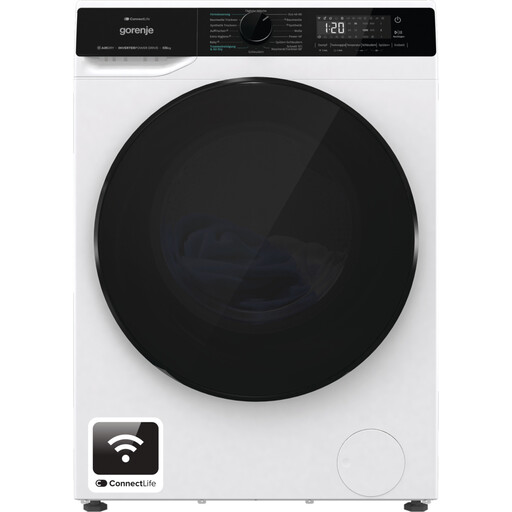
Gorenje WD2PA854ADW DE Connect washer-dryer
This washer-dryer could suit a shared house looking to combine washing and drying in one appliance.
The product name lists 8 kg, but doesn’t say whether this refers to washing or drying. Before buying, check which capacity it refers to and the maximum load for the combined programme.
Joybuy
 No image available
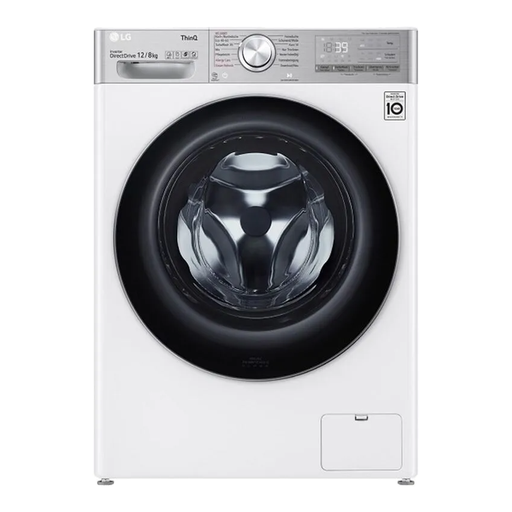
LG V9WD128H2, 12 kg washing/8 kg drying
This model could suit a shared house with larger planned loads, provided the bedding fits within the drying capacity.
LG lists 12 kg for washing and 8 kg for drying for this model. For a complete cycle, it’s the lower drying capacity that matters.
Joybuy
 No image available
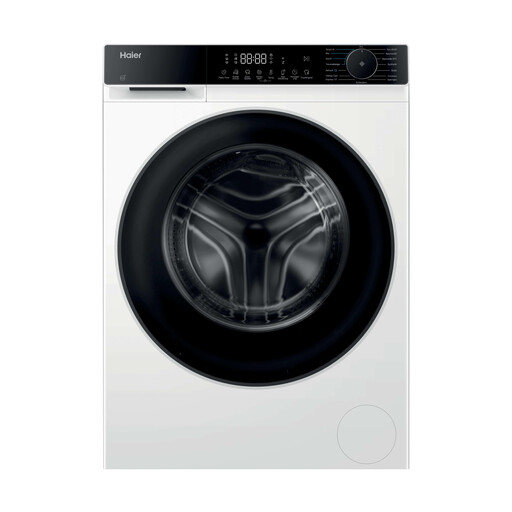
Haier X5 Series HWD120-BP14357U1, 12+8 kg
For a shared house with larger planned bedding loads, the capacity listed in the product name is a useful point of comparison.
The product name lists 12+8 kg, but doesn’t specify which figure is for washing and which is for drying. Before buying, check what each figure refers to and the limit for the complete programme.
Joybuy
 No image available
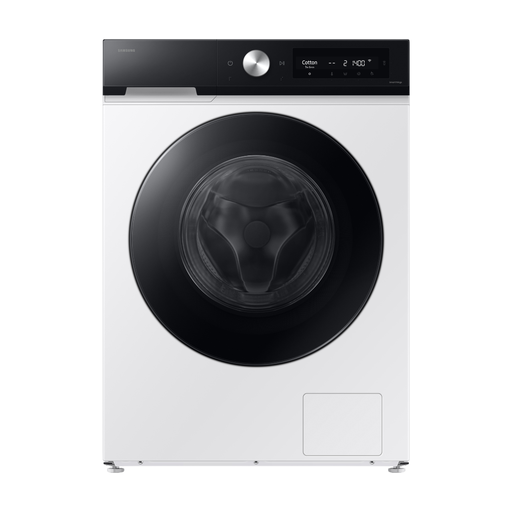
Samsung WD1BDB7B85GEU2, 11+6 kg
This washer-dryer could suit a shared house looking to combine washing and tumble drying in one appliance.
The product name lists 11+6 kg, but doesn’t specify which figures refer to washing and drying capacity. Check what each figure means and the programme load limit before buying.
Joybuy
Frequently asked questions
Does a 10.5 kg washing capacity mean you can dry the same amount of bedding afterwards?
No. For the Bosch WNG24443, the figures are 10.5 kg for washing only and 6 kg for washing and drying in one cycle. Bosch Hausgeräte lists these figures for this specific model; also check the limit for the programme you choose.
How can our shared house compare running costs?
Compare the kWh per 100 complete wash-and-dry cycles for the same type of use. The Verbraucherzentrale distinguishes this figure from the energy-label figure for washing only. To work out the cost in euros, you’ll also need your electricity tariff and the number of cycles you run.
What should we check before connecting an appliance in a rented shared house?
Check that the connections and the specific location are suitable, and confirm the installation requirements for your home. The Verbraucherzentrale advises discussing the installation with your landlord; this doesn’t mean that every installation is automatically forbidden or permitted.
Does cotton bedding always need to be washed at 60 °C?
No, not as a general rule: the care label specifies how each item of bedding can be treated. For specific precautions if you have a house dust mite allergy, the Umweltbundesamt recommends washing at a minimum of 60 °C with a powder detergent for whites and colours when using your own washing machine. This conditional recommendation doesn’t automatically apply to every shared-house load.


