If several people regularly wash breakfast bowls, cups and cutlery together, and you can wait until you have a full load, a 60 cm model is an obvious option. The German Environment Agency considers this width particularly efficient for households of two or more when fully loaded; if space is tight or you have smaller amounts of crockery, a 45 cm model may be a better fit. Mini dishwashers are better suited to very small loads – pay particular attention to capacity, the water supply and drainage.
Which type suits you
Shared house with lots of breakfast dishes
If several people can collect bowls, cups and cutlery together, a 60 cm model could be a good choice for regular full loads. The German Environment Agency considers this width particularly efficient for households of two or more when fully loaded.
Shared house with a narrow kitchen
If width is limited, a 45 cm model may fit. Even so, check that your bowls will fit with the basket layout and height of the specific model.
Small kitchen without a permanent water supply
A mini dishwasher with a water tank may be worth considering for small amounts of crockery. Its capacity and the drainage setup required by the instructions need to suit your day-to-day needs and the intended location.
What to look for when buying
| What matters |
What to check before buying |
Who it matters most to |
| Capacity and bowls |
Work out how much crockery builds up between washes; compare bowl dimensions with the basket height and layout. |
If we collect breakfast dishes together, we want as much as possible to fit into one planned wash. Around 31% of consumers are likely to prioritise capacity above all else. |
| Available space and type |
Measure the width, height and depth of the space; remember to allow room for the door to open. |
If you have a narrow kitchen, you need a model that fits the space without taking up unnecessary worktop room. Around 25% of consumers are likely to have limited space for a dishwasher. |
| Water and electricity connections |
Check the model’s instructions for the water inlet, drainage, power supply and required space against the conditions in your home. |
If you don’t plan to use a permanent water supply where the dishwasher will go, you’ll need to check that the type of appliance and drainage setup are suitable. Around 19% of consumers are likely to have connection requirements as their main concern. |
| Electricity, water and running costs |
Compare kWh per 100 Eco cycles and litres per Eco cycle on the same basis; take your planned washing routine into account. |
If you want to keep an eye on regular expenses, compare the stated Eco figures with how you plan to use the appliance. Around 13% of consumers are likely to prioritise running costs above all else. |
| Noise and cycle time |
Check the noise rating in dB(A), the Eco programme duration and the programmes available on the specific model. |
If a running dishwasher could be disruptive in a shared kitchen, or you’ll need the bowls again soon, noise and when you run a cycle matter. Around 12% of consumers are likely to prioritise quiet, predictable operation. |
Common buying and planning mistakes
-
Choosing a larger dishwasher based only on its consumption per full load
The German Environment Agency’s assessment of 60 cm dishwashers assumes they are fully loaded. If you don’t have much crockery, it may take longer to build up a suitable load.
Frequent half-load cycles or long waits to fill the dishwasher can make life in a shared house more difficult.
First work out how much crockery you’ll collectively use between planned washes, then choose the right size.
-
Assuming a tank-fed dishwasher has no drainage requirements
The manufacturer says the MEDION MD 37217 can be used with or without a permanent water connection. That doesn’t mean drainage or the installation location can be ignored.
Before buying, plan a drainage and installation solution that follows the instructions.
Check the instructions for the specific tank model against the place where you intend to install it.
-
Assuming the energy rating tells you how much a short programme uses
The stated electricity and water figures are based on the Eco programme and don’t directly indicate the consumption of another programme.
If you mainly use other programmes, the Eco figures may be less representative of your running costs.
Compare label figures on the same programme basis, and take into account which programmes people in your shared house will actually use.
Brands to consider
Bosch
The freestanding Series 4 models described are available in 45 cm and 60 cm widths.
- Bosch lists dimensions of 845 × 450 × 600 mm, energy efficiency class E and 9,5 l of water per Eco cycle for the SPS4HMI49E. For the SMS4EVI08E, the manufacturer lists dimensions of 845 × 600 × 600 mm, class B and 9,0 l per Eco cycle.
- These figures apply to the models named and don’t prove the cleaning performance or an advantage across the brand as a whole.
Siemens
The freestanding iQ300 SN23EW03ME is a 60 cm model for spaces of the corresponding size.
- Siemens lists energy efficiency class B, 9,0 l of water per Eco cycle and a delay-start function for this model.
- These details apply to the SN23EW03ME and are not the result of an independent performance test.
Beko
The freestanding BDFS26020WQ is an example of a slim 45 cm model.
- Beko lists ten place settings, a height-adjustable upper basket that can be adjusted when loaded, class E, 8,7 l of water per Eco cycle and 46 dB(A) for this model.
- Whether your breakfast bowls will fit depends on their dimensions and the basket settings; these details don’t apply to all Beko dishwashers.
MEDION
The MD 37217 is a mini dishwasher that can be used without a permanent water supply.
- MEDION lists two place settings for this model, which can be used with or without a permanent water connection.
- Its limited capacity could mean frequent wash cycles for several people who regularly have breakfast together. The manufacturer lists the model as sold out.
Miele
The G 5540 SC SL Active is another specific example of a freestanding 45 cm model.
- Miele lists class E, 45 dB, a cutlery tray and a delay-start function for this version.
- Check any optional installation services and their terms before ordering. These are manufacturer details, not the findings of an independent comparison test.
Joybuy products for larger shared loads
The following freestanding 60 cm dishwashers may be worth considering if you regularly have larger shared loads in your household.
 No image available
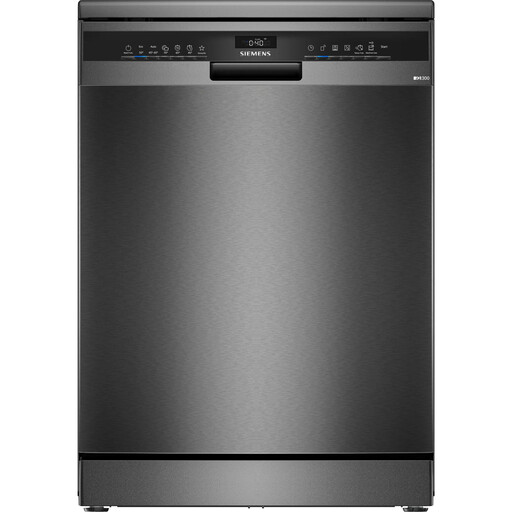
Siemens SN23EC03ME, 60 cm, BlackInox
This freestanding 60 cm model may be suitable if your shared house has room for a dishwasher of this width and you regularly have a larger load.
Energy efficiency class B, as stated in the product name.
Joybuy
 No image available
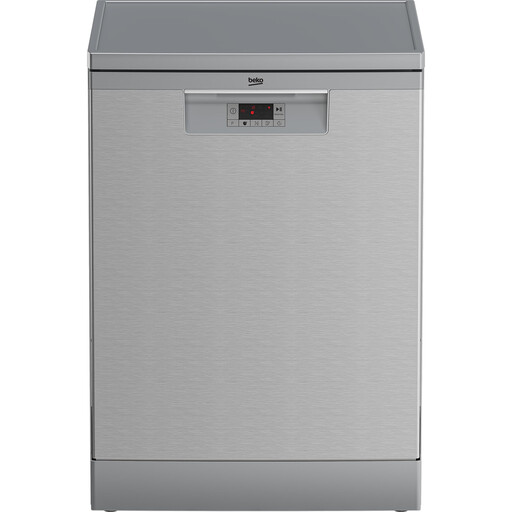
Beko BDFN16O44XW, 60 cm, 14 place settings, stainless steel
The freestanding design and stated capacity may suit breakfast dishes collected by several people; also check that your bowls will fit in the baskets.
Five programmes and a half-load function are listed in the product name.
Joybuy
 No image available
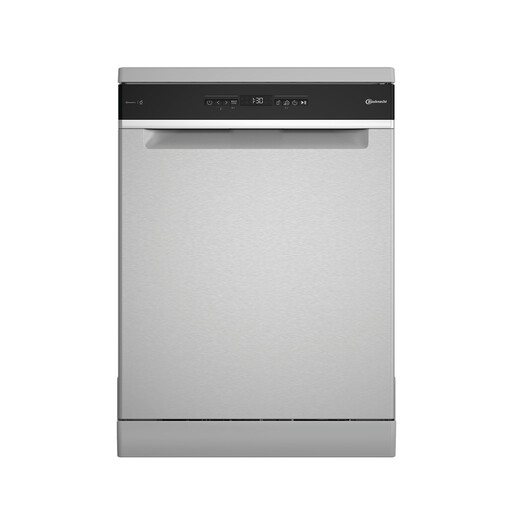
Bauknecht BKSV2FBN3CX, 14 place settings, class B, stainless steel
With a stated capacity of 14 place settings, this freestanding 60 cm model could be an option for a larger shared load.
41 dB, as stated in the product name.
Joybuy
 No image available
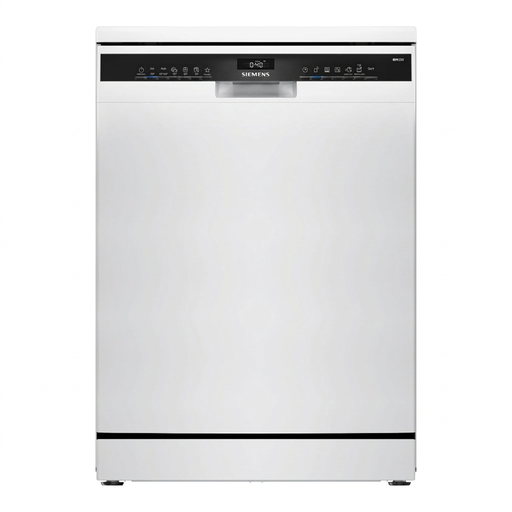
Siemens iQ300 SN23HW05ME, 60 cm, white, 14 place settings
This freestanding 60 cm model, with its stated capacity, may suit crockery that regularly builds up when several people share a kitchen.
Described as Wi-Fi-enabled in the product name.
Joybuy
 No image available
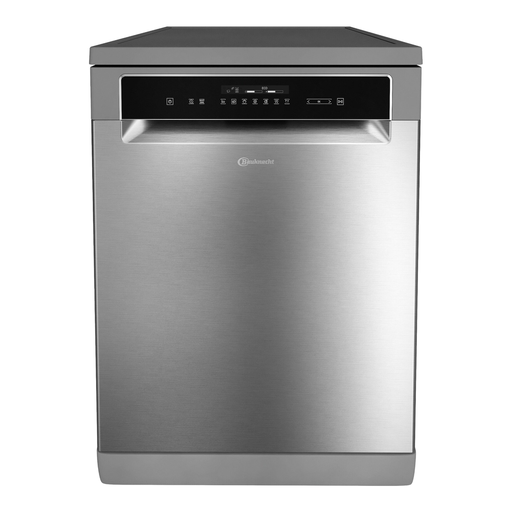
Bauknecht BFP 5041 PLT X, 60 cm, 14 place settings, class C
This freestanding 60 cm model, with a stated capacity of 14 place settings, could suit larger loads from a shared kitchen.
Stainless steel version, as stated in the product name.
Joybuy
Frequently asked questions
Is it enough to compare the place settings of different dishwashers?
No. Place settings alone won’t tell you whether your breakfast bowls will fit in the baskets. Also compare their dimensions with the basket layout and height of the specific model; for example, the Beko BDFS26020WQ is listed as having a height-adjustable upper basket.
Should I rinse bowls with warm water before loading them?
No. The German Environment Agency advises against rinsing dishes before putting them in the dishwasher, particularly with warm water. For efficient use, it recommends running a full load on the Eco programme.
What should I bear in mind when looking after my dishwasher?
Follow the instructions for your appliance regarding water hardness and regeneration salt. The German Environment Agency notes that limescale deposits can affect efficiency and service life.
What energy label applies to dishwashers in Germany?
Mains-powered household dishwashers are subject to the relevant EU ecodesign and energy-labelling rules. The European Commission describes the energy label introduced on 1 March 2021 as using a scale from A to G. The stated energy and water figures are based on the Eco programme, not every other programme.


