What should you look for when buying?
For opened cream, a usable fridge compartment comes first; the instructions on the packaging are what matter.
Fridge freezer with a well-organised fridge compartment
A good fit if: Several people need space for chilled food and regular supplies of frozen food.
Consider: A larger appliance takes up more floor space and may use more electricity. Without allocated shelves and cleaning rules, it won’t automatically keep things tidy.
More compact fridge freezer with a small freezer compartment
A good fit if: Space is limited and you only freeze food occasionally, provided there’s enough room for chilled items.
Consider: Less freezer space limits how much you can store; check fridge and freezer capacity separately, as well as the clearance needed to open the door.
Fridge without a freezer compartment
A good fit if: You already have a separate freezer or genuinely don’t need to store frozen food.
Consider: Without another way to freeze food, you won’t be able to store frozen supplies.
| Buying priority |
What to check |
Who it matters most to |
| Suitable chilling for cream |
Room for a sealed pack in the fridge compartment; suitable temperature setting |
If I store opened cream between meals, I need an easy-to-reach place in the fridge and will follow the storage instructions on the packaging. Around 29% of consumers prioritise suitable chilling. |
| Keeping a shared fridge organised |
Usable fridge capacity; accessible, adjustable shelves |
With several people using the fridge, I want to keep sealed food separate and organised so it’s easy to find. Around 24% of consumers prioritise separate, well-organised storage in a shared household. |
| Fit in the space available |
Dimensions of the exact model; door hinge and opening clearance |
If the kitchen is tight on space, the appliance needs to fit in its designated spot, and the door must not block access to the shelves. Around 18% of consumers place the greatest importance on floor space and door access. |
| Energy use and noise |
kWh per year and noise emissions on the EU label |
For an appliance that runs all the time, I want to compare energy use against the capacity I need. In an open-plan kitchen, I’ll also check the stated noise emissions. Around 18% of consumers also put running costs first. |
| Freezer capacity and defrosting |
Stated freezer capacity; NoFrost or LowFrost on the specific model |
If we regularly store frozen food, I need enough freezer space and want to know how much defrosting the model will require. Around 11% of consumers prioritise freezer capacity and easier defrosting. |
Fridge freezers at Joybuy
The Joybuy products below are fridge freezers that let you plan your chilled and frozen food storage separately. The selection includes compact appliances and models with No Frost.
 No image available
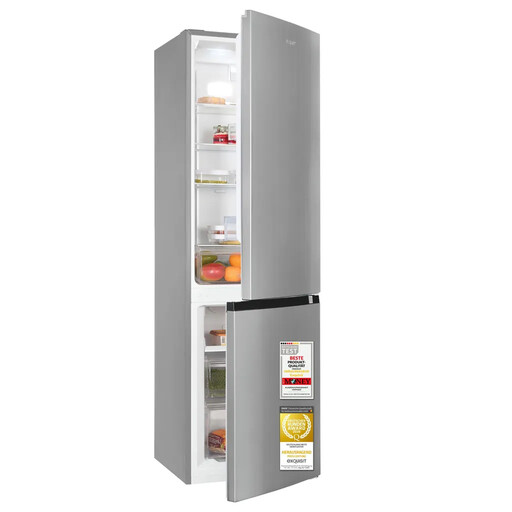
Exquisit KGC5265-70-NF-040C Inox Look
For a shared household that plans chilled and frozen food storage separately and wants No Frost in both compartments.
253 l total capacity, including 182 l of fridge capacity and 71 l of freezer capacity; No Frost in both compartments.
54,5 cm wide; electronic temperature control, reversible door and height-adjustable feet.
Energy class C; 39 dB.
View at Joybuy
 No image available
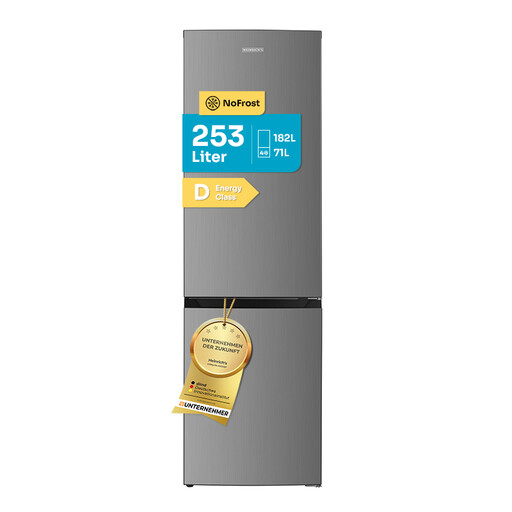
Heinrich's fridge freezer, 253 l, Inox
For a shared kitchen where fridge and freezer space need to be planned separately.
253 l total capacity, including 182 l of fridge capacity and 71 l of freezer capacity; No Frost.
LED lighting, reversible door and large freezer drawers.
39 dB.
View at Joybuy
 No image available
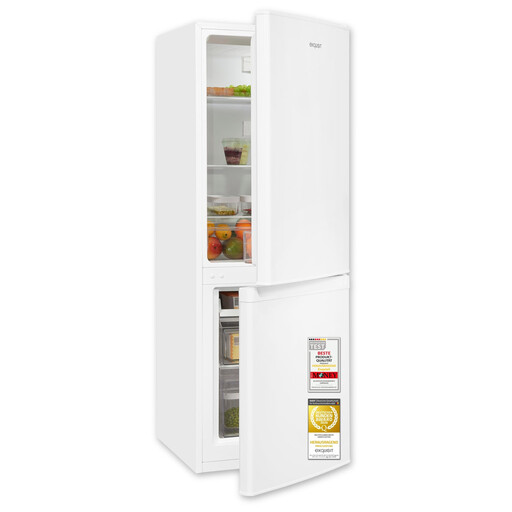
Exquisit KGC5232-60-E-040E, white
For a narrow space, when a smaller freezer compartment is enough for your needs.
173 l total capacity, including 121 l of fridge capacity and 52 l of freezer capacity.
49,5 cm wide; three glass shelves, one of which is height-adjustable, and a reversible door.
Temperature control and LED lighting.
View at Joybuy
 No image available
Exquisit KGC5232-60-E-040C Inoxlook-az
For a compact setup with separately stated fridge and freezer capacities.
173 l total capacity, including 121 l of fridge capacity and 52 l of freezer capacity.
49,5 cm wide; three glass shelves, LED lighting and a reversible door.
Freestanding fridge freezer.
View at Joybuy
 No image available
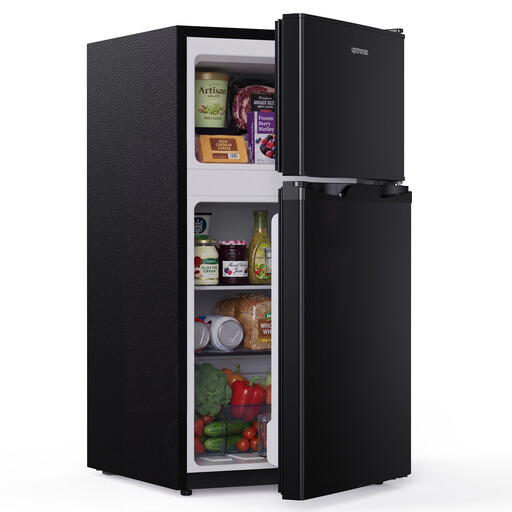
Upstreman TM84-Black, 84 l
For very modest needs when you want separate fridge and freezer space.
84 l total capacity: 59 l fridge compartment and 25 l freezer compartment.
Seven-setting thermostat and reversible door.
39 dB; LED lighting.
View at Joybuy
Frequently asked questions
Where should opened cream go in the fridge?
First, follow the instructions on the specific packaging. The Verbraucherzentrale recommends storing cream on the middle shelf of the fridge at 5 to 7 °C; the BfR recommends keeping perishable food chilled at 2 °C to a maximum of 7 °C. In a shared household, it also helps to label the cream with your name and the date it was opened.
How long does opened cream keep?
There’s no general time limit for using it up that applies to every type of cream, packaging instruction and storage condition. Check the information on your pack: the best-before date for unopened products doesn’t guarantee how long they’ll keep after opening. Don’t use cream if there are clear signs that it has spoiled.
What should we agree on after setting up a fridge in a shared house?
Agree on personal and shared spaces, as well as a cleaning routine. The Verbraucherzentrale recommends labelled spaces, regular stock checks and a cleaning rota for shared households, among other things. These are practical ways to stay organised, not features of the appliance.
What information helps you compare energy use and noise?
The EU energy label for household refrigeration appliances shows the efficiency class, kWh per year, storage volume and noise emissions. For a fair comparison, look at models with similar fridge and freezer capacities. You can work out your annual electricity costs using the stated energy use and your personal electricity price per kWh.
Does a retailer in Germany have to take back an old fridge?
Under § 17 ElektroG, retailers that meet the size and sales conditions set out in the legislation must take back an old appliance free of charge when supplying a new one, provided it is of the same appliance type and performs essentially the same functions. If the new appliance is delivered to a private household, the legislation also provides for free collection, subject to certain conditions. Check the arrangements with the retailer.


