A washer-dryer can be a good choice for a shared house if there’s little room to hang washing and the pillowcase care labels allow tumble-drying. For small, occasional loads, a washing machine with air-drying may be a better fit. If several people will use the machine regularly, compare drying capacity, full wash-and-dry cycle times and available space together.
Which option is right for you?
Shared house with limited drying space
If you need to dry pillowcases regularly and there’s barely enough room for a clothes airer or a second appliance, a washer-dryer can save space. Before buying, check the appliance dimensions, connections and whether the pillowcases are suitable for tumble-drying. The Verbraucherzentrale outlines the space-saving benefits of washer-dryers, while GINETEX GERMANY explains textile care symbols.
Shared house with lots of laundry
If several people use the same machine, consider how much laundry it can handle in a complete wash-and-dry cycle, as well as how long it will be in use. The Verbraucherzentrale and manufacturers’ details for individual models can help you compare these capacities separately.
Shared house with delicate pillowcases
When you have different fabrics, check the care symbols first to see which temperature and drying method are permitted. GINETEX GERMANY points out that the number in the wash symbol shows the maximum permitted washing temperature.
What should you look for when buying?
Washer-dryer
A good fit if: you have space for one appliance, drying space is limited and the care labels say the pillowcases can be tumble-dried.
Consider: washing and drying take place one after the other in the same appliance. For conventional washer-dryers, the Verbraucherzentrale notes higher electricity and water consumption than for separate appliances. This does not necessarily apply to every model.
Washing machine and air-drying
A good fit if: you have room to hang washing, the pillowcases can dry before you need them again, or their care labels rule out tumble-drying.
Consider: hanging washing takes up space and needs to be coordinated with your housemates, but avoids a machine-drying cycle.
Washing machine and separate tumble dryer
A good fit if: you have room for two appliances and regularly wash larger loads that can be tumble-dried.
Consider: two appliances take up more space. Compare consumption and suitability based on the specific models.
| What matters |
What to check before buying |
Who it matters most to |
| Shared loads |
Compare washing capacity and wash-and-dry capacity separately. According to the manufacturers, the Bosch WNC244070 and Siemens WN54C2070 each have a 9 kg washing capacity and a 6 kg wash-and-dry capacity. |
If several housemates combine their washing, I want to know whether a typical load can be dried without taking anything out. Around 31% of consumers put the size of shared loads first. |
| Drying space |
Check the dimensions, door opening and connections at the intended location. Also check each pillowcase’s care label to see if it can be tumble-dried. |
If you have very little room to hang washing in your shared house, an integrated drying function that suits your needs may be a priority. Around 23% of consumers prioritise limited drying space. |
| Fabric-appropriate care |
Check the care symbols on each pillowcase and follow them when choosing the temperature and drying method. A programme name alone doesn’t prove it’s suitable for every fabric. |
If you have pillowcases made from different fabrics, I want to be able to follow their care symbols. Around 23% of consumers put fabric-appropriate cleaning first. |
| Running costs |
On the EU energy label, distinguish the details for washing and drying from those for washing alone. HEA explains how they are shown separately; compare values only when they are based on the same programme. |
If you share the machine with several housemates, you’ll want to understand the consumption of complete cycles. Around 15% of consumers prioritise running costs. |
| Gentle drying |
Check the tumble-drying symbol and permitted treatment. Also follow the programme and load limits for the specific model. |
If you have delicate pillowcases that the care label says can be tumble-dried, I want to be able to choose a suitable setting. Around 8% of consumers put gentle drying first. |
Avoid common buying mistakes
-
Comparing only the higher washing capacity
The models considered here have a 9 kg washing capacity, but are rated for 6 kg in a complete wash-and-dry cycle. For larger loads, you’ll need to take some laundry out before drying or split the load.
If you want to dry everything without transferring laundry, plan loads according to the stated drying capacity.
Extra drying cycles can keep a shared machine in use for longer.
-
Taking the washing efficiency rating as a measure of the full cycle
The EU energy label gives separate figures for washing alone and for a complete wash-and-dry cycle. So a washing figure doesn’t automatically tell you how much energy is used for drying.
If you plan to use the dryer, compare the figures for complete cycles and consider how often you’ll actually use them.
-
Letting a hygiene or delicate-care programme override the care label
The permitted washing temperature and drying method depend on the individual pillowcase. A programme name doesn’t prove that it’s suitable for every textile.
Sort pillowcases by their care symbols, then choose a suitable programme and an allowed load size.
Brands and model-specific details
The details below relate to individual models and product ranges; they are not a general assessment of each brand.
AEG
According to AEG, the L9WEF80690 is a heat pump washer-dryer with a 9 kg washing capacity and a 6 kg drying capacity.
- AEG lists SensiDry and DualSense for this model. The EU product information sheet gives figures of 252 kWh per 100 complete wash-and-dry cycles and 49 kWh per 100 washing cycles. These figures are based on standardised programmes.
- The drying capacity is lower than the washing capacity. The energy label figures won’t necessarily reflect every shared-house laundry cycle.
Bosch
The Bosch WNC244070 is a comparison model with stated appliance dimensions and a water protection feature.
- Bosch lists a 9 kg washing capacity, a 6 kg wash-and-dry capacity, dimensions of 848 × 598 × 622 mm and AquaStop for this model.
- Check that the dimensions, connections and room to operate the appliance suit the space available in your shared house.
Siemens
According to Siemens, the Siemens WN54C2070 combines stated capacities with a delay start function.
- Siemens lists a 9 kg washing capacity, a 6 kg wash-and-dry capacity, dimensions of 848 × 598 × 622 mm, aquaStop and a delay start of up to 24 hours.
- The delay start function won’t make the appliance available for several shared-house loads at once; its capacity for a continuous wash-and-dry cycle is lower than its washing capacity.
LG
The V7WD96H1A is a comparison model with steam and quick-wash functions.
- LG lists a 9 kg washing capacity and a 6 kg drying capacity for this model, as well as Steam and TurboWash.
- Advertised quick cycle times apply under the stated load or programme conditions. The study cited by LG on fabric protection compared different models and doesn’t prove the effect for every pillowcase in this appliance.
Beko
The Beko BM3DT4844W1 is a comparison model with a lower stated capacity and an appliance depth of 57 cm.
- Beko lists an 8 kg washing capacity and a 5 kg drying capacity for this model, as well as a noise emission of 75 dB(A) during spinning.
- The noise figure refers to airborne noise emissions during the spin cycle on this model; it doesn’t indicate how loud every stage of a programme is.
Washer-dryers at Joybuy
This selection features washer-dryers for shared houses where you want to wash and dry in one appliance. Compare your typical load with the drying capacity and check the pillowcase care labels before you buy.
 No product image available
Roborock Zeo Lite washer-dryer, white
An option if you want to wash and dry in one appliance; compare your usual load with the drying capacity.
10 kg washing and 6 kg drying; Zeo-Cycle drying technology; LintClear self-cleaning system; automatic dosing.
View at Joybuy
 No product image available
LG WT1210EGF WashTower
May suit a shared household if you want washing and drying in one WashTower unit; check the space available.
12 kg washing and 10 kg drying; heat pump dryer; AI DD; TurboWash 360°; ThinQ Smart App; 1350 rpm; green/beige.
View at Joybuy
 No product image available
LG WT1210WWF front-loading washer-dryer
For a shared house that wants to combine washing and drying in one appliance; bear in mind the lower drying capacity when using the dryer to its full extent.
12 kg washing and 10 kg drying; Dual Inverter heat pump; AI DD; TurboWash 360°; steam function; Wi-Fi ThinQ App; white.
View at Joybuy
 No product image available
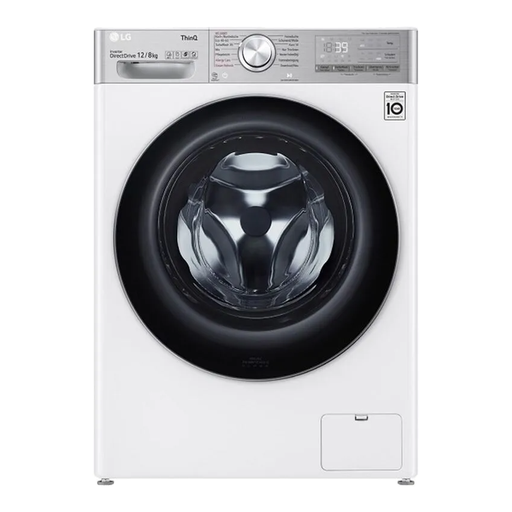
LG V9WD128H2 AI DD washer-dryer
An option if you need to wash and dry in one appliance; check the drying capacity separately against your usual loads.
12 kg model; AI DD; ThinQ; white.
View at Joybuy
 No product image available
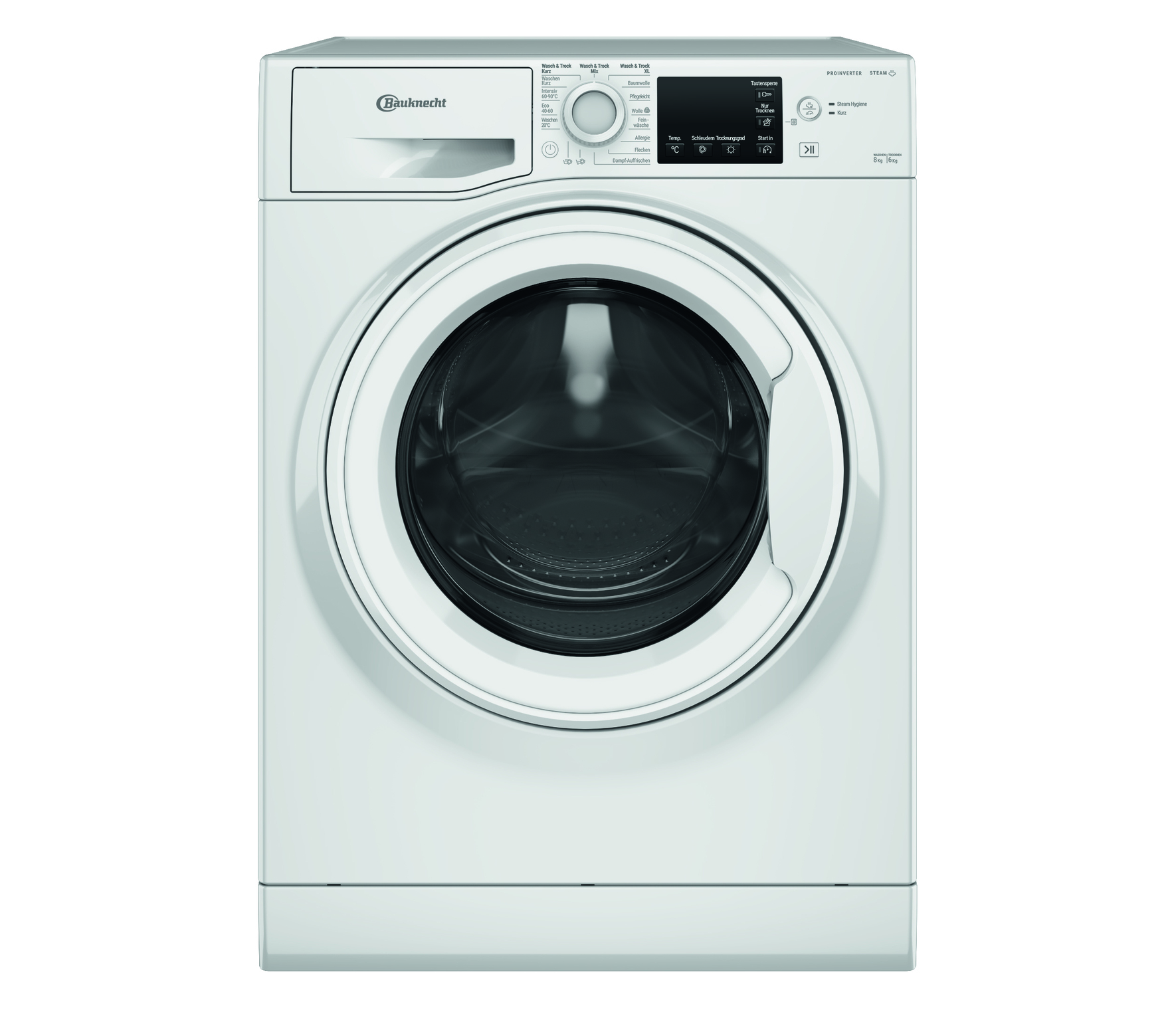
Bauknecht WD Eco Shield 8614 D
Could suit a shared house looking for a freestanding washer-dryer; compare the load size with the drying capacity.
8 kg washing and 6 kg drying; 1400 rpm; Stains 40°; Steam Hygiene; Steam Refresh; Anti-Allergy programme; energy efficiency class D.
View at Joybuy
Frequently asked questions
Can every pillowcase be washed and dried in a washer-dryer?
No. The number in the wash symbol shows the maximum permitted washing temperature; the tumble-drying symbol separately indicates whether and how the pillowcase can be machine-dried. Follow the care symbols on each pillowcase for both steps.
Do pillowcases in a healthy shared house always need to be disinfected?
No. The Umweltbundesamt does not consider additional laundry disinfection necessary for healthy household members and normally soiled washing. Its general hygiene advice does not replace the textile’s care label.
What should housemates do with the machine after washing?
Take the washing out promptly and keep the seal and detergent drawer dry. The Verbraucherzentrale recommends leaving the compartments open after washing; follow the instructions for your appliance when cleaning the lint filter.
What statutory protection applies when buying a new appliance from a retailer?
For consumer purchases in the EU, the seller must provide a legal guarantee of at least two years from the date you receive the goods. This is separate from any additional manufacturer’s guarantee; these retailer rules do not apply in the same way to private sales.
Can you put an old appliance in general waste in Germany?
No. Electrical and electronic waste must be collected separately. Take-back and disposal are governed by the Electrical and Electronic Equipment Act; check what take-back service is available for your order.


