Which features matter in everyday shared-house life?
First, work out how often your household does laundry and how much you need to dry. Then compare energy consumption and space requirements, and check the care instructions for your laundry and the tumble dryer you’ll be sharing.
| What matters |
What to check before buying |
Who is this important to? |
| Regular cotton laundry |
Compare your usual load size with the cotton programme and its maximum load capacity. |
If we regularly have towels and bedding to dry, we want enough usable capacity without constantly having to dry small loads. Around 33% of consumers put drying capacity first. |
| Electricity and overall costs |
Compare the kWh per 100 cycles on the current EU label, then estimate the cost using your electricity tariff and expected usage. |
If we share the costs, we want to factor in both the purchase price and ongoing electricity consumption. Around 27% of consumers prioritise overall and electricity costs. |
| Space and moisture |
Check the appliance dimensions, door access, installation instructions and noise rating. If you air-dry clothes indoors, make sure you can ventilate the space adequately. |
If space is tight in our shared house, the appliance needs to fit with enough room to access it. If we dry clothes indoors, we want to keep an eye on moisture levels. Around 20% of consumers focus mainly on space and moisture. |
| Fabric care and ease of use |
Check the care symbols, drying settings, and filter and condensate instructions in the manual for the specific model. |
If several people use the appliance, we want to make sure the fabrics are suitable for tumble drying and that everyone understands the care instructions. Around 20% of consumers prioritise fabric care and ease of use. |
Heat pump tumble dryers at Joybuy
These Joybuy models are heat pump tumble dryers for shared household laundry. Compare their listed programmes and features with your usual loads, as well as the care and space requirements in your home.
 No image available
Haier I-Pro 1 HD80-E929E-DE, 8 kg
The stated capacity may suit shared household loads.
Heat pump technology; 8 kg capacity.
The product description lists sensor drying and several drying programmes.
Joybuy
 No image available
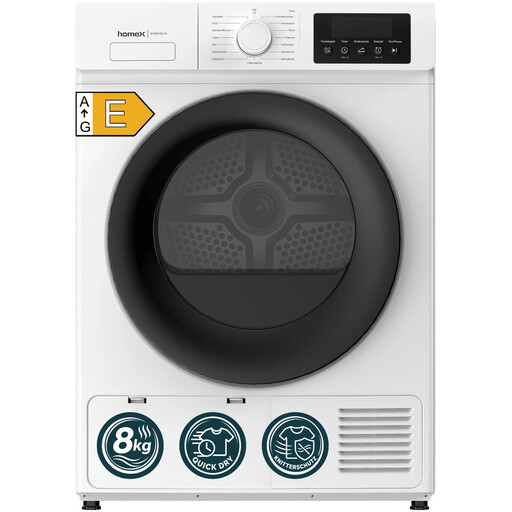
homeX WT8W1E-W, 8 kg, 15 programmes
The capacity and listed programmes may be useful for handling different types of laundry in a shared house.
Heat pump tumble dryer; 8 kg; 15 programmes, including Mix, Towels and Bedding.
The description lists adjustable drying levels, an anti-crease function and an ECO option. Clean the lint filter after every use and empty the condensate container when prompted.
Joybuy
 No image available
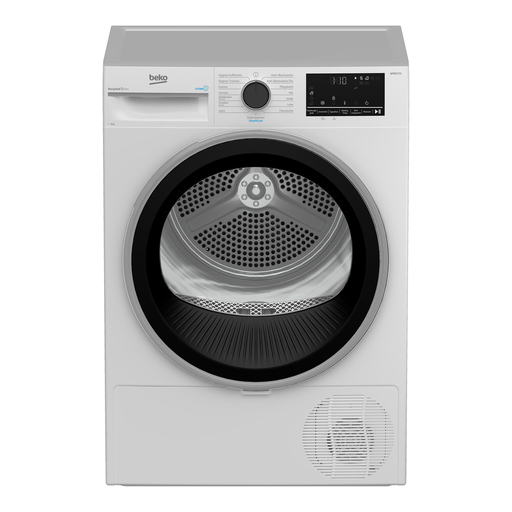
Beko B5TD6821B, 8 kg, 15 programmes
The listed cotton programme and capacity are worth considering if you regularly dry cotton laundry.
Heat pump tumble dryer; 8 kg; the product description lists a cotton programme and energy class B.
The description lists sensor drying and a Silent programme. Clean the lint filter after every drying cycle and empty the condensate container regularly.
Joybuy
 No image available
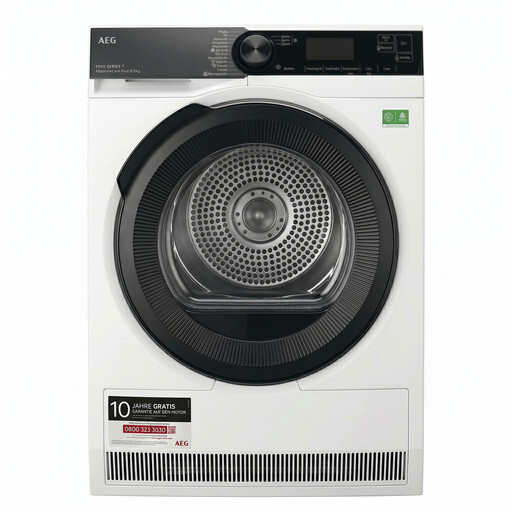
AEG TR9W75780, 8 kg
The stated capacity and cotton programme may suit shared household loads.
Heat pump tumble dryer; 8 kg; the product description lists a cotton programme and energy class B.
The description lists MixDry for cotton and synthetic loads, as well as a ProSense load sensor. Clean the lint filter after every use and empty the condensate container regularly.
Joybuy
 No image available
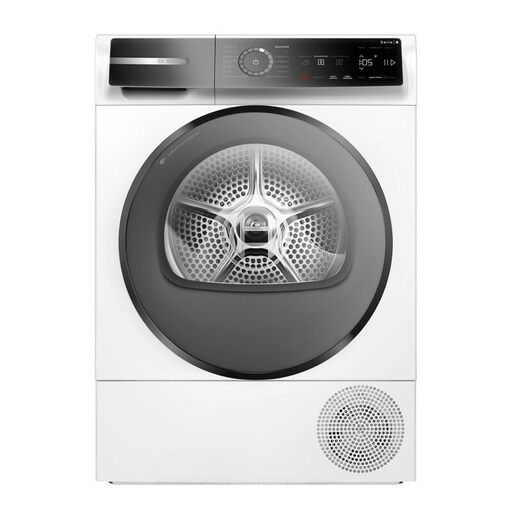
Bosch WQB246D41 Series 8, 9 kg
The stated capacity and half-load function may be useful for shared household loads of different sizes.
Heat pump tumble dryer; 9 kg; the product description lists a cotton programme and energy class B.
The description lists AutoDry and a self-cleaning condenser. Clean the lint filter after every use; empty the condensate container regularly or use the designated drain.
Joybuy
Frequently asked questions
How do we calculate electricity costs for our shared house?
Take the consumption in kWh per 100 cycles from the current label for the specific tumble dryer, divide it by 100, then multiply the result by your estimated number of cycles and your electricity price per kWh. This calculation uses the test figure from the label; your actual loads may differ.
Can every cotton item go in the tumble dryer?
No. Check the tumble-drying symbol on each item: care symbols distinguish between normal and low drying temperatures, as well as fabrics that must not go in a tumble dryer.
What should we bear in mind when drying clothes in a room?
Use a suitable drying room if you can. If you hang clothes to dry indoors, make sure you ventilate the space adequately, particularly in winter, to prevent moisture from building up. The German Environment Agency highlights this point.
What should we consider when installing and maintaining a tumble dryer?
Measure the space where you plan to put the appliance, allowing room in front of the door and following the installation instructions for your chosen model. Follow the manual for the filter and condensate: a self-cleaning condenser or specially designed filter does not automatically mean the appliance is maintenance-free.
Which energy label applies when buying in Germany?
Since 1 July 2025, household tumble dryers have used the rescaled EU energy label from A to G. An older rating such as A+++ does not belong to this scale and should not be compared directly with a current class.


