Which buying criteria matter most?
First, work out how large your usual shared loads are and what will fit in the space available. Then compare programmes and energy and water figures based on how you’ll actually use the machine.
| What matters |
What to look for when buying |
Who will find this most important |
| Suitable load capacity |
Compare the rated capacity in kg with your usual shared loads. |
If you collect laundry before washing it, the drum should suit your regular loads, not just occasional bulky items. Around 25% of consumers put load capacity first. |
| Caring for tablecloths |
Check the care label and suitable programmes; treat visible stains as soon as possible. |
If you wash cotton tablecloths regularly, you’ll want to choose a programme that suits the fabric and care instructions. For around 25% of consumers, caring for tablecloths is their main concern. |
| Installation space and design |
Measure the width, depth and clearance for opening the door; also consider the route in and the connections. |
In a tight space, the machine needs to fit with its door or lid open. Around 19% of consumers prioritise the installation space. |
| Energy and water use |
Compare kWh per 100 Eco 40–60 cycles and litres per Eco 40–60 cycle for machines with a suitable capacity. |
If the machine is used regularly, look at consumption in relation to the drum size you need; the EU label doesn’t cover every wash cycle. For around 19% of consumers, running costs are the main concern. |
| Water protection and noise |
Check the water-protection features explicitly listed and the spin noise level in dB(A). |
If the machine is close to shared living spaces, protection against water damage and spin noise are important factors. Around 12% of consumers focus on these features. |
Joybuy products for shared-house laundry
These front-loaders are designed for laundry collected together in a shared house. Check the capacity against your usual loads and the dimensions against the space you actually have.
 No image available
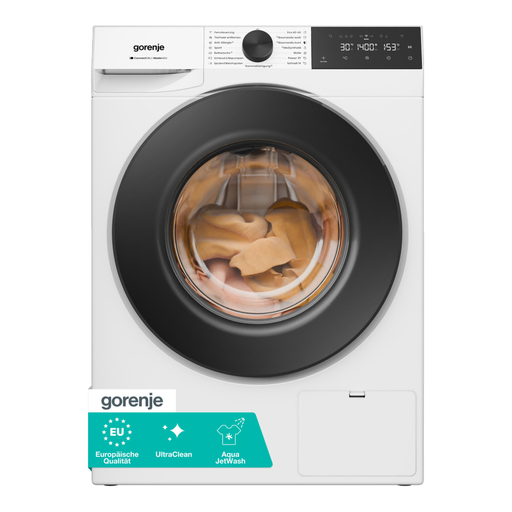
Gorenje W5G4S84AP2
The stated capacity of 8 kg could suit laundry collected together in a shared house; compare it with your usual loads.
Listed in the product name: 8 kg, 1400 rpm, energy class A, 15 programmes and a depth of 460 mm.
View at Joybuy
 No image available
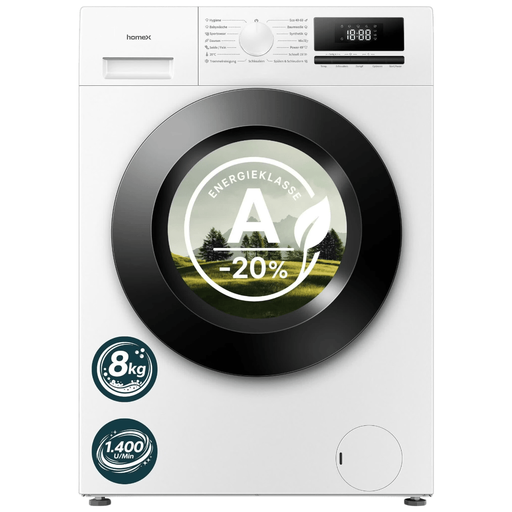
homeX WF814H1A-W
With its stated 8 kg capacity, you can consider whether this model suits your shared house’s usual loads.
Listed in the product name: 8 kg, 1400 rpm, steam function, inverter motor, AquaStop and energy class A.
View at Joybuy
 No image available
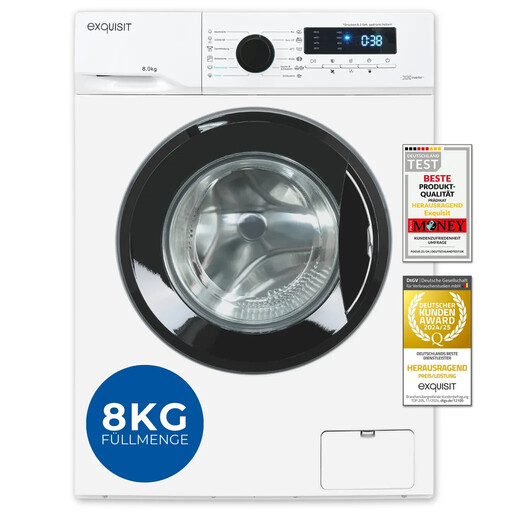
Exquisit WA58014-020A
The stated 8 kg capacity gives you a useful point of comparison for your regular shared-house loads.
Listed in the product name: 8 kg, energy class A, maximum 1400 rpm, 13 programmes, delay start and child lock.
View at Joybuy
 No image available
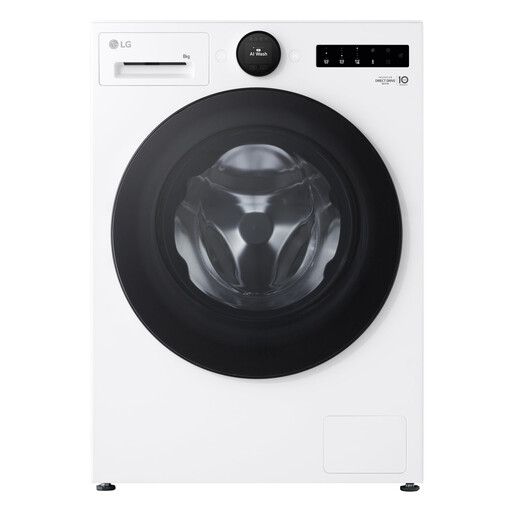
LG F4WX808YC
The stated capacity of 8 kg could work for laundry collected together, as long as it suits your usual loads.
Listed in the product name: 8 kg, 1350 rpm and energy class A-20%.
View at Joybuy
 No image available
LG F4WR5035
The stated capacity of 13 kg is only suitable if it matches your usual shared-house loads; an occasional tablecloth alone isn’t a reason to choose a larger drum.
Listed in the product name: 13 kg, 1360 rpm and energy class A-20%.
View at Joybuy
Frequently asked questions
Do cotton tablecloths always need a hot wash?
No. Always check the care label first. Eco 40–60 is intended for normally soiled cotton that the care instructions say can be washed at 40 °C or 60 °C; the Verbraucherzentrale recommends treating visible stains as soon as possible. The programme name doesn’t guarantee an actual wash temperature of 40 °C or 60 °C.
What should you check before installing the machine in a shared house?
Measure the machine and the clearance for opening it in the space where it will go, and check the connections and installation instructions for your chosen model. Also compare the water-protection features explicitly listed, as they can vary between models from the same brand.
How can you prevent odours in a shared washing machine?
Don’t leave wet laundry in the machine for long, and dry the rubber seal and detergent drawer after washing. The Verbraucherzentrale also recommends leaving the door and detergent drawer open, and washing a suitable 60 °C white load with powder detergent for whites about once a month.
Who should you contact in Germany if something is faulty?
For a purchase made by a consumer, you generally make a statutory claim for lack of conformity against the seller; this is different from a voluntary manufacturer’s guarantee. The Verbraucherzentrale states that the period is two years from delivery. For sales contracts from 31 July 2026, it describes additional rules if you choose a repair during the statutory period.
What labelling should a new washing machine sold in Germany have?
New household washing machines on the EU market are subject to energy-labelling and ecodesign rules. The EU label uses classes A to G and includes, among other information, weighted energy consumption per 100 Eco 40–60 cycles; the class isn’t a general indication of the consumption of every programme.


