What should you consider when buying?
Fridge-freezer
A good fit if: Everyone in the house share will make use of both the fridge and freezer space.
The trade-off: More compartment space takes up room and can increase energy consumption.
Fridge without a separate freezer compartment
A good fit if: You want to chill salad dressing and other fresh food, and you already have freezer space or don’t need any.
The trade-off: You won’t have a separate freezer compartment.
First, check whether your house share needs a freezer compartment. Then compare usable fridge capacity, available space and running costs.
| Priority |
What to check when buying |
Who is it important to? |
| Chilling and hygiene |
Check the temperature in the intended storage area; allow room for sealed, clearly labelled containers. |
If I use perishable ingredients, I want to handle them hygienically and keep them sufficiently chilled in their storage area. Around 36% of consumers put hygiene first. |
| Usable shared space |
Compare fridge and freezer capacities separately; check the shelves, container height, external dimensions and door opening. |
If several housemates need to store chilled food, I need enough clearly designated space without filling the kitchen with an oversized appliance. Around 29% of consumers prioritise how the space is arranged. |
| Energy consumption |
Compare the annual kWh figure on the EU energy label for appliances with suitable compartment capacities. |
If we share the running costs, I want to compare the annual energy consumption of an appliance that suits our needs. Around 21% of consumers focus mainly on electricity costs. |
| Noise and installation |
Check the noise level on the EU label, as well as the dimensions and model-specific installation guidance. |
If the fridge is near a living or working area, I want an appliance that works well in the space where it will be installed. Around 14% of consumers prioritise noise and installation. |
The consumer advice centre notes that larger fridges can use more energy. The European Commission says the EU label includes information such as annual energy consumption, fridge and freezer capacity, and noise emissions. Compare appliances with capacities that suit your house share’s actual needs.
Suitable products at Joybuy
This selection includes freestanding fridge-freezers for shared kitchens, from more compact models to appliances with larger fridge and freezer compartments.
 No image available
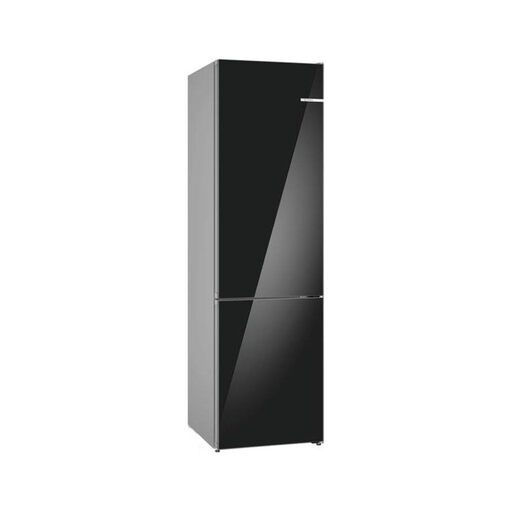
Bosch Serie 6 KGN39LBCF, 363 l, energy class C, black
A good fit if your house share needs both fridge and freezer space and has enough room for the appliance.
363 l total capacity; energy class C; black.
View at Joybuy
 No image available
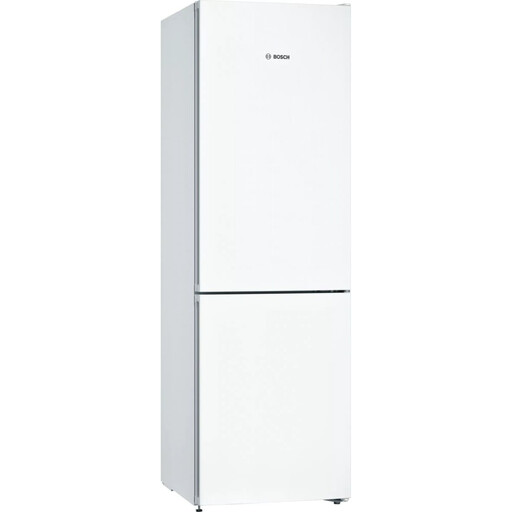
Bosch Serie 4 KGN36VWED, 326 l, energy class E, white
An option if your house share is looking for a freestanding fridge-freezer with separate fridge and freezer compartments.
NoFrost; VitaFresh; 326 l total capacity; energy class E; white.
View at Joybuy
 No image available
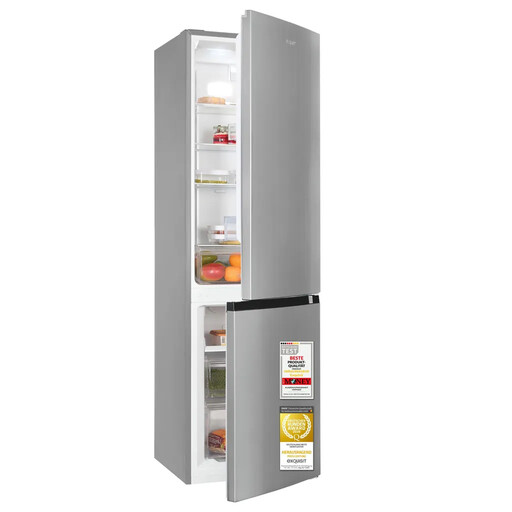
Exquisit KGC5265-70-NF-040C, 253 l, energy class C
Could suit a house share that needs fridge and freezer space in one freestanding appliance.
253 l total capacity; energy class C; 39 dB; stainless steel look; No Frost in both the fridge and freezer compartments.
View at Joybuy
 No image available
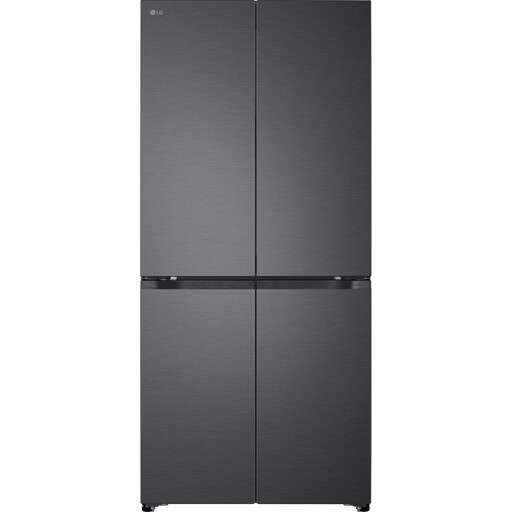
LG GMBS30SDEP, 4 doors, NoFrost
More suitable if your house share needs plenty of separate fridge and freezer space and has room for a wide appliance.
369 l fridge capacity; 211 l freezer capacity; temperature alarm; 83.5 cm wide. With a total capacity of 580 l, this is a large appliance and may not suit a kitchen with limited space.
View at Joybuy
 No image available
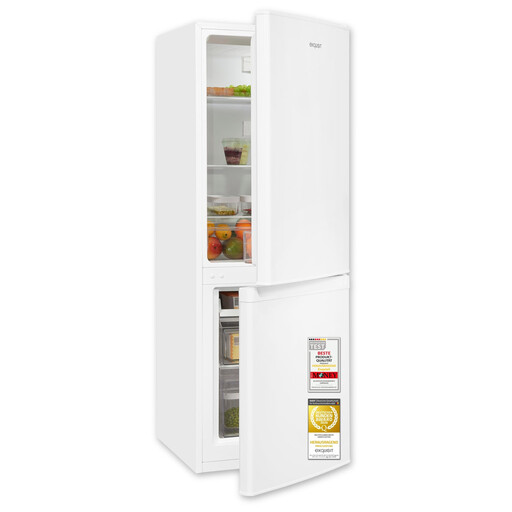
Exquisit KGC5232-60-E-040E, 173 l, white
A more compact fridge-freezer for house shares that need both fridge and freezer space in a smaller appliance.
173 l usable capacity; freezer compartment; temperature control; glass shelves; white.
View at Joybuy
Frequently asked questions
What’s the right temperature for homemade salad dressing?
There isn’t one fridge temperature that suits every salad dressing, as it depends on the ingredients. The consumer advice centre gives 7 °C for the top shelf as a general guide, not as a guarantee that every dressing can be stored safely at that temperature. If the ingredients are perishable, check the temperature in the actual storage area.
Does a fridge make dressing with raw egg safe?
No. Chilling alone won’t make dressing containing raw egg safe. The German Federal Institute for Risk Assessment lists untreated egg products, including mayonnaise, among foods that carry a risk of salmonella. Careful hygiene and chilling are important, but they won’t remove bacteria that are already present.
What should I measure before installing a fridge in a shared kitchen?
Measure the height, width and depth, as well as the space needed to open the door. Also check the installation guidance for the specific model: ETM TESTMAGAZIN notes that appliances can require different amounts of space beside a wall.
Which figures help when comparing energy use?
Compare the annual energy consumption in kWh for appliances with suitable fridge and freezer capacities. The European Commission says the EU label also shows the energy efficiency class, the capacity of each compartment and the noise emissions. The scale in use since March 2021 runs from A to G; older ratings such as A+ or A+++ are not the same labelling system.
What are the rules in Germany for returning an old fridge?
The German Environment Agency explains that when you buy a new appliance of the same type, you can return a large old electrical appliance free of charge, including with an online purchase and delivery. Check when placing your order how collection will be arranged.


