What should you look for when buying?
First, compare how easy the machine is to clean and where it will fit with your kitchen routine. Then you can work out whether its production and tank specifications meet your needs.
| What matters when buying |
What to look for |
Who should consider this? |
| Cleaning when the machine is shared |
Check whether the basket, scoop and accessible water-contact parts are easy to clean, and follow the care instructions in the manual. |
When we take turns using the machine, we want easy access to the basket and water-contact parts, and to agree on a shared cleaning routine. Around 33% of consumers put cleaning first. |
| Keeping up with demand for several drinks |
Compare cycle time, tank capacity and full-basket indicators separately from daily output; daily output doesn’t tell you how much ice is immediately available. |
When we’re making several drinks at once, I want to know how quickly the first batch is ready and when the machine needs refilling or emptying. Around 25% of consumers prioritise ice supply. |
| Footprint and ease of access |
Measure the available space and allow room to open the machine, fill it and remove the basket. Resolve any conflicting dimensions before you buy. |
When worktop space is shared and limited, I want to use the machine without blocking access to the tank or basket. Around 25% of consumers put space requirements first. |
| Noise and ongoing effort |
Check the noise specifications for the model and consider the tasks involved. You can only calculate electricity costs with a relevant energy consumption figure, the time you use the machine and your electricity tariff. |
When the kitchen is in use while the machine is running, I pay attention to noise and how much refilling and cleaning it needs. Around 17% of consumers prioritise quiet, low-effort operation. |
Ice makers at Joybuy
These options are countertop ice makers for chilled drinks. Depending on your shared needs, pay particular attention to production figures, tank size and cleaning features.
 No image available
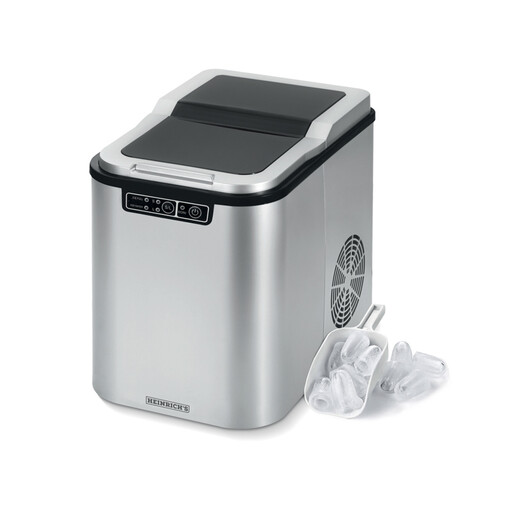
Ice maker, 120 W, 2.2-l water tank
For making several drinks one after another, the product title states that it makes 9 ice cubes in 9 minutes, with an output of 12 kg in 24 hours.
The title lists two ice sizes and a self-cleaning function; the description mentions full-basket and low-water indicators, as well as a basket and scoop.
View at Joybuy
 No image available
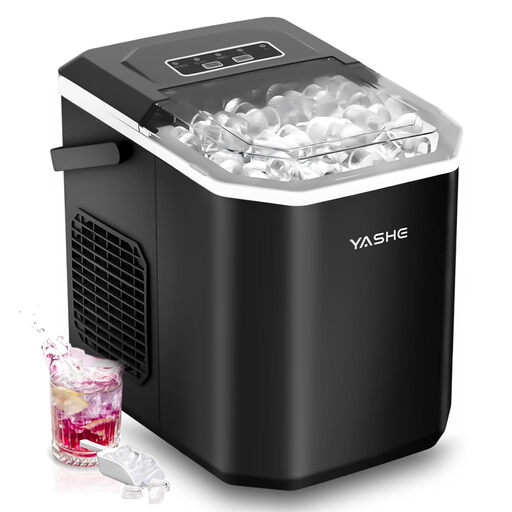
YASHE HZB-12/G ice maker
For drinks where you can choose the ice size, the product title lists two ice sizes and a self-cleaning function.
The title states that it makes 9 ice cubes in 6 minutes and up to 26 lb per day.
View at Joybuy
 No image available
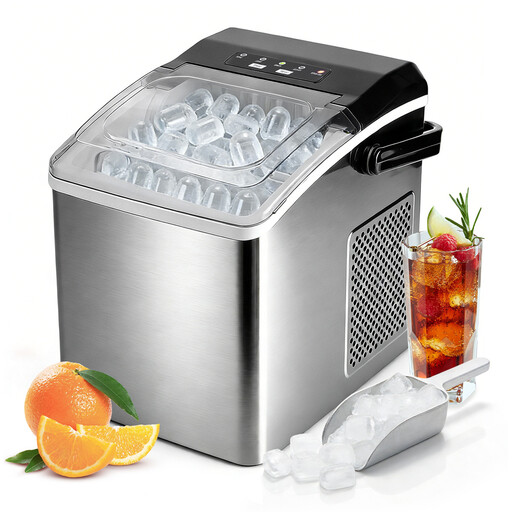
Ice maker with carry handle, 1.3-l water tank
For ice on demand, the product description states that it makes 9 ice cubes in 6 minutes, and up to 12 kg in 24 hours.
Features include two ice sizes, a self-cleaning mode and indicators for a full ice basket and when the machine needs refilling.
View at Joybuy
 No image available
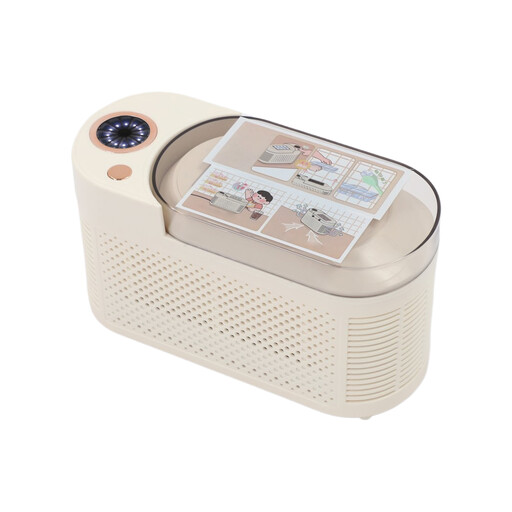
Countertop ice maker, 120 W
For drinks, the description states that it makes 8 ice cubes per cycle and offers two power options.
The description also lists an ice scoop, a transparent lid and a 12-V car cable.
View at Joybuy
 No image available
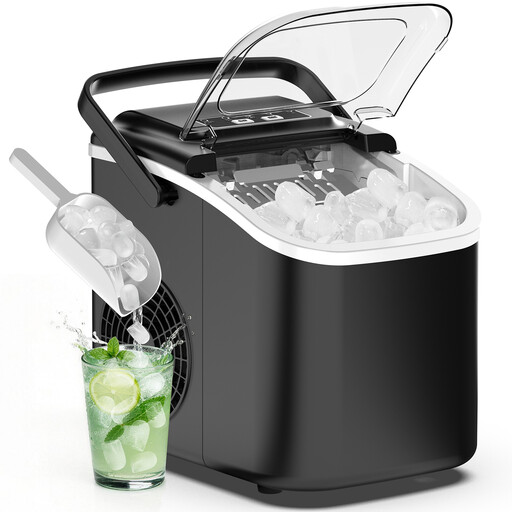
Ice maker, 12 kg/24 h, two ice sizes
For different drinks, the product description lists two ice sizes and an included ice scoop.
The title states that it makes 8 ice cubes in 6 minutes; both the title and description list a self-cleaning function.
View at Joybuy
Frequently asked questions
Does a countertop ice maker need to be connected to the water supply?
No, not every model needs a water connection. According to ProfiCook, the PC-EWB 1253 has an integrated 1.5-l tank and doesn’t need an additional water supply; check this feature for each model individually.
What water should we use to make ice for drinks?
For food and drinks, Germany’s Federal Environment Agency recommends using fresh water from the cold tap. If water has been sitting in your home’s pipes for more than four hours, run it off first; if you have concerns about your plumbing, check its condition. This recommendation doesn’t cover cleaning the machine’s tank.
Does a self-cleaning programme take care of all the maintenance?
No, a cleaning programme is a model-specific feature. It doesn’t guarantee that the basket, scoop and accessible surfaces need no further care. Set up a shared routine based on the instructions for the machine you buy; the German Federal Institute for Risk Assessment highlights the importance of hygiene in general.
Can you work out electricity consumption from the wattage?
No, wattage alone isn’t enough to calculate running costs. You’ll also need a relevant energy consumption figure, the actual time you use the machine and your electricity tariff.
Is the CE mark an independent certification of ice quality?
No, it isn’t a quality mark for ice. According to the European Union, the manufacturer uses it to declare that the product meets the applicable EU requirements; the mark doesn’t tell you whether a particular machine suits your routine.


