If you have access to a usable socket and somewhere to clean it, a mains-powered mini blender with a drinking cup is an obvious choice. If there’s no socket, a battery-powered blender could be an option. For either type, check the fill line, care instructions for the blades and cup, and whether there’s a suitable place to use it in the office. Without comparable noise measurements, no model can be considered quiet enough for a particular shared space.
Which blender is right for you?
Considerate in shared spaces
If you want to blend during working hours, look for clear noise measurements and consider whether the place and time are suitable for the office. Results from different blending tasks and measurement methods aren’t directly comparable.
Blend and tidy up quickly
If you want to make a portion directly in a drinking cup, check which parts can be removed and how the blade assembly should be cleaned. Approval for individual parts to go in the dishwasher doesn’t automatically apply to the whole appliance.
Blend without a socket
If there’s no socket where you want to blend, a charged battery-powered blender could be suitable. Before using it, check the charging port, charge level and care instructions for the specific model.
What should you look for when buying?
Mains-powered mini blender
A good fit if: There’s a usable socket where you plan to blend, and somewhere to clean the cup and blades.
Things to consider: The cable and motor base take up space; this doesn’t indicate how noisy the blender will be in an office.
Battery-powered blender
A good fit if: There’s no socket where you plan to blend and you can bring the appliance fully charged.
Things to consider: You’ll need to keep the charge level in mind and follow the manufacturer’s instructions for ingredients, the cup and cleaning.
First, decide whether there’s a socket where you plan to blend. Then check the noise information, ingredient requirements and cleaning instructions for the specific model.
| Consideration |
What to look for |
Who is it important to? |
| Being considerate in the office |
Only compare noise figures when the measurement task and method are clear. IMTEST measured 74.2 dB when making a red smoothie; this isn’t a measurement for a pear smoothie in an office. |
When I blend in a shared office, I want to avoid disturbing other people’s work as much as possible. Around 26% of consumers prioritise being considerate when blending. |
| Pear smoothie texture |
Check the model’s instructions for permitted ingredients, the amount of liquid required, the fill line and blending time. |
If I want a drinkable pear smoothie, I check the ingredient requirements and recommended fill level. Around 21% of consumers put their preferred smoothie texture first. |
| Cleaning |
Check separately whether the blades, cup and lid can be removed and are specifically approved for dishwasher use. The VKI points out that approval doesn’t apply to the blade assembly on every appliance. |
If I want to tidy up quickly after blending, it’s important that I can clean the parts I’ve used thoroughly and without unnecessary effort. Around 21% of consumers prioritise ease of cleaning. |
| Power supply |
Check whether there’s a socket where you plan to blend or whether you’ll need to bring the appliance charged; for battery-powered models, the charging port and charge level matter. |
If there’s no socket where I want to blend, I need a way to make a fresh smoothie anyway. Around 16% of consumers prioritise being independent of a mains power supply. |
| Portion size and carrying |
Check the fill line, seal and weight; the stated container capacity isn’t necessarily the usable volume for every recipe. |
If I want to take a single portion between my workspace and the office kitchen, a suitable cup and lid are important. Around 16% of consumers prioritise being able to carry a portion with them. |
Common buying mistakes
-
Assuming wattage means a better texture or less noise
The rated power alone doesn’t tell you how an appliance will blend pears or how noisy it will be for a particular task.
Check which ingredients are permitted and read the guidance on blending time and fill level. Only compare noise figures when the measurement task and method are clear.
-
Assuming “dishwasher-safe” applies to the whole appliance
Approval may apply to individual parts, but not to the blade assembly or motor base. Some parts may need to be washed by hand.
Before choosing a model, read the care instructions for the cup, lid and blades separately.
Having to wash extra parts by hand can take more time in the office.
-
Assuming models with similar names are identical
Variants may differ in their power supply, cup and included accessories. A similar name alone doesn’t prove that they have the same features.
Compare the full model number, cup, accessories and power supply with the details on the specific product page.
Brands to consider
WMF
The Kult X Mix & Go is a mains-powered mini blender with a 0.6-l drinking cup.
- WMF lists 300 W, a screw-on lid and a safety cut-off if the cup isn’t fitted correctly.
- These specifications don’t confirm a particular noise level in an office or a specific texture when blending pears.
Bosch
The VitaPower Serie 2 MMB2111S is a mains-powered mini blender with a to-go cup.
- Bosch lists 450 W and a 0.6-l cup; according to the manufacturer, some parts are dishwasher-safe.
- Bosch gives a sound power level of 86 dB(A) for this model. This figure isn’t directly comparable with noise measurements taken in other ways.
nutribullet
The Flip NBP016B is a battery-powered option with USB-C charging and an insulated cup.
- Its features let you blend somewhere without a socket, as long as the appliance is charged.
- Follow the cleaning instructions for this specific model, taking its battery and integrated design into account.
Severin
The SM 3743 is a mains-powered blender supplied with two blend-and-drink cups.
- Severin lists 320 W, two speed settings and a pulse function.
- According to the manufacturer, the appliance is designed for short bursts and should run for no more than about one minute at a time.
Ninja
The range includes various portable models, including the mains-powered BlendBoss with a to-go cup and the cordless Blast.
- The BlendBoss and Blast have different power supplies.
- Information about one model doesn’t automatically apply to the other; check the full model number and features.
Blenders at Joybuy
The selection includes portable smoothie blenders: mains-powered appliances with drinking cups and battery-powered models for places without a usable socket.
 No image available
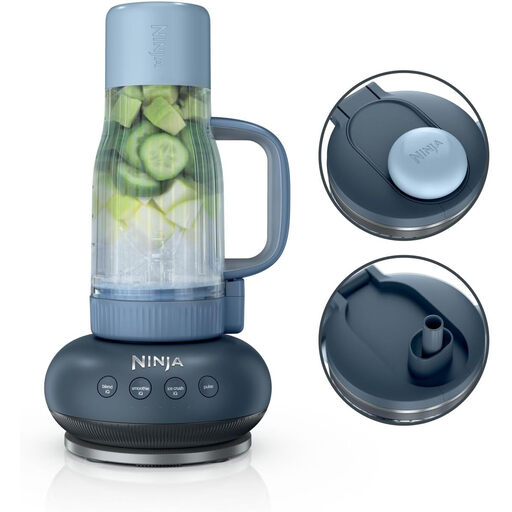
Ninja BlendBoss, Cyberspace, 710 ml
Worth considering if you’re looking for a portable blender with a travel cup. The cup holds 710 ml; the listed features include three automatic programmes, ice crushing and dishwasher-safe parts.
View at Joybuy
 No image available
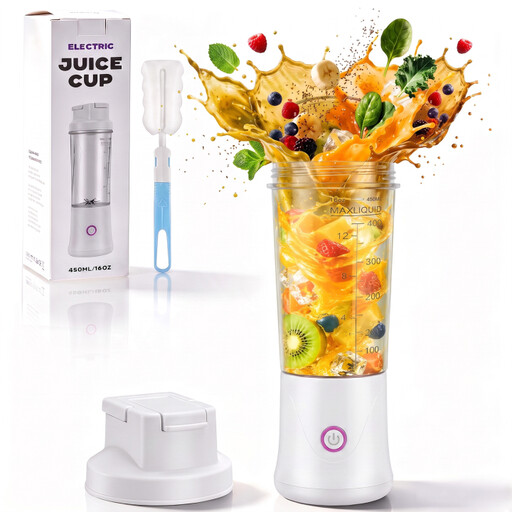
Portable Blender, 652 ml, 6 Blades, White
An option if you’re looking for a portable smoothie blender. The product name specifies a 652 ml container and six blades; ingredients should be cut into smaller pieces beforehand, and the container shouldn’t be overfilled.
View at Joybuy
 No image available
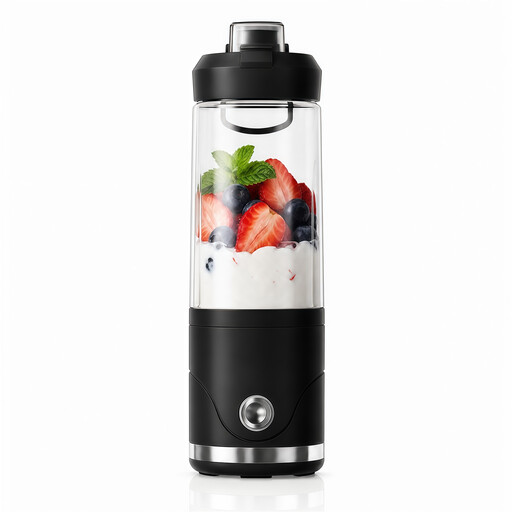
Portable USB-C Blender, 6 Blades, Black
Worth considering if you want to blend without a socket and can charge the appliance beforehand. It’s listed as having USB-C charging and six blades; according to the product details, a full charge takes four hours.
View at Joybuy
 No image available
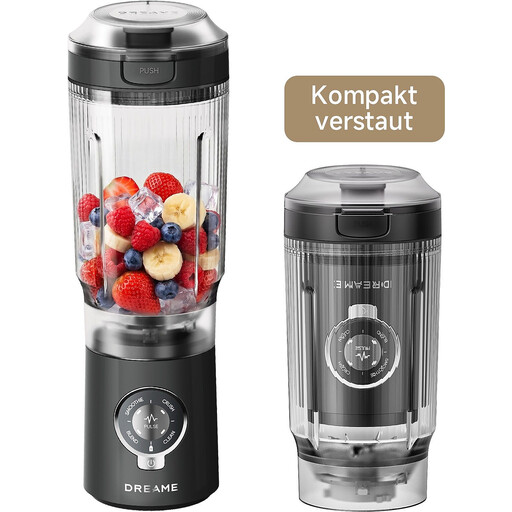
Dreame 3-in-1 Smoothie Maker, 0.88 l, 120 W, Grey/Black
Worth considering if you’re looking for a cordless blender with a drinking lid. The listed specifications include a 0.88-l container, 120 W and USB-C charging; the appliance should be fully charged before use.
View at Joybuy
 No image available
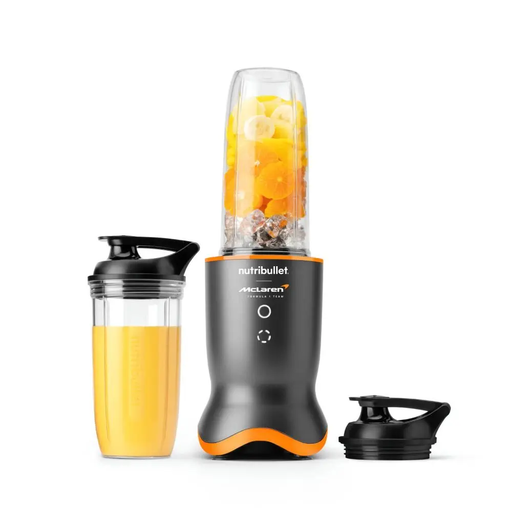
nutribullet Ultra NB1206GO-MC, Dark Grey
An option if you’re looking for a mains-powered personal blender. According to the product details, it should run for no more than 60 seconds at a time and be left to cool for at least one minute between cycles; handle and clean the sharp blade assembly with care.
View at Joybuy
Frequently asked questions
How can I prepare pears hygienically in a shared office?
Use fresh ingredients with no signs of spoilage, wash the fruit thoroughly and clean any utensils you’ve used. The German Federal Institute for Risk Assessment gives this food hygiene advice; it doesn’t mean that any particular blender kills germs.
Can the blade assembly go in the dishwasher?
It depends on the model and the specific part. Check the instructions separately to see whether the cup, lid and blades are dishwasher-safe.
Is a battery-powered blender automatically quieter?
No. You can’t tell how noisy it will be from the power supply alone. Only compare noise information when the measurement task and method are clear, and take the specific workspace into account.
What should I look for to ensure the product is safe?
Check the manufacturer details, product labelling, and the required instructions and warnings in German. The German Federal Network Agency recommends these points as a guide; CE marking is only mandatory when the relevant harmonised EU rules require it.


