A team ordering several lattes
If several lattes are being made one after another, the stated frothing capacity and practical cleaning between uses both matter. Rommelsbacher lists a 250 ml frothing capacity for the MS 625.


In a shared office, your choice should mainly depend on the amount of froth you need and how easy it is to clean the parts that come into contact with milk. A compact automatic frother can prepare individual drinks and heat the milk; the F.A.Z. Kaufkompass notes that the jug of the Philips CA6500/60 is not dishwasher-safe. For several uses, a removable jug can be handy if you have enough worktop space: Rommelsbacher lists a 250 ml frothing capacity for the MS 625, while a battery-operated handheld whisk does not heat the milk itself.
If several lattes are being made one after another, the stated frothing capacity and practical cleaning between uses both matter. Rommelsbacher lists a 250 ml frothing capacity for the MS 625.
If you organise the shared kitchen, check the instructions for cleaning the jug, lid and whisk. Melitta says the Cremio’s lid and whisk are dishwasher-safe, but the jug must be cleaned by hand.
If you usually make just one drink for yourself, weigh up the space needed against the extra steps involved. Philips lists compact dimensions for the CA6500/60; CASO describes the Fomini 1610 as a battery-operated handheld whisk that does not heat milk.
For a shared office, the main considerations are cleaning, the right frothing capacity, the drinks you want to make and the space available.
| Priority | What to check before buying | Who is it important to? |
|---|---|---|
| Cleaning between uses | Check the instructions for the jug, lid, whisk and base separately. Removable parts are not necessarily dishwasher-safe. | If several people use the frother after each round of lattes, I want to be able to clean all the parts that come into contact with milk easily. For around 36% of consumers, cleaning between uses is the top priority. |
| Frothing capacity for several drinks | Compare the stated frothing capacity, not the total volume. Rommelsbacher lists 250 ml for frothing and 500 ml for mixing with the MS 625; Melitta lists 100 to 150 ml of froth and 100 to 250 ml of warm milk for the Cremio. | If several lattes are ordered one after another, I need a frothing capacity that matches the number of drinks. Around 29% of consumers prioritise the amount available for several servings. |
| Drinks and types of milk | Check the hot and cold programmes, as well as the guidance on the milk or plant-based drink to use. Rommelsbacher distinguishes between regular and barista oat drink for the MS 625. | When people want different types of latte, I want to know whether the preparation method works with the plant-based drink being used. Around 21% of consumers put drink variety first. |
| Space and single servings | Compare the appliance’s dimensions, power source and any extra steps required. Philips lists dimensions of 12,8 × 12,8 × 19,4 cm for the CA6500/60; CASO specifies two AA batteries for the Fomini 1610. | If I usually make my own latte and have little worktop space, I want to weigh up the space needed and the extra steps involved. For around 14% of consumers, space and making single servings are the main priorities. |
Manufacturers list different capacities for frothing and simply heating milk. So a larger number on the jug does not necessarily tell you how much milk froth it can make in one cycle.
If the actual frothing capacity is lower than you need, you will have to run extra cycles to make several drinks.
Check the stated frothing capacity and fill-level markings rather than relying on the largest volume figure.
Cleaning instructions can vary from one part to another. For the Melitta Cremio, the manufacturer says the lid and whisk are dishwasher-safe, but the jug must be cleaned by hand. The F.A.Z. Kaufkompass notes that the jug of the Philips CA6500/60 is not dishwasher-safe.
If some parts need to be cleaned by hand, someone will still have to do that regularly when the appliance is shared.
Check the instructions for each part that comes into contact with milk, as well as the electrical base.
The CASO Fomini 1610 is a battery-operated handheld whisk, not a heated jug. For a warm latte, you will need to heat the milk separately.
You will also need a separate container and batteries. CASO’s instructions describe this model as intended for private use and unsuitable for commercial use.
Choose a handheld whisk only if the extra steps are practical, and check that your intended office use complies with the manufacturer’s guidance.
The points below apply to the product lines and models mentioned, not necessarily to every appliance from each brand.
The MS 625 is an option for offices where several drinks and different frothing programmes are needed.
The Milk Twister CA6500/60 may suit single or small servings where worktop space is limited.
The Cremio has separate fill levels for froth and warm milk, with programmes for both hot and cold preparation.
The battery-operated Fomini 1610 is a space-saving handheld whisk for individual drinks.
The MS 3693 is designed for making hot or cold froth and heating milk, according to the manufacturer.
Here you’ll find automatic and manual milk frothers for different ways of preparing lattes. Before sharing one in the office, check the information about the materials that come into contact with milk, cleaning and intended use.
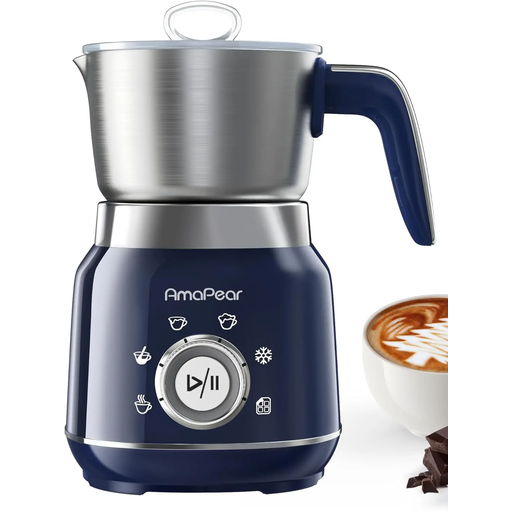 No image available
Could be worth considering if you’re making several lattes one after another; check that the appliance’s actual frothing capacity meets your needs.
Features listed in the product name: 6 programmes, 1 L and 630 W; for hot and cold milk froth and chocolate milk.
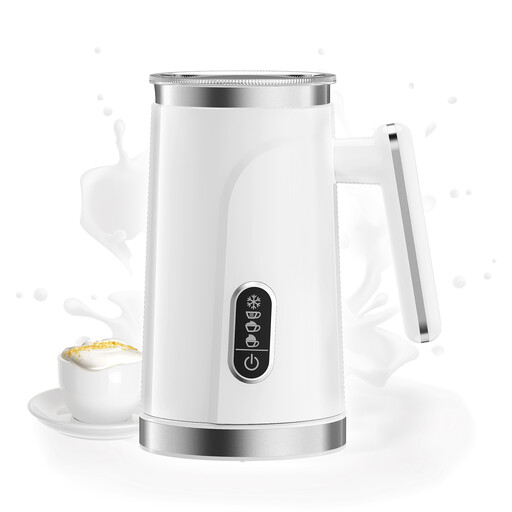 No image available
Could suit you if you prefer automatic preparation; check that the actual frothing capacity is enough for your drinks.
Features listed in the product name: 500 W, 4-in-1, one-button control and automatic shut-off; for hot and cold milk froth.
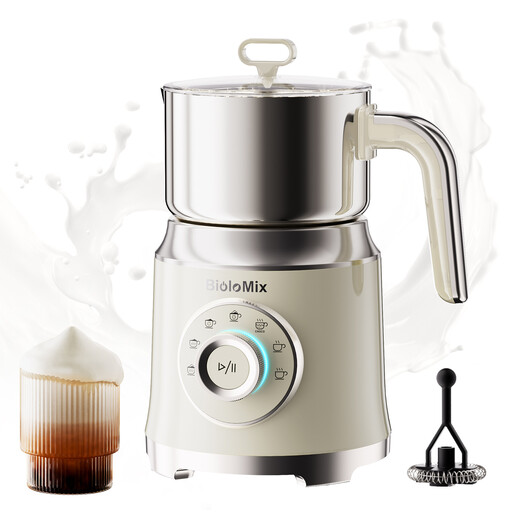 No image available
A removable jug and whisk may make cleaning between uses easier; check the instructions for each part.
Features listed in the product name: 1,2 L, 600 W, removable stainless steel milk jug and detachable magnetic whisk.
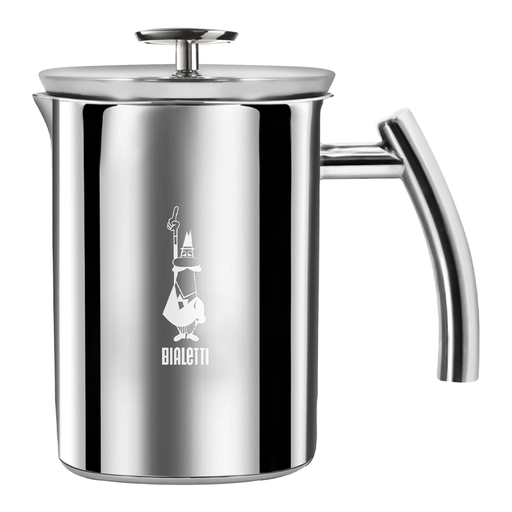 No image available
A manual option if your office has a suitable induction hob; check the capacity you need and the cleaning instructions.
Features listed in the product name: stainless steel and suitable for induction hobs.
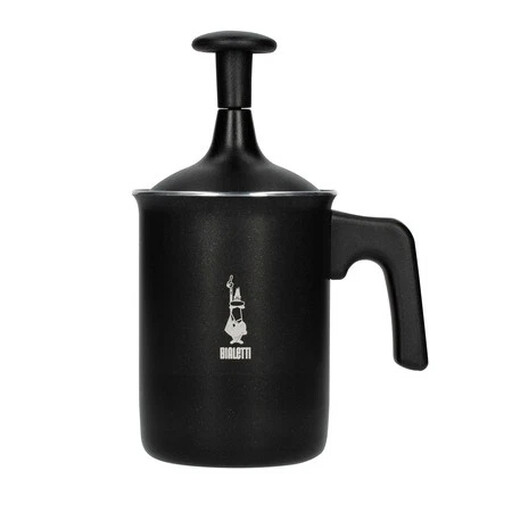 No image available
A manual option if the extra preparation step is practical in your office; check that it suits your hob and the amount of froth you need.
Features listed in the product name: Tutto Crema and 8 cm.
Follow the instructions for each individual part and remove any milk residue after use. For the Melitta Cremio, the manufacturer says the lid and whisk are dishwasher-safe, but not the jug. The German Federal Institute for Risk Assessment recommends keeping perishable food as cold as possible in private households until it is prepared or eaten; this is not specific guidance for office milk frothers.
No. What matters is the stated frothing capacity. Rommelsbacher lists a 250 ml capacity for frothing and 500 ml for mixing with the MS 625. For the Cremio, Melitta lists 100 to 150 ml of froth and 100 to 250 ml of warm milk.
EUR-Lex summarises the EU rules on food contact materials, which also cover food-processing appliances. These rules alone do not establish whether the materials in a specific model are suitable, so check the product information. The Low Voltage Directive 2014/35/EU covers electrical equipment rated at 50 to 1.000 V AC or 75 to 1.500 V DC; these voltage ranges do not automatically apply to battery-operated handheld whisks. The German Federal Network Agency explains that the CE marking is the manufacturer’s own declaration of conformity and is not an independent quality mark for milk froth.
No. The German consumer advice centre distinguishes statutory consumer rights from an additional voluntary guarantee, which is subject to its own terms. When buying an appliance for the office, check who the contracting party is and whether the intended shared use is covered by the manufacturer’s guidance; CASO’s instructions exclude commercial use of the Fomini 1610.