For a podcast archive accessed by several people, choose a NAS that suits your sharing needs, usable storage capacity and existing network. You should also plan for compatible drives and a separate backup, and test that you can restore from it: RAID mirroring is no substitute for a backup.
Who is this guide for?
Podcast teams sharing a file archive
When several people need access to episodes and project files, shared folders and appropriately assigned user or group permissions can make things easier. Synology provides guidance on setting these access permissions.
Teams with recordings that are hard to replace
If you need to be able to restore raw recordings and finished episodes, plan for a separate backup and a restore test as well as your RAID configuration. The German Federal Office for Information Security distinguishes data mirroring from data backup.
Archives with growing collections
As your storage needs grow, usable capacity, suitable hard drives and compatibility with your specific NAS model all matter. Synology and Western Digital provide information for individual models and product ranges.
What should you look for when buying?
First, consider how your team will share files and how you’ll restore recordings if needed. Then you can assess the drives, usable capacity and the right network connection.
| Buying criterion |
What to look for |
Who is it most important for? |
| Restoring recordings |
Plan for a separate backup destination, a backup routine and a trial restore. |
If raw recordings or finished episodes are hard to replace, I want to be able to retrieve deleted files from a separate copy. Around 33% of consumers put the ability to restore files first. |
| Organised team access |
Check shared folders and user or group permissions, and plan how to organise raw files, projects and published episodes. |
As a team, we want files to be easy to find without giving everyone the same editing permissions. Around 27% of consumers prioritise organised shared access. |
| Usable storage and drives |
Estimate your current data and future growth; check the exact drive model number against the NAS compatibility list. |
As the archive grows, I want to plan for usable space rather than just the combined capacity of the drives. Around 20% of consumers prioritise enough archive storage and suitable drives. |
| Transfer speeds for large files |
Check the NAS and workstation ports, as well as the connection between them, before making 2.5GbE a reason to buy. |
When transferring large files regularly, I want to know whether the workstation, NAS and network can all support faster transfers. Around 20% of consumers prioritise this kind of file transfer. |
Common buying mistakes
-
Assuming RAID mirroring is a complete backup
Mirroring can also replicate changes such as accidentally overwriting a file. The German Federal Office for Information Security does not consider RAID mirroring to be data backup.
Plan for a separate copy and test whether you can restore files from it.
Allow for an additional backup drive or destination, as well as time to test restores.
-
Assuming an empty enclosure is ready to use as an archive
Usable capacity depends on the drives installed and the storage configuration you choose. If you buy an empty enclosure, you’ll need to budget for compatible drives too.
Check what’s included, how much storage will be usable and whether the exact drive models are compatible with the NAS.
You’ll need to install additional internal drives and choose ones that work with your specific NAS.
-
Expecting a 2.5GbE port to make everything faster
A faster NAS port alone won’t speed up transfers if your workstation or the rest of your network can’t keep up.
Check the ports and connections along the entire transfer route.
A faster transfer route may require upgrades to other networking equipment.
-
Choosing a NAS hard drive by product family alone
Western Digital’s WD Red range includes different series that use different recording technologies. The product family name alone won’t tell you whether a specific drive is right for your NAS.
Check the model number, recording technology and compatibility with your NAS.
Brands to consider
Synology
The DS225+ is a two-bay NAS with 2.5GbE for centralised file storage and backups.
- Synology provides guidance on shared folders and backup features.
- The manufacturer refers users to its drive compatibility list. The DS225+ throughput figures are based on internal tests; an independent review describes the speed benefit as dependent on a fast network.
QNAP
The TS-233 is a two-bay option for centralised storage and file sharing on a Gigabit network.
- QNAP lists Gigabit Ethernet and a USB copy button.
- The manufacturer says the TS-233’s built-in 2 GB of memory cannot be upgraded.
TerraMaster
The F2-425 is a two-bay NAS with 2.5GbE for a suitably equipped workstation.
- TerraMaster lists 4 GB of memory and a 2.5GbE port.
- Advertised performance benefits are based on the manufacturer’s claims and don’t prove an advantage over every other NAS.
ASUSTOR
The AS5402T is a two-bay option with additional networking and M.2 connectivity to consider.
- ASUSTOR lists two 2.5 Gigabit Ethernet ports and four M.2 slots.
- Whether these connections benefit your podcast workflow depends on your network and setup.
Western Digital
WD Red Plus is an internal hard drive range for NAS systems, not a standalone device for shared network folders.
- Western Digital specifies CMR as the recording technology for WD Red Plus.
- The WD Red family includes different series and recording technologies. Check the exact model number and NAS compatibility.
NAS devices and hard drives at Joybuy
This selection includes Synology NAS enclosures with different numbers of bays, as well as internal Synology hard drives for adding to compatible systems.
 No image available
Synology DiskStation DS925+ 4-Bay NAS
An option for shared file storage if you need four drive bays and expandability.
Four drive bays; expandable to up to nine bays; two 2.5GbE ports; M.2 NVMe SSD cache. The user guide limits drive compatibility to Synology drives.
View at Joybuy
 No image available
Synology DiskStation DS1825+ 8-Bay NAS
An option for shared workflows if eight drive bays and the option to expand suit your archive needs.
Eight drive bays; expansion option; two built-in 2.5GbE ports; optional 10GbE. Compatible drives must be installed before use.
View at Joybuy
 No image available
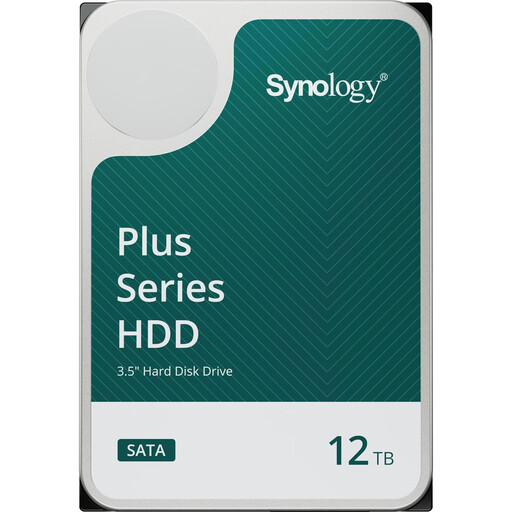
Synology HAT3310-12T 12TB NAS hard drive
An internal hard drive for adding to a compatible Synology NAS.
12 TB; CMR; SATA III; 3.5 inches; 7200 RPM; 512 MB cache; maximum workload rate 180 TB/year. For use with compatible Synology NAS systems only.
View at Joybuy
 No image available
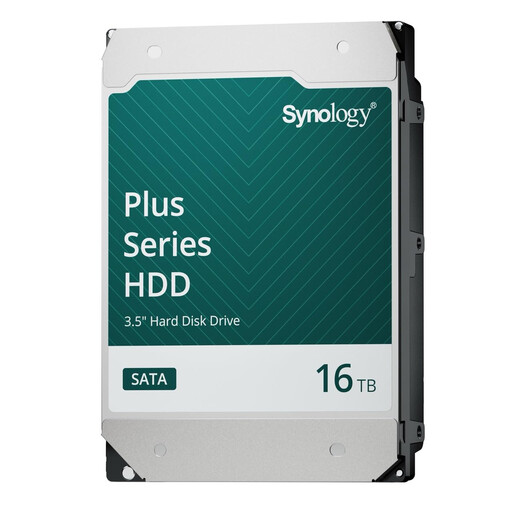
Synology HAT3310-16T 16TB NAS hard drive
An internal hard drive for adding to a compatible Synology NAS.
16 TB; CMR; SATA 6Gb/s; 3.5 inches; 7200 RPM; maximum workload rate 180 TB/year. For use with compatible Synology NAS systems only.
View at Joybuy
 No image available
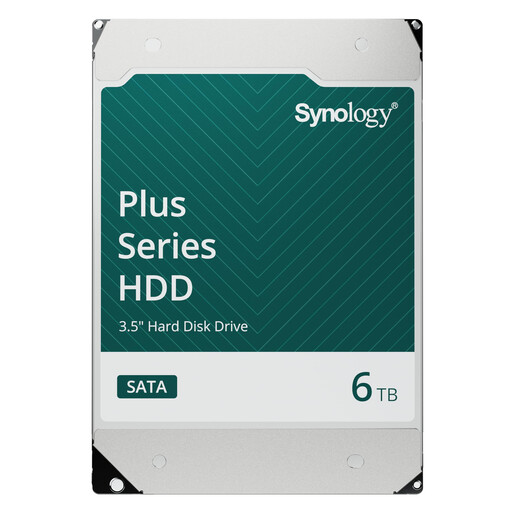
Synology HAT3300-6T 6TB NAS hard drive
An internal hard drive for adding to a compatible Synology NAS.
6 TB; CMR; SATA 6Gb/s; 3.5 inches; 5400 RPM; maximum workload rate 180 TB/year. For use with compatible Synology NAS systems only.
View at Joybuy
Frequently asked questions
Is RAID 1 enough to back up my podcast episodes?
No. RAID mirroring is no substitute for a separate data backup. The German Federal Office for Information Security distinguishes mirroring from backup; mirrored changes can also replicate an accidental overwrite. Keep a separate copy and test that you can restore from it.
How do I set up shared folders on a Windows workstation?
According to Synology’s documentation, you can enable SMB and map shared folders as network drives. Set folder and group permissions to suit your team’s roles. The setup process varies on other NAS systems.
Are hard drives included with an empty NAS enclosure?
Not necessarily. Check the specific listing to see whether drives are included, how much storage will be usable and whether the hard drives are compatible with the NAS model.
What should I consider when podcast recordings contain personal data?
If you process personal data, the obligations that apply depend on who is responsible and how the processing is carried out. In its resolution of 24 November 2021, the Data Protection Conference describes technical and organisational measures under Article 32 of the GDPR as legal obligations. This does not establish a general retention period or require you to use a particular NAS model.


