
Lieferung heute & morgen

Qualitätsgarantie

Willkommens-Angebote freischalten: KOSTENLOSE Lieferung | Bis zu 80 % RABATT | Kostenlose 30-Tage-JoyPlus-Testphase
App herunterladen
A new smartphone is a significant investment, and protecting its display is a top priority. However, the screen protector market is flooded with marketing promises that often create more confusion than clarity. Many users invest in products that don't deliver, only to end up with a scratched or cracked screen. Before you buy a screen protector, it's crucial to know the most common pitfalls and understand which technical features truly matter.
As your Joybuy Product Recommendation Officer, I'm here to help you separate fact from marketing myths. In this guide, we'll focus on the critical properties of a high-quality, reinforced protective film and how you can make an informed decision.
Choosing a screen protector can quickly become overwhelming. Manufacturers advertise with technical specs whose meanings are often unclear. Here are three common misconceptions that lead to poor purchasing decisions:
To make the right choice, you should focus on the objective technical features that determine actual protection and usability.
The biggest distinction lies in the material. Traditional tempered glass is rigid and made of hardened glass. It offers high scratch resistance and a glass-like feel but is brittle. It often breaks on hard impact and must be replaced.
In contrast, a modern reinforced protective film is often a multi-layered, flexible protective film. These hybrid materials combine the scratch resistance of a hard top layer with the shock-absorbing properties of a flexible core. They are an excellent alternative to tempered glass because they can cushion impacts better without shattering themselves.
The hardness rating (e.g., 7H) indicates how well the surface is protected from scratches. For everyday protection, a rating of 7H or higher is generally sufficient to prevent scratches from keys or coins in your pocket.
However, impact resistance is more important. Some manufacturers, like 3mk, state that their films increase screen durability by a specific factor. A claim like "strengthens screen durability by up to 700%" (according to manufacturer 3mk) is a concrete indicator of the film's ability to absorb impact energy. Such an impact-resistant phone film offers significantly greater protection during drops.
The thickness of a film affects both the user experience and the level of protection. Very thin films (under 0.2 mm) are barely noticeable but often provide less impact protection. Thicker films (approx. 0.4 mm) can offer a more glass-like feel and distribute impact energy more effectively. Ensure that the film does not interfere with in-display sensors, like the fingerprint scanner, and is compatible with your phone case ("case-friendly").
Based on the criteria above, we have identified several products suited for specific user profiles and their needs.
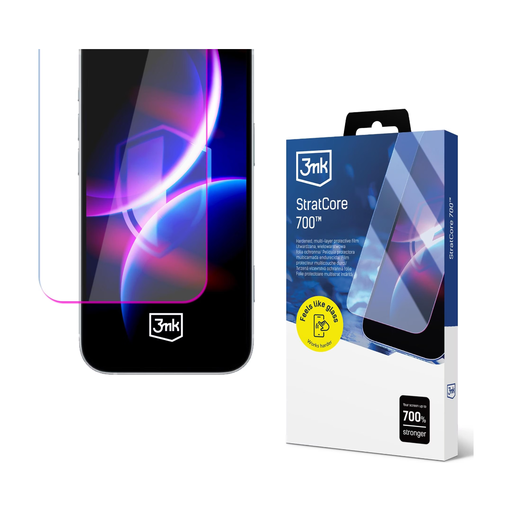
Why it's a good fit: Anyone with a high-end device like the iPhone 17 Pro wants maximum protection without compromising the premium feel and user experience. This film combines high shock absorption with a smooth, glass-like surface.
Instead of just advertising a hardness rating, the focus is on impact resistance. The flexible multi-layer structure absorbs shocks rather than shattering like rigid glass.
Offers up to 700% greater screen reinforcement (per manufacturer claims) and a 0.4 mm thickness for a solid feel and high protection.
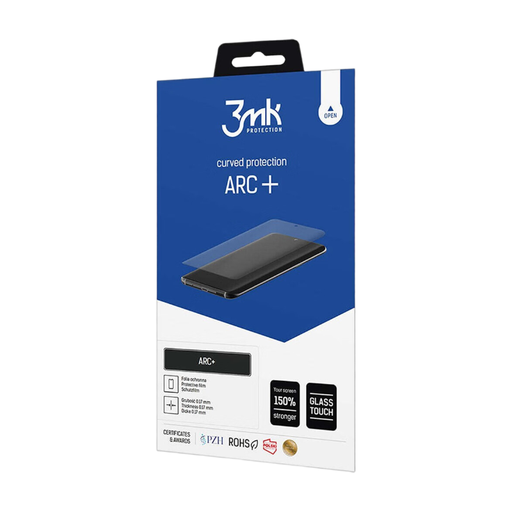
Why it's a good fit: Owners of devices like the Samsung Galaxy S25 Ultra need a film that perfectly conforms to the curved edges. This product is specifically designed for that purpose and uses a wet application method to ensure bubble-free adhesion.
Solves the poor-fit problem by offering a flexible film with a special installation method for complete and durable edge-to-edge coverage.
The Self-Heal technology repairs minor scratches on its own within 24 hours (per manufacturer claims), ensuring a permanently clear surface.
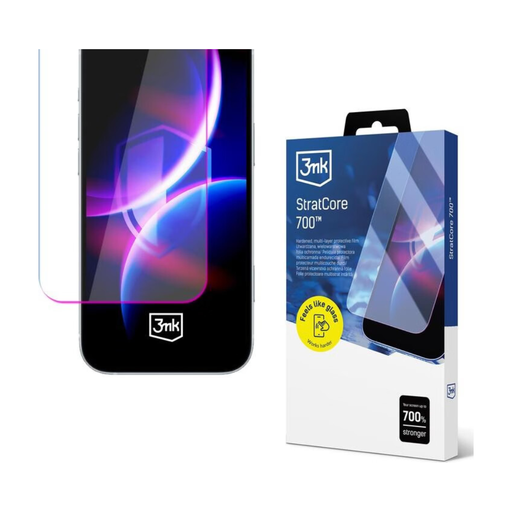
Why it's a good fit: Reliable protection is just as important for mid-range smartphones. This product brings the advanced protection technology of premium models to popular devices like the Samsung A-series at an accessible price.
Delivers demonstrable value through high impact resistance instead of vague marketing terms, effectively protecting the investment in the smartphone.
Features the same 700% reinforcement technology (per manufacturer claims) as the flagship models, making a high level of protection accessible for a wider range of devices.
We have compiled a complete, up-to-date list of products that fully meet these strict selection criteria and German safety regulations.
Tempered glass is a rigid sheet of chemically hardened glass. It is very scratch-resistant but brittle and can break on impact. A reinforced protective film is often a flexible, multi-layer film that absorbs and distributes impact energy through its structure. It is more resistant to chipping and often provides better protection against repeated impacts.
The lifespan depends heavily on usage. Since a flexible protective film doesn't shatter like glass, it generally needs to be replaced less often. However, it can accumulate scratches over time, although some models feature self-healing properties for minor scuffs. Tempered glass must be replaced immediately after it cracks to maintain protection and safety.
This depends on the sensor's technology and the quality of the film. Ultrasonic fingerprint sensors, which are built into many modern smartphones, can be affected by materials that are too thick or unsuitable. Manufacturers of high-quality screen protectors usually state whether their products are compatible with these sensors. It is advisable to re-register your fingerprints after installation.