
Lieferung heute & morgen

Qualitätsgarantie

Willkommens-Angebote freischalten: KOSTENLOSE Lieferung | Bis zu 80 % RABATT | Kostenlose 30-Tage-JoyPlus-Testphase
App herunterladen
There are plenty of Sheba wet cat food options to choose from: sauce, jelly, pâté, fillets, fish, poultry and multipacks. But for cat owners in the UK, flavour isn’t the only thing that matters. The recipe, life stage, portion size and whether a product is complete or complementary all help determine whether it’s right for your cat’s daily routine.
Terms such as “natural ingredients” or “no artificial colours” describe individual features, but don’t automatically tell you how much of a particular type of meat or fish a product contains. Many recipes group meat and animal derivatives together. So if you’re looking specifically for cat food with chicken or cat food with fish, check the full ingredients list.
A product labelled as complete food is intended to provide your cat’s daily nutrition when fed according to the feeding guidelines. Fillet products in small 60-g trays, on the other hand, are often complementary foods. They can accompany a meal or make a special treat, but they aren’t necessarily a substitute for your cat’s main food.
50-g pouches are suitable for smaller meals or mixed feeding. 85-g pouches and trays are more practical for many adult cats when a larger portion is needed. A large Sheba cat food multipack can reduce the cost per portion, but it’s only worthwhile if your cat regularly eats the varieties included and you have enough storage space.
For cats under twelve months old, choose a product specifically labelled as junior or kitten food. Adult recipes are intended for fully grown cats. If you’re changing your cat’s food, it’s best to do so gradually over several days. If your cat has known intolerances or specific dietary needs, discuss the ingredients with your vet.
Texture is mainly a matter of what your cat enjoys and what fits your feeding routine:
Always check the ingredients list and packaging to confirm whether a product is labelled as “grain-free cat food”. Recipes can vary between product ranges.
Check the protein, fat, moisture and crude ash content, as well as the recommended daily amount. Analytical values are only useful for comparing products when their moisture content is taken into account. Your cat’s activity level, weight and individual body condition also matter.
Opened pouches and trays should be refrigerated according to the manufacturer’s instructions and used within the stated time. Store unopened portions in a cool, dry place away from direct sunlight. Make sure fresh drinking water is always available.
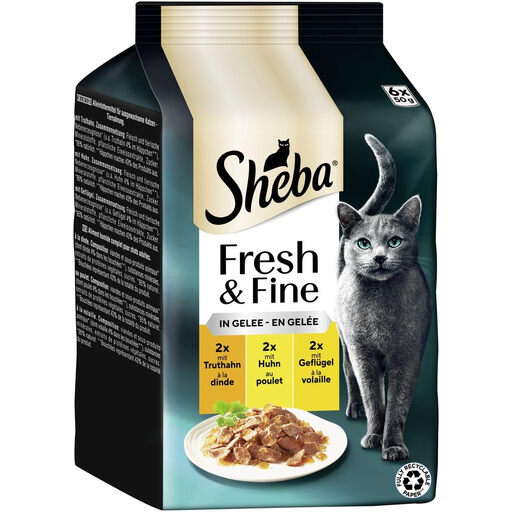
Why this product suits this profile: The six 50-g portions are ideal for smaller meals, mixed feeding or trying out a jelly texture.
The smaller pack helps you avoid buying a large supply of a flavour your cat may not like. The product information says it provides complete nutrition for adult cats.
6 x 50 g, jelly texture, poultry varieties and, according to the product information, no artificial colours or preservatives.
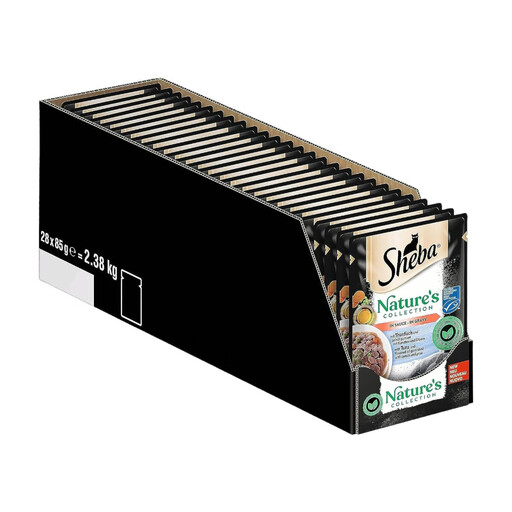
Why this product suits this profile: The pack of 28 portions is a good choice for households that regularly feed their cats food in sauce and look for clearly stated fish provenance.
The pack specifically states that the recipe is grain-free and contains MSC-certified tuna. Even so, check the current ingredients list on the packaging.
28 x 85 g, complete food for adult cats according to the product information, with a declared MSC-certified fish ingredient.
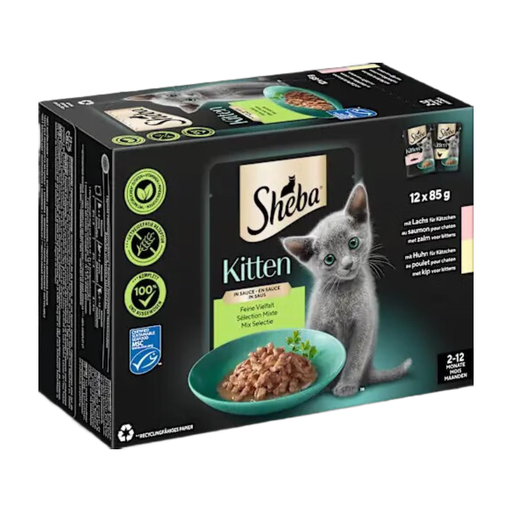
Why this product suits this profile: This junior multipack is designed for kittens and combines poultry and fish varieties in 85-g portions.
The stated life stage helps prevent it being confused with adult wet food. The amount you feed should still be adjusted to your kitten’s age and development.
12 x 85 g, sauce texture, poultry and fish varieties and, according to the product information, no added preservatives.
We’ve put together a complete, regularly updated list of products that meet these strict selection criteria and fully comply with the safety regulations in force in the EU.
Opened portions should be refrigerated according to the packaging instructions and are usually best used within one to two days. You can bring the food to room temperature before serving. Don’t feed it to your cat if it smells unusual, the packaging is damaged or it looks different from normal.
Not every variety. Products labelled “Junior” or “Kitten” are designed for young cats. According to the product information, many adult products aren’t suitable for kittens. Always check the life stage and feeding guidelines.
The daily amount depends on your cat’s weight, activity level, age and how much dry food they also eat. The figures on the packaging are guidelines. If you’re combining wet and dry food, take the amount of each into account to avoid unintentionally increasing your cat’s daily calorie intake.