
Lieferung heute & morgen

Qualitätsgarantie

Willkommens-Angebote freischalten: KOSTENLOSE Lieferung | Bis zu 80 % RABATT | Kostenlose 30-Tage-JoyPlus-Testphase
App herunterladen
There are plenty of Sheba wet cat food options to choose from, including sauce, jelly, fillets, trays, pouches and multipacks with poultry or fish. The packaging may look similar, but the products differ in terms of life stage, complete nutrition, portion size and intended use.
Three common buying mistakes can lead to unnecessary spending:
For daily feeding, look for ‘complete pet food’ or ‘complete cat food’ on the label. This means the product is intended to meet the daily nutritional needs of the animal group specified, when fed according to the feeding guidelines.
Fillets and speciality fish or meat varieties may instead be labelled as complementary pet food. These are suitable as an addition to a meal or as a snack. For example, Sheba Delicate Filets Chicken with Sustainable Tuna 16 x 60 g is described as complementary pet food for adult cats. You’ll need to adjust your cat’s main meal accordingly.
Wet food for adult cats isn’t automatically suitable for kittens. For young cats, the pack should specifically state that it’s suitable for juniors or kittens. Sheba Junior wet food multipacks are designed for kittens, while many Fresh & Fine, Selection and Classics products are labelled for adult cats.
Feeding guidelines are just that: a guide. Your cat’s weight, age and activity level, whether they’ve been neutered and any extra treats all affect how much they need. Always follow the instructions on the specific pack. If you’re changing your cat’s food, it’s best to do so gradually over several days.
Cat food in sauce is a good choice if you prefer a looser consistency. Cat food in jelly also has a high moisture content, with a firmer texture. Fresh & Fine 50 g pouches are handy if you want to serve smaller meals or carefully control portions.
By contrast, 85 g trays make it easier to stock up if your household uses wet food regularly. If you’re choosing fish-based products, take any sensitivities or known intolerances into account. Checking the full ingredients list gives you more useful information than the flavour name on the front of the pack.
Refrigerate opened portions as directed by the manufacturer and use them within the stated time. Wet food is best served at room temperature. Make sure your cat always has fresh drinking water available.
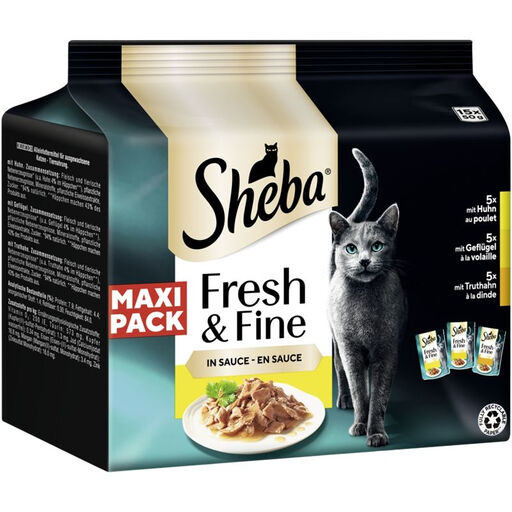
Why it suits this profile: The 15 individual 50 g portions make it easy to plan meals for adult cats.
It’s labelled as complete and balanced food for adult cats, while the portion size helps reduce leftovers.
15 pouches, 50 g per portion, a sauce texture and 84% moisture according to the product information.
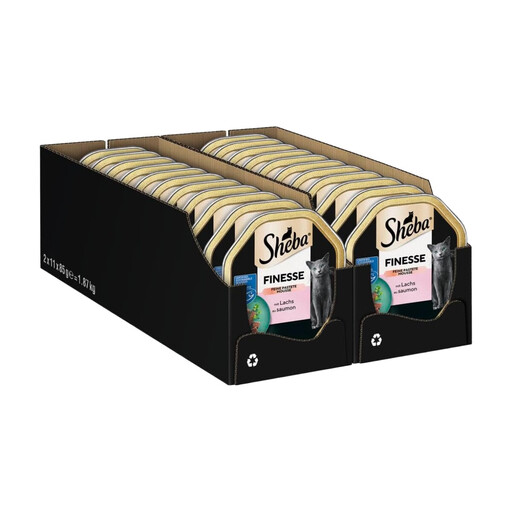
Why it suits this profile: This option is for buyers who value clearly labelled ingredients, MSC-certified salmon and complete nutrition.
The product information describes it as complete food for adult cats, clearly distinguishing it from complementary fillets.
22 trays of 85 g each, a pâté/mousse texture and declared MSC salmon.
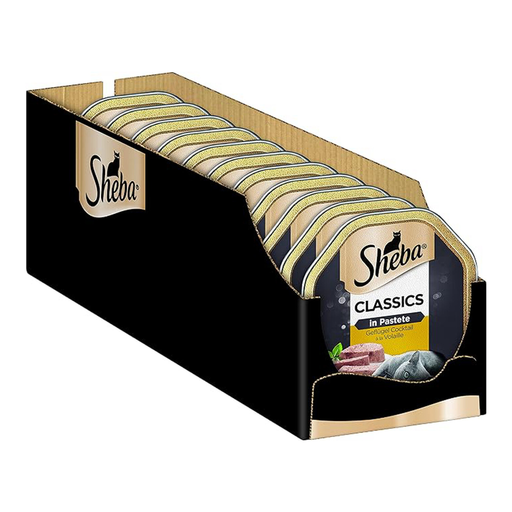
Why it suits this profile: The large pack of 22 trays is ideal for households that use wet food regularly.
It’s labelled as a grain-free complete pet food for cats aged 12 months and over, clearly distinguishing it from complementary food.
2 × 11 trays of 85 g each, a grain-free recipe according to the product information, and 65% meat and animal derivatives.
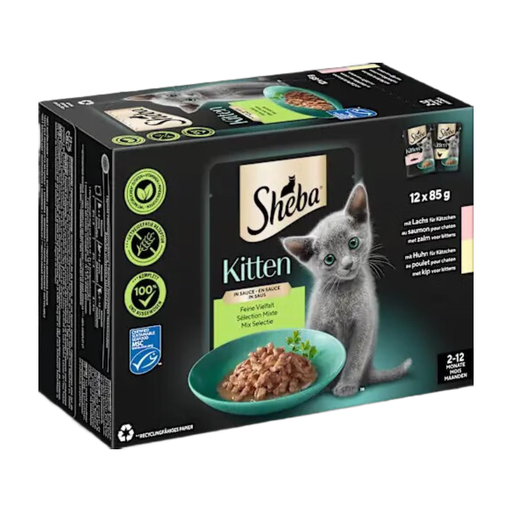
Why it suits this profile: This multipack is specifically designed for kittens and combines poultry and fish varieties in sauce.
The kitten food label helps avoid the common mistake of confusing it with recipes for adult cats.
12 portions of 85 g each, poultry and fish varieties, and no cereal ingredients according to the product information.
We’ve put together a comprehensive, regularly updated list of products that meet these strict selection criteria and fully comply with the safety regulations in force in the EU.
Some varieties are labelled as complete food for adult cats, while other products, such as certain fillets, are intended only as a complementary food. Always check the label on the specific pack; the brand name or flavour alone isn’t enough.
Refrigerate opened portions and use them according to the manufacturer’s instructions. For the products mentioned, the guidance often recommends using them within two days. An unusual smell, damaged packaging or visible changes are reasons not to serve the food.
50 g pouches are suitable for smaller individual meals and households looking to avoid leftovers. 60 g trays are often used for complementary fillets, while 85 g portions are handy for regular main meals. The total amount to feed each day depends on your cat’s weight, activity level and age, as well as whether you’re combining wet food with dry food.