Explaining with printed sheet music
You want to show the music and your annotations on your desk, so you need a clear view of the page. The IPEVO V4K is designed as a document camera for viewing paper.


For printed sheet music that you want to point to in specific places, a stable view of the page is the key thing to look for. A document camera is designed for paper, while a webcam with a desk mode can make it easier to switch between your face and the music. If your music is digital, first check whether screen sharing is enough. Whichever camera you choose, test the smallest details you need to show using the video service you’ll actually use; the stated resolution alone won’t tell you how clearly they’ll appear during a call.
You want to show the music and your annotations on your desk, so you need a clear view of the page. The IPEVO V4K is designed as a document camera for viewing paper.
You switch between your face, gestures and the music during a call. Depending on the model, you could use a tilting camera, a desk view or saved angles.
Your music is already on your computer. Zoom lets you share individual applications or part of your screen; a camera may also be useful for showing gestures or printed music.
A good fit if: The page will be the main focus for a while and you want to point to individual bars or handwritten annotations.
Bear in mind: You may need a second camera or to switch video sources to show your face at the same time.
A good fit if: You often want to switch between your face and sheet music laid out on the desk.
Bear in mind: The position of your monitor and the camera’s tilt affect which part of the page appears in the picture.
A good fit if: You move around while explaining or want to switch between prepared views.
Bear in mind: A saved angle doesn’t guarantee that small musical symbols will remain legible during a call.
A good fit if: The score is already open in an application and you don’t need to show anything on paper.
Bear in mind: A camera may still be useful for showing gestures, an instrument or handwritten notes; you’ll also need to check the rights to use the music.
| What you need | What to check before buying | Who is this important to? |
|---|---|---|
| Legibility of printed music | Check the page size and the smallest details you need to show during a test call. IPEVO lists a maximum capture area of 342 × 255 mm for the V4K. | If I’m showing printed music, even small symbols and handwritten annotations need to be clear in the image being sent. Around 36% of consumers put the legibility of printed music first. |
| Switching between your face and the page | Check the monitor position and mount. Logitech advises holding the Brio 500 mount when tilting it if it isn’t secured in place. | If I switch between my face and the sheet music while explaining, I want to do so without having to reposition everything awkwardly. For around 29% of consumers, switching quickly between views is the priority. |
| Speech and music audio | Test speech and music separately in the service you’ll use. Zoom describes microphone processing and a separate option for sharing computer audio. | When I play music examples, I want the music as well as my voice to come through properly. Around 21% of consumers prioritise clear speech and music audio. |
| Digital sheet music without an extra camera | Check whether you can share individual applications or parts of your screen, and whether you also need to show paper or gestures. | If my music is already digital, I want to check whether screen sharing is enough before buying another camera. Around 14% of consumers favour a solution for digital sheet music. |
For the IPEVO V4K, the manufacturer’s specifications distinguish between maximum image resolution and Full HD live video at up to 30 frames per second. The framing and the connection also affect what the other person can see.
Check a typical section of your music in a test call, using the lighting you plan to have, rather than relying only on the highest resolution figure.
Depending on your setup, you may need extra lighting or a camera that can be positioned differently.
Insta360 distinguishes between a temporary desk view and Overhead Mode, which uses a separate mount. According to the manufacturer, Overhead Mode is only available on the original Link.
Check the full model name and whether your planned setup needs a permanently mounted overhead view.
Zoom describes standard noise and echo suppression, as well as separate settings for music and computer audio. The right setting depends on whether you’re speaking or playing an audio example.
Test your voice and a short music example, then check the settings in the service you’ll actually use.
The V4K is a USB document camera for viewing paper on your desk.
The Brio 500 is a webcam for showing your face, with a tilting Show Mode for viewing your desk.
According to the manufacturer, the Link range has a DeskView mode; the original Link also supports Overhead Mode with a separate mount.
The Tiny 2 Lite is a pan-and-tilt webcam for prepared angles and movement in front of the camera.
The Joybuy products below are webcams for video calls on a computer; some product descriptions mention a desk view or adjustable positioning.
 Image unavailable
Could be an option for video calls on your computer if you want to position the camera to show the page and your face; test the view of your music in the service you use first.
Features listed in the product name: 4K, 99° field of view, 180° tilt, 360° rotation and privacy cover.
 Image unavailable
Could suit you if you’re looking for a webcam with an adjustable stand for your desk; check during a test call that the part of the music you want to show remains visible.
USB; the product description lists autofocus, an adjustable stand and an included tripod. It also states 1080p at 30 fps.
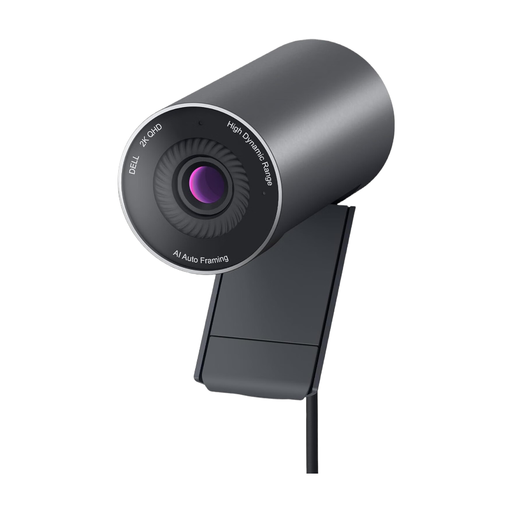 Image unavailable
Could be an option for video calls on your computer if you’re looking for a webcam with autofocus and an adjustable frame; check how clearly the music appears during an actual call.
According to the product description: 2560 × 1440 pixels, USB, autofocus, AI auto-framing and compatibility with Windows and macOS.
 Image unavailable
Could be worth considering if you want to switch to a desk view during a call; check first whether the mode captures your page as you’d like.
The product description lists DeskView, 4K, a 1/2-inch sensor, auto-framing and HDR. DeskView isn’t the same as the separately mounted Overhead Mode, which Insta360 says is only available on the original Link.
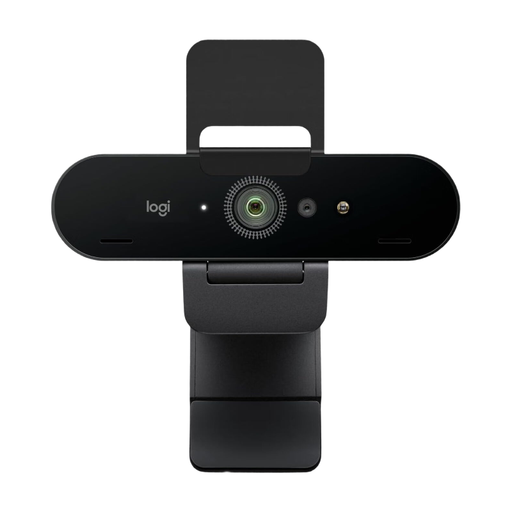 Image unavailable
Could be an option for video calls if you want to switch between different views; test whether the angle you choose can show small musical symbols too.
The product description lists 4K, autofocus and three field-of-view presets.
Compare the page size and the area you need to show with the stated capture area. Set up the camera in the lighting you plan to use, then check the smallest details on the other person’s device during a test call. For the IPEVO V4K, maximum resolution and Full HD live video are listed separately.
Not necessarily just to show the music: Zoom supports sharing an application or part of your screen, as well as annotations. A camera may be useful if you also want to show your face, gestures or printed music.
Check that the mount is secure and the whole score is in view. Logitech advises holding the Brio 500 mount while tilting it if it isn’t secured in place. For the OBSBOT Tiny 2 Lite, saved angles are set up through OBSBOT Center.
The webcam alone doesn’t determine how the audio comes through. Zoom describes standard noise and echo suppression, as well as separate audio settings for music; sharing computer audio is also a separate option for examples played from your computer. Test speech and music separately.
Not in every case. § 60a UrhG sets out a teaching exception for educational establishments that is subject to conditions, as well as specific rules for graphic representations of musical works. You’ll need to check separately whether it applies to your particular lesson, group of participants and intended use. Otherwise, check the usage rights or use material that has been cleared for use.
No. The Data Protection Conference guidance dated 23 October 2020 treats recordings as a separate form of processing and describes the need to check the legal basis and be transparent with those affected. The specific requirements will depend, among other things, on who is hosting the call and who is taking part.