
Lieferung heute & morgen

Qualitätsgarantie

Willkommens-Angebote freischalten: KOSTENLOSE Lieferung | Bis zu 80 % RABATT | Kostenlose 30-Tage-JoyPlus-Testphase
App herunterladen
A shelf is more than just storage space. It creates order, showcases treasured items, and can significantly shape the ambience of a room. But the selection is vast, and not every model lives up to its promise. As your Joybuy Product Recommendation Officer, I'll help you navigate the common pitfalls of purchasing and make an informed decision that suits your needs and your living space.
Many shelves look appealing in product photos but prove to be impractical or short-lived in daily use. Watch out for these three common problems to avoid a poor purchase:
freestanding shelf that sways with a light touch, or a wall shelf whose mounting isn't designed for the weight of books, poses a safety hazard. The cause often lies in thin materials or inadequate design.To avoid these issues, you should check three core aspects before buying. These objective criteria will help you assess the quality and suitability of a shelf.
The material determines not only the look but also the stability and lifespan.
wooden shelf made of solid material is robust, durable, and can be sanded down and refinished if needed. However, it is more maintenance-intensive and generally more expensive.industrial-style shelf. A powder-coated steel frame offers high stability and a resilient surface.The most important specification for functionality is the maximum load capacity per shelf in kilograms. A bookshelf should be able to support at least 15 kg per shelf. Additional stability features include:
hanging shelf or floating shelf, the suitability of your wall is critical. Solid walls made of concrete or brick are ideal, while drywall requires special anchors or reinforcements.Choose the type that best suits your space and purpose:
living room shelf or office shelf. Offers plenty of storage and is flexible in placement.Here are some recommendations tailored to specific living situations and needs.
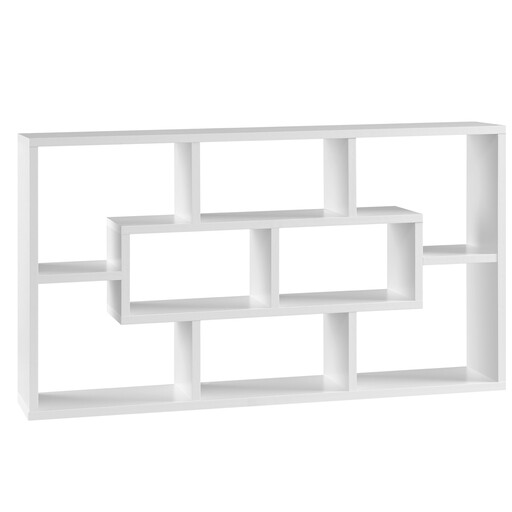
Why it's a great fit: Ideal for student dorms or small apartments where every square metre counts. This `wall shelf` utilises the height of the room without blocking valuable floor space, creating organised storage for books, plants, or decor with its eight compartments.
The clearly defined load capacity of 5 kg per compartment prevents overloading. The melamine foil surface is water-repellent and easy to clean, counteracting the problem of inferior surfaces.
Maximum space utilisation through vertical mounting; creates order in a small footprint.
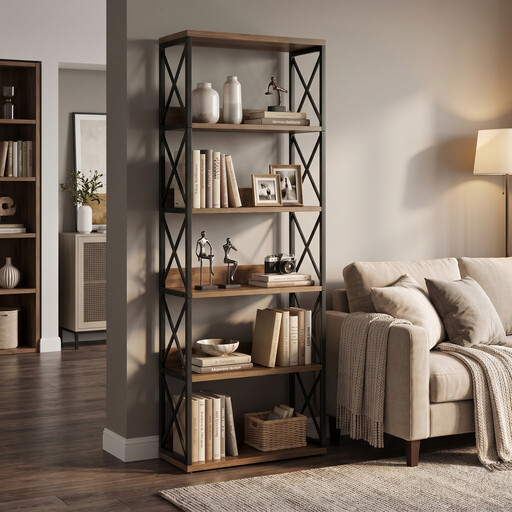
Why it's a great fit: Perfect for an `office shelf` or a living room with a modern, rustic flair. The combination of a black metal frame and wood-tone shelves embodies the `industrial-style shelf` and offers ample space on five levels for an extensive book collection or decorative items.
The sturdy metal frame and the included anti-tip kit directly counteract the problem of instability. The open design and clear dimensions prevent any surprises regarding its size.
A tall and stable design that creates plenty of vertical storage while making a stylistic statement.
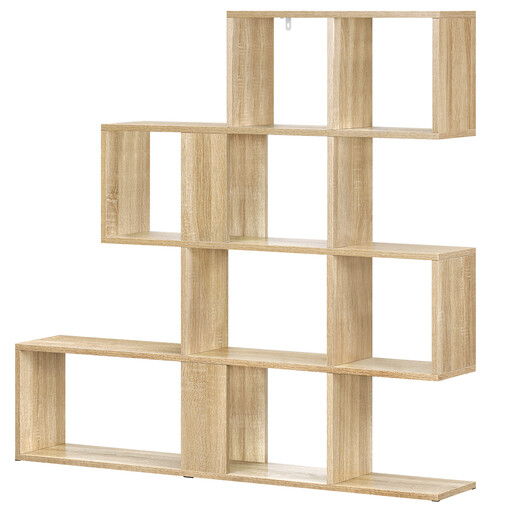
Why it's a great fit: This stepped shelf is incredibly versatile. It works as a classic `freestanding shelf` against a wall or freestanding as a `room divider` to visually separate a workspace in a large living room, for example. The asymmetrical arrangement of the compartments provides a modern and airy look.
The wide base and the included anti-tip kit ensure a secure footing. The melamine surface is scratch-resistant and easy to clean. With a total load capacity of 70 kg, it is also very robust.
Highly versatile as a bookshelf or room divider; modern, geometric design.
We have compiled a complete, up-to-date list of products that fully meet these strict selection criteria and rigorous safety regulations.
1. How do I securely mount a wall shelf? Safety depends on the wall and the mounting hardware. First, check your wall type (e.g., concrete, brick, drywall). Use anchors and screws appropriate for your wall. A spirit level is essential to align the shelf correctly. Never exceed the maximum load capacity specified by the manufacturer.
2. What is the difference between MDF and solid wood for a shelf? MDF (Medium-Density Fibreboard) is an engineered wood product made from finely shredded wood fibres pressed together. It is dimensionally stable and usually more affordable. The surface is typically veneered or painted. Solid wood is natural lumber, considered more durable and valuable, but it requires more care and can react to humidity.
3. How much weight can an average bookshelf hold? There is no standard value. The manufacturer's specification for load capacity per shelf is always the deciding factor. For a shelf that will be primarily filled with books, a capacity of at least 15 kg per shelf is a good benchmark. Lighter decorative items require less. Check this specification carefully before you buy.