
Lieferung heute & morgen

Qualitätsgarantie

Willkommens-Angebote freischalten: KOSTENLOSE Lieferung | Bis zu 80 % RABATT | Kostenlose 30-Tage-JoyPlus-Testphase
App herunterladen
Not enough storage, unused corners or small items left lying around: shelving and storage for your home can help you get organised while complementing your décor. However, product photos and general marketing claims don’t always help you make the right choice. What matters are the actual dimensions, the material, the weight capacity and where you plan to use it.
A shelf may look narrow in a product photo but still be too deep for the space you have in mind. Every centimetre counts, particularly in hallways, kitchens and home offices. Before you buy, measure the available width, height and depth. For a wall shelf, you’ll also need to consider its distance from doors, windows, sockets and work surfaces.
The internal dimensions matter too. A bookcase with short shelves may not fit large illustrated books, while a display shelf may have enough room for smaller items.
Decorations, books and plant pots can add up to a considerable weight. The stated maximum load often assumes that weight is distributed evenly and the shelf is fitted correctly. It’s best to place heavier items on the bottom. For a wall shelf, the wall material, wall plugs and screws must all be suitable for the construction.
For example, the 5five Fixy Wall Shelf has a stated maximum load of 3.0 kg. That’s a reasonable limit for lightweight decorations, small kitchen utensils or herbs, but you’ll still need to check that the fixings and wall are suitable.
An eye-catching finish alone tells you little about how practical a shelf will be. Easy-to-clean surfaces are useful in the kitchen, while closed compartments in the hallway can help keep small items out of sight. For balconies or damp rooms, check that the materials are suitable for the conditions. With plant stands, a stable base, even weight distribution and protection from excess moisture are also important.
A narrow shelving unit, a corner shelf or a vertical plant stand can work well in a small home. Shelving for smaller rooms should leave walkways clear and allow enough space around radiators and doors. Measure not only the space where it will stand, but also the route through doorways and stairwells.
Depending on your needs, a freestanding shelving unit, a bookcase or a combination of open and closed shelves could suit your living room or office. Open shelves make it easy to reach your things, but they also show dust and clutter more readily.
MDF, engineered wood, bamboo, steel and plywood differ in weight, finish and care requirements. MDF with a coated or painted finish can usually be cleaned with a soft, slightly damp cloth. Don’t leave water sitting on the edges.
Bamboo can create a natural look. If you’re considering a bookcase with rattan doors, check that the mix of open and closed compartments suits your storage needs. Steel frames can add stability to plant stands, but the unit should still be placed on a level surface.
Check the information about self-assembly, the approximate assembly time and how many people are needed. Don’t load a wall shelf until it’s securely fixed in place. Tall, freestanding shelving units should be secured against tipping where necessary, particularly in homes with children or pets.
For a plant stand, place heavier pots on the bottom and follow the manufacturer’s guidance on the maximum load for each tier. Bookends can stop individual books falling over on open shelves. They can also be used for files, magazines or CDs, as long as their shape and weight are suitable.
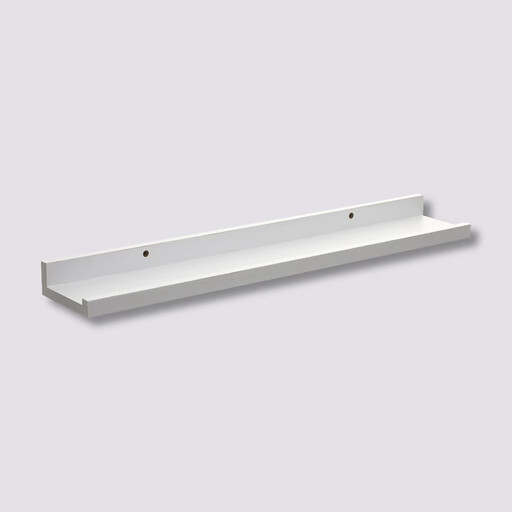
Why this product suits your needs: This compact wall shelf takes up little depth and is ideal for small decorations, herbs or lightweight items in the kitchen, living room or workspace.
Its dimensions of 58 x 10 x 4 cm and stated load capacity of 3.0 kg give you a clearer idea of how it can be used than a purely decorative product description.
MDF, an FSC claim, a white wood-effect finish and a compact depth. Assembly is stated to take around 30 minutes.
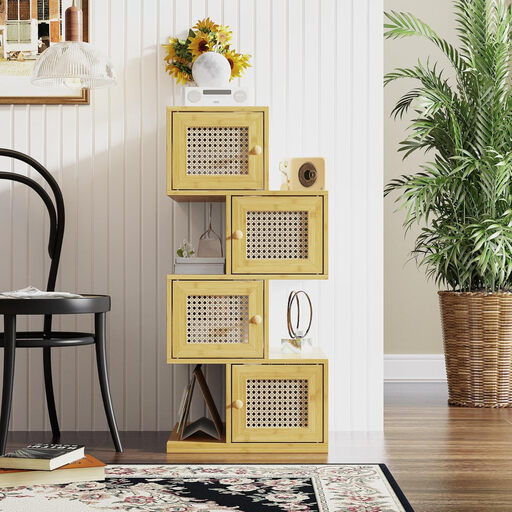
Why this product suits your needs: Measuring 85 x 40 x 25.4 cm, this slim unit combines open shelves with closed compartments, making it a good fit for a living room, bedroom, hallway or office.
Its compact external dimensions make it easier to plan where to put it. The combination of open and closed compartments means you don’t have to keep everything on display.
Bamboo frame, four compartments and rattan doors. The surface is described as easy to clean.
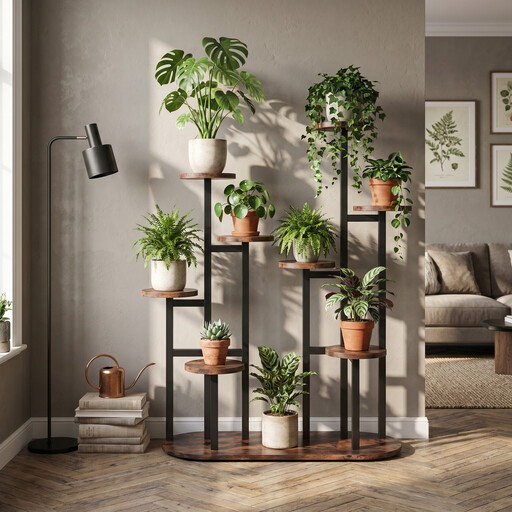
Why this product suits your needs: Plant lovers can arrange several pots vertically and make the most of their space indoors, on a balcony, in the garden or on the patio.
The design is intended to distribute weight evenly. The manufacturer specifies a maximum pot size of 19.8 cm and recommends placing the stand on a level, stable surface.
Nine tiers, dimensions of 100 x 43.99 x 111 cm, a wood-effect finish and a metal frame. Follow the manufacturer’s guidance on the load per tier.
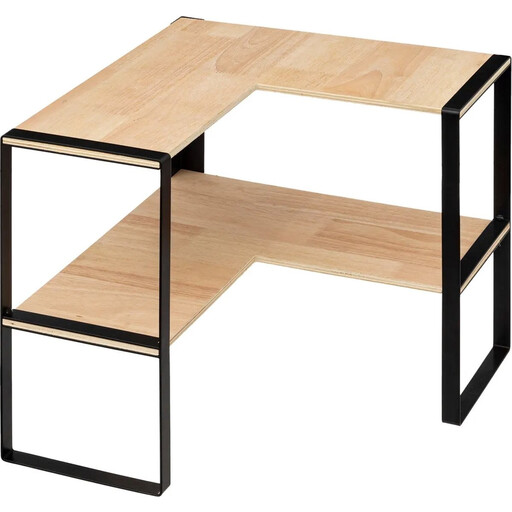
Why this product suits your needs: This corner shelf makes use of worktops, cupboards or the space under the sink, and is suitable for spices, containers and pans.
Its role as a two-tier kitchen organiser is clearly defined. At 40 x 40 x 35 cm, you can check whether your corner or cupboard has enough space for it.
Made from a combination of steel and plywood, with two tiers and self-assembly required. The product weight is stated as 2.26 kg.
We’ve put together a complete, regularly updated list of products that meet these strict selection criteria and fully comply with the safety regulations in force in the EU.
A narrow shelving unit, a wall shelf or a corner shelf is often a good choice for a small room. Look for a shallow depth, sufficient stability and clear access to doors and walkways. Measure the available space and the internal dimensions before you buy.
Its lifespan depends on the material, assembly, load, moisture and care. Distributing weight evenly, keeping surfaces dry and following the manufacturer’s guidance can help it stand up to everyday use. For wall shelves, the quality of the fixings is particularly important.
A shelving unit doesn’t incur ongoing energy costs during normal use. Additional costs may include assembly fittings, extra bookends, replacement parts or cleaning products. Depending on how you use a plant stand, you may also need to budget for plant pots, saucers and watering.