
Lieferung heute & morgen

Qualitätsgarantie

Willkommens-Angebote freischalten: KOSTENLOSE Lieferung | Bis zu 80 % RABATT | Kostenlose 30-Tage-JoyPlus-Testphase
App herunterladen
A sturdy heavy-duty shelf is the foundation for an organised cellar, garage, or workshop. However, the market is flooded with products whose promises often don't hold up in practice. A wobbly shelf or a sagging board is not only frustrating but also a safety hazard. Before you make a decision, it's crucial to understand the common weak points that often only become apparent after the purchase.
As your Joybuy Product Recommendation Officer, I'll help you identify the essential features and separate marketing hype from solid facts.
To find a durable and safe storage solution, you should carefully examine three technical parameters. These determine the functionality and safety of your new shelving system.
The most important metric is the maximum load capacity per shelf. Ensure that this value is explicitly stated. It indicates how much weight a single shelf can withstand when the load is evenly distributed. For storing toolboxes, paint cans, or car tyres, a heavy-duty metal shelf with a capacity of at least 150 kg per shelf is a sensible choice. The total load capacity is the sum of the individual shelf loads and serves as a guide, but it should not be the sole purchasing criterion.
The material of the frame and shelves is crucial for longevity, especially in environments like a cellar or garage.
Modern heavy-duty shelving is usually designed as boltless metal shelving. This system allows for quick and tool-free assembly. However, the stability of such a unit depends heavily on the precise manufacturing of the interlocking components.
Pay attention to the following points:
Here are some recommendations tailored to specific user profiles and their requirements.
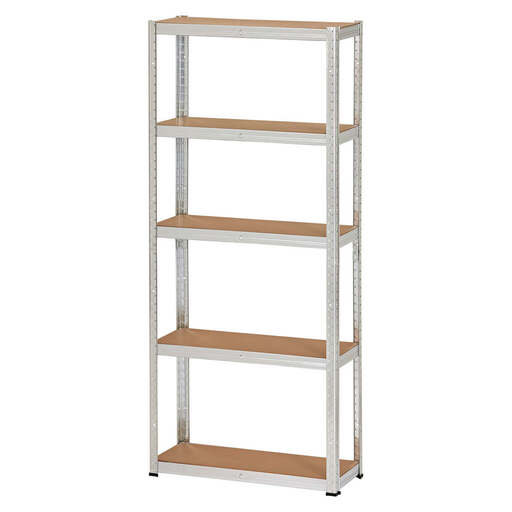
Why This Fits Their Persona: Ideal for organising supplies, lighter tools, or archive boxes in a dry cellar, pantry, or utility room. Its compact dimensions fit well into smaller spaces.
The clearly defined load capacity of 75 kg per shelf sets realistic expectations and prevents overloading. The galvanised steel frame provides basic protection against corrosion in dry to moderately damp rooms.
Simple and fast assembly thanks to the boltless system. Excellent value for money for lighter storage needs.
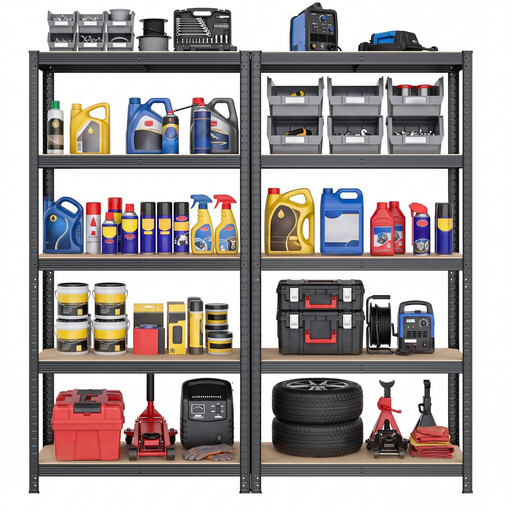
Why This Fits Their Persona: This set of 2 is designed for DIY enthusiasts who store heavy tools, machinery, or materials in their garage shelving or workshop shelving. The high load capacity and flexibility are key here.
With a reliable load capacity of 175 kg per shelf and reinforced crossbars, the risk of sagging boards is minimised. The included anti-tip kit proactively addresses safety concerns.
High flexibility: The shelves can be set up individually or combined to form a workbench. The set of 2 offers an excellent price-to-volume ratio.
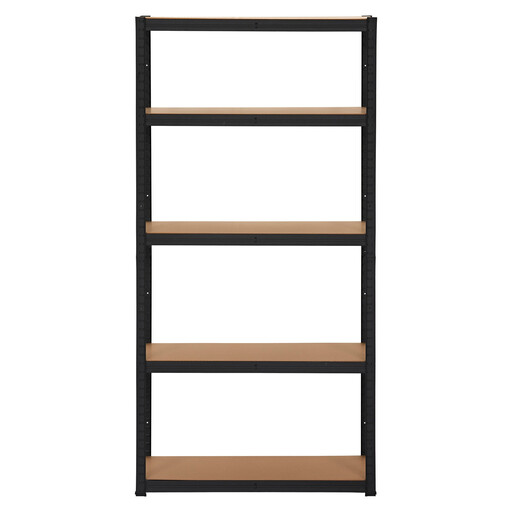
Why This Fits Their Persona: Engineered for professional use as warehouse shelving for a small business or for users who need to store extremely heavy items like engine parts, large containers, or heavy files.
The exceptionally high and clearly specified load capacity of 265 kg per shelf leaves no room for doubt. The robust construction is explicitly designed for heavy loads, avoiding the typical weaknesses of cheaper models.
Maximum load-bearing capacity for demanding storage tasks. The matte black powder coating offers superior protection and a professional look.
We have compiled a complete, up-to-date list of products that fully meet these strict selection criteria and safety requirements.
Yes, it is strongly recommended. Especially with tall, narrow shelving units or uneven loads, securely anchoring the unit to the wall provides essential anti-tip safety. Most high-quality shelving units come with a suitable wall-mounting kit.
If you are using a shelving unit with MDF boards in a potentially damp cellar, there are a few protective measures you can take. You can seal the boards with a water-repellent wood stain or varnish. Another option is to place a thin plastic sheet underneath the boards. For the long term, however, a shelving unit with metal shelves is the more reliable solution for damp environments.
This note means that the specified maximum weight must be distributed evenly across the entire surface of the shelf. A point load, for example, from a single, very heavy object in the middle of the board, can overload the structure and cause it to sag or break, even if the total weight is below the specified maximum load. Heavy items should therefore be placed to cover as much surface area as possible or on the lower shelves near the support posts.