
Lieferung heute & morgen

Qualitätsgarantie

Willkommens-Angebote freischalten: KOSTENLOSE Lieferung | Bis zu 80 % RABATT | Kostenlose 30-Tage-JoyPlus-Testphase
App herunterladen
A new freestanding shelf should create order, display books, or serve as a stage for decorative objects. But the search for the right model can quickly become overwhelming. Often, a shelf that looks appealing online turns out to be unstable after assembly, or its surface is far more delicate than expected. As your Joybuy Product Recommendation Officer, I'll help you identify the critical features and avoid common purchasing pitfalls.
Two common problems lead to disappointment:
To ensure your new piece of furniture is both functional and durable, you should check a few core parameters before buying.
Choosing a shelf should go beyond mere aesthetics. Three technical aspects are crucial for longevity and functionality.
The material is the primary determinant of stability and lifespan.
A fully loaded storage shelf can reach a considerable weight. Look for the following features:
Measure the available space precisely—in height, width, and depth. Remember to account for skirting boards or power outlets. For unused or small areas, special solutions are available:
Here are some recommendations tailored to specific needs and room situations.
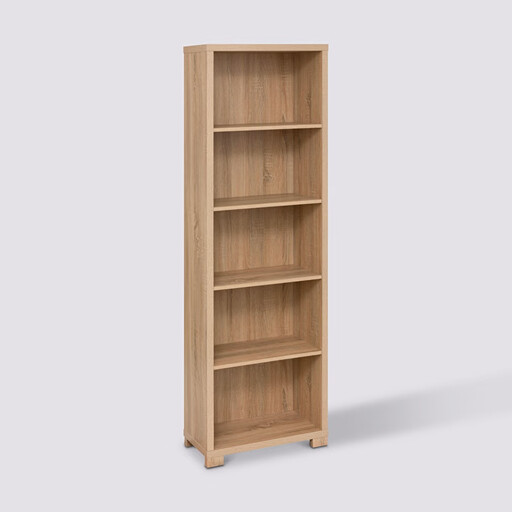
Why This Fits Their Persona: A straightforward and functional solution for anyone seeking a solid, basic storage solution for books and everyday items without breaking the bank. The classic design blends easily into existing decor.
The construction of MDF and particleboard, combined with a back panel, offers more reliable stability than many comparable models in the low-price segment, which often omit a reinforcing back panel.
According to the manufacturer, it offers a high total load capacity of 120 kg. Its standard dimensions make it a versatile storage shelf for various rooms.
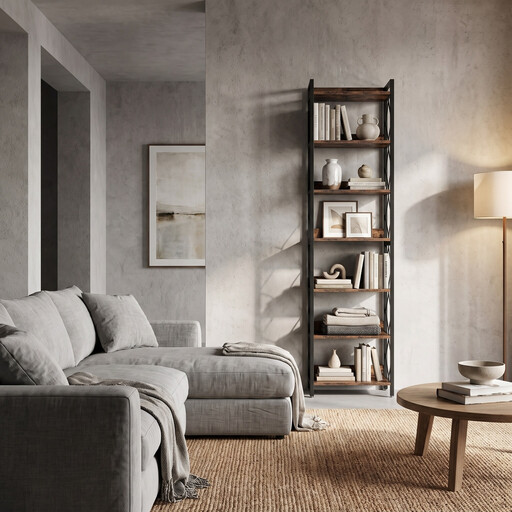
Why This Fits Their Persona: This corner shelf makes optimal use of otherwise wasted space. With its 200 cm height and slim profile, it's ideal for small apartments where vertical storage is in demand. The retro-industrial design also adds a stylish accent.
The sturdy metal frame provides the necessary stability that is often lacking in tall, narrow shelves. Adjustable feet and an anti-tip kit actively counteract the risk of wobbling and tipping.
Maximum space utilisation thanks to its corner design. The combination of a metal frame and wooden shelves offers a high load capacity per shelf (18 kg, according to the manufacturer).
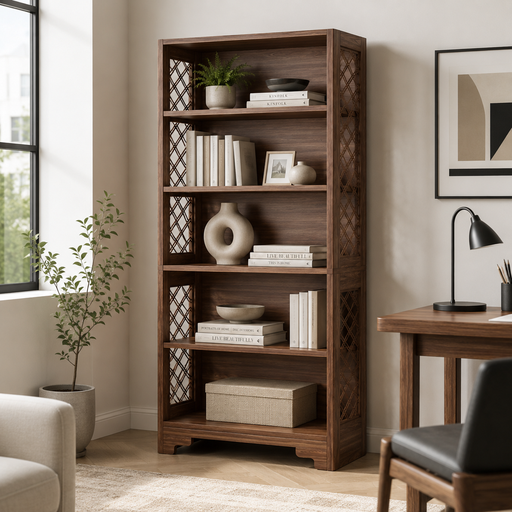
Why This Fits Their Persona: Anyone who needs to store heavy binders, textbooks, and office supplies needs one thing above all: load-bearing capacity. With six tiers, this shelf offers plenty of space and is designed for heavy loads, making it a great choice for the home office.
The use of thickened MDF panels (1.5 cm) and a solid back panel prevents the shelves from sagging under load—a common problem with basic bookshelves that are unsuitable for heavy binders.
Very high load capacity per shelf (up to 34 kg, according to the manufacturer). The lateral X-shaped braces add to the stability and give the shelf a distinctive industrial look.
We have compiled a complete, up-to-date list of products that fully meet these strict selection criteria and UK safety regulations.
Every tall shelf should come with an anti-tip kit. This kit usually consists of a bracket or strap that is screwed to the shelf and the wall. Use wall plugs and screws that are appropriate for your wall type (e.g., concrete, brick, plasterboard). For added stability, always place the heaviest items on the lowest shelves.
For a long lifespan and high load capacity, shelves made of solid wood or with a sturdy metal frame are a good choice. A more affordable yet very stable alternative is MDF, which has a higher density and resistance to bending than simple particleboard. For engineered wood, look for a scratch-resistant and easy-to-clean surface seal.
The load capacity varies greatly depending on the material and construction. Simple particleboard shelves often only support 5-10 kg per shelf. More robust models made of MDF or with a metal frame can hold 15-30 kg or more per shelf. You can always find the exact maximum load capacity in the manufacturer's product details. Exceeding these limits can lead to damage or safety risks.