
Lieferung heute & morgen

Qualitätsgarantie

Willkommens-Angebote freischalten: KOSTENLOSE Lieferung | Bis zu 80 % RABATT | Kostenlose 30-Tage-JoyPlus-Testphase
App herunterladen
A new shelving unit can bring order, provide storage, or enhance a room as a decorative element. But the selection is vast, and the decision is often harder than it seems. Many buyers only realise after assembly that their chosen model is wobbly, the surface scratches easily, or it’s simply not suited for its intended purpose. As a Joybuy Product Recommendation Officer, I'm here to help you navigate the common pitfalls and make an informed decision.
This guide focuses on the objective criteria that define a quality shelf and shows you what to look for before you buy to find a durable and suitable solution for your home.
Before we dive into the key selection criteria, let's look at the problems that often lead to disappointment. By knowing what they are, you can actively avoid them.
To avoid these pitfalls, you should focus on three key technical features. These will help you objectively assess the quality and suitability of a shelving unit.
The material determines not only the look but also the durability and load-bearing capacity.
A crucial metric is the maximum load capacity per shelf. This manufacturer specification is a reliable indicator of stability. A shelf for light decor might only need to hold 5 kg per level, whereas a bookcase should support at least 10–15 kg.
The shape and design of the shelf should match its function and the available space.
A safe shelf stands firm and won't tip over, even when loaded. Look for an included anti-tip kit. This small component for securing the unit to the wall is essential, especially in households with children or for tall, narrow shelves. Adjustable feet are also a plus, as they help compensate for uneven floors and ensure a wobble-free stance.
Here are some recommendations tailored to different needs and living situations.
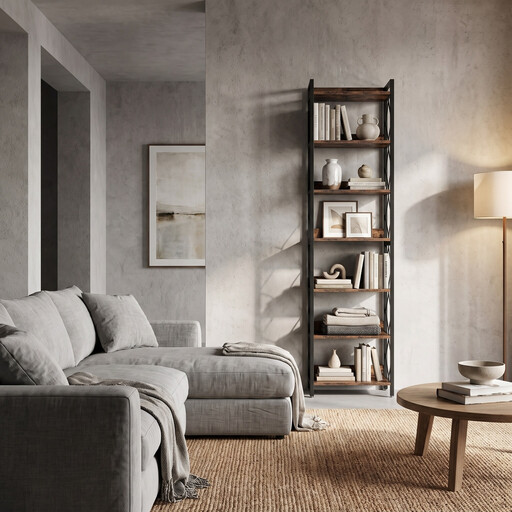
Why this model fits: Perfect for anyone looking to turn unused corners in living rooms or home offices into valuable storage. Its tall, narrow design makes optimal use of vertical space without taking up much floor area.
The combination of a metal frame and particleboard, along with the included anti-tip kit, counteracts the pitfall of unstable construction. Adjustable feet ensure a firm stance even on uneven floors.
Offers seven levels of storage on a footprint of just 35x35 cm. According to the manufacturer, each shelf can hold up to 18 kg, making it suitable as a bookcase.
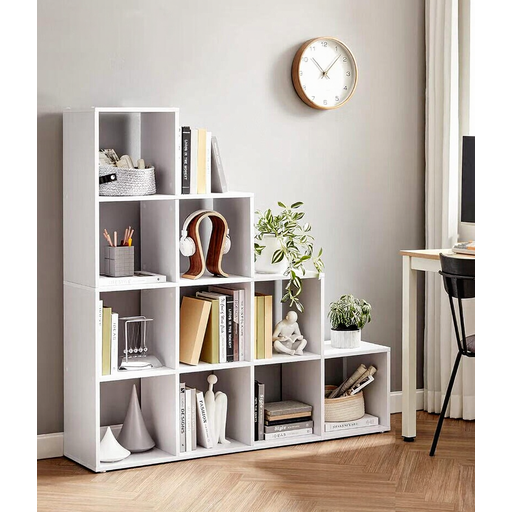
Why this model fits: For those seeking a piece of furniture that is more than just storage. Its stepped shape and accessibility from both sides make it ideal as a modern room divider or a design feature against a wall.
The scratch- and wear-resistant melamine veneer surface addresses the pitfall of poor finish quality. The construction from 15 mm thick particleboard and the included anti-tip kit provide the necessary stability.
Can be used flexibly as a step shelf, bookcase, or room divider. The 10 spacious cubes offer plenty of room for books and decorative items. Each cube can hold up to 15 kg.
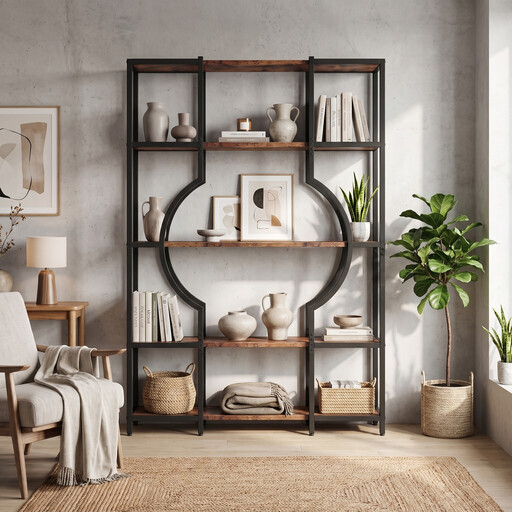
Why this model fits: A robust and spacious solution for anyone needing ample storage for books, binders, and other items. The classic industrial style complements many decor schemes in the living room or office.
Directly counters the pitfall of unstable construction. The sturdy metal frame and high stated total load capacity of 113 kg provide a reliable base for heavy items. Wall mounting is also possible.
With 12 compartments across 5 tiers, it offers an exceptional amount of storage. The combination of MDF shelves and a metal frame ensures high load capacity and durability.
We have compiled a complete, up-to-date list of products that fully meet these strict selection criteria and safety standards.
1. How do you securely mount a shelf to the wall? For a secure installation, choosing the right mounting hardware is crucial. Check the type of your wall (e.g., concrete, brick, or plasterboard) and use the appropriate wall plugs and screws. Use a spirit level to ensure the shelf is straight. For tall, freestanding shelves, the included anti-tip kit should always be used to prevent them from falling over.
2. How much weight can a shelf hold? The load capacity varies greatly depending on the material, construction, and installation. A reliable guide is the maximum load capacity per shelf specified by the manufacturer. Do not exceed this value. As a general rule, always place heavier items on the lower shelves to increase the unit's stability.
3. What is the difference between MDF and solid wood for a shelf?Solid wood is made from natural timber, is very robust, durable, and has a unique grain. It is typically heavier and more expensive. MDF (Medium-Density Fibreboard) is an engineered wood product made from finely shredded wood fibres that are pressed together. MDF boards are dimensionally stable and have a smooth surface that is ideal for painting or veneering. They are often a more budget-friendly alternative but can be more susceptible to moisture if not properly sealed.