
Lieferung heute & morgen

Qualitätsgarantie

Willkommens-Angebote freischalten: KOSTENLOSE Lieferung | Bis zu 80 % RABATT | Kostenlose 30-Tage-JoyPlus-Testphase
App herunterladen
The right shelving unit should provide storage, stand securely and fit the space available. Yet product images and vague marketing claims can often lead to the wrong purchase. It’s particularly worth checking the technical details rather than judging by appearance alone when choosing wall shelves, bookcases and heavy-duty shelving.
A claim such as “up to 875 kg” may refer to the whole shelving unit, not to an individual shelf. The maximum load usually applies only when the weight is evenly distributed, the unit is standing on a level surface and it has been assembled correctly. Heavy items should always go on the lower shelves.
For a shelving unit with several shelves, check:
Solid wood shelving is very different from shelving made from MDF. MDF panels can swell in high humidity, so they are not always suitable for areas that stay damp. For kitchen or bathroom shelving, a sealed finish, distance from water sources and suitable care are therefore important.
Metal shelving is often designed to hold heavier loads, but it also needs a level surface and, where necessary, anti-tip protection. A powder-coated finish can protect the surface, but it is no substitute for proper assembly.
Depth determines whether books, folders, kitchen supplies or tools will actually fit on the shelves. Narrow shelving takes up less floor space, but a taller unit may be more prone to tipping.
Before buying, measure:
Wall shelves are ideal for small spaces, hallways, work areas and above desks. The wall must be suitable for the combined weight of the shelves and their contents. Use wall plugs and screws that suit the wall type, and do not exceed the stated load capacity.
Freestanding shelving units are more flexible to position. Tall models should be secured to prevent them tipping over, especially in homes with children or pets. Some heavy-duty shelving units come with an anti-tip kit.
Open shelves make items easy to reach and work well as display shelving for books, plants and photo frames. Closed storage offers more protection from dust and creates a neater look. A unit combining open and closed storage can be a good choice for a living room, bedroom or hallway.
Always follow the product specifications rather than relying on general expectations about a material.
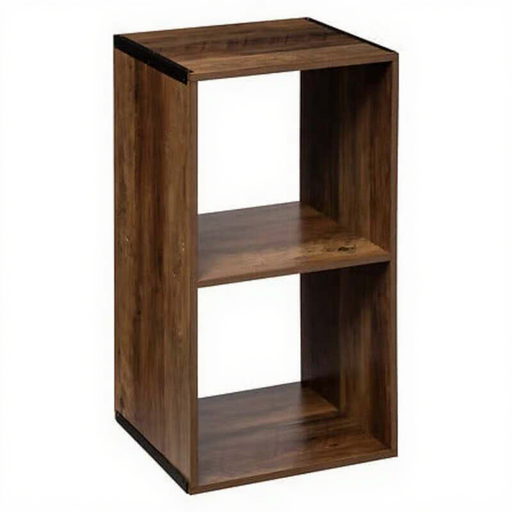
Why it suits this shopper: This freestanding shelving unit has six compartments and is around 67.7 cm wide, making it suitable for books, decorations or everyday items in the living room or home office.
Compartments measuring approximately 31 × 31 × 31 cm make the available storage space clear. The unit is designed for items to be distributed evenly.
Six open compartments, an MDF construction and industrial-inspired colours; self-assembly required.
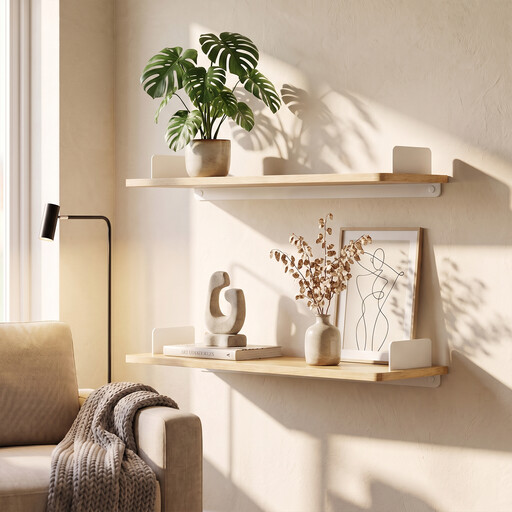
Why it suits this shopper: Combining a wood-effect finish with metal brackets, this wall-mounted option is designed for living rooms, kitchens, bathrooms, hallways or home offices where floor space is limited.
The maximum load is stated as up to 20 kg. The fitting instructions recommend suitable wall anchors and regular checks of the fixings.
FSC-certified rubberwood according to the product details, aluminium alloy brackets and a painted finish.
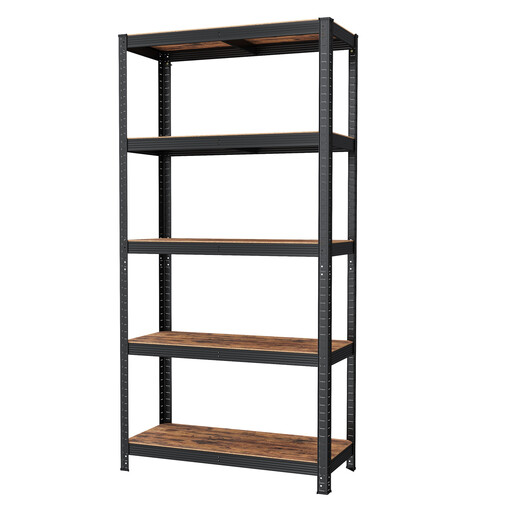
Why it suits this shopper: This heavy-duty shelving unit is ideal for anyone needing storage in a garage, cellar, shed or workshop. The adjustable shelves make it easier to accommodate tools and supplies.
The specifications distinguish between 175 kg per shelf and a total load of 875 kg. Wall fixing and even weight distribution should also be taken into account.
Powder-coated steel frame, five shelves, height-adjustable shelves and a sectional design according to the product description.
We’ve put together a complete, regularly updated list of products that meet these strict selection criteria and fully comply with the safety regulations in force in the EU.
Follow the assembly instructions supplied and check all screws, brackets and connectors before loading the unit. For wall shelves, the fixings must be suitable for the wall surface. For tall freestanding shelving, it’s best to use the recommended anti-tip protection.
For a longer service life, follow these tips:
Narrow shelving, wall shelves or compact corner units are all worth considering for small rooms. The key is to look beyond the overall dimensions: check the shelf spacing too, and make sure you can secure the unit safely to the wall or floor.
It depends on the model, material, construction and how the weight is distributed. Check the stated load capacity per shelf and the overall load capacity. For wall shelves, you’ll also need to consider the wall type and fixings.
MDF can swell if exposed to moisture for long periods. In kitchens and bathrooms, use an MDF shelving unit only if it can be kept well away from water sources and cared for according to the instructions. In damp areas, the material, surface treatment and ventilation are particularly important.