
Lieferung heute & morgen

Qualitätsgarantie

Willkommens-Angebote freischalten: KOSTENLOSE Lieferung | Bis zu 80 % RABATT | Kostenlose 30-Tage-JoyPlus-Testphase
App herunterladen
Whether you need space for books, plants, decorations, provisions or tools, your shelving should suit the space available and the weight it needs to hold. A slim wall shelf for the living room has different requirements from a heavy-duty shelving unit for a garage, cellar or storage area. As a Joybuy Product Recommendation Officer, I’ll explain the key factors to consider and show you which product details to check before you buy.
A stated load capacity usually applies per shelf or to the unit as a whole. These figures do not automatically mean the shelving is safe to use in every situation. It’s also important to know whether the figure refers to a static load, a load spread evenly across the shelf or a concentrated load in one spot.
A five-tier shelving unit rated at 120 kg per shelf could theoretically hold up to 600 kg in total if the weight is distributed evenly. Even so, it’s best to place heavier items on the lower shelves to avoid shifting the centre of gravity too high.
When choosing a bookcase or wall shelf, width and height aren’t the only things to consider. Check the following too:
A slim corner shelf can save floor space, while a freestanding storage rack offers considerably more room but takes up more space.
A floating shelf or wall shelf needs to be suitable for your wall. Wall plugs and screws for solid walls aren’t automatically suitable for plasterboard. When fitting a shelf to a stud wall, you’ll need suitable cavity wall fixings, a load-bearing support structure or another appropriate fixing solution.
A freestanding metal shelving unit should also be secured against tipping if it’s tall enough to pose a risk. A level floor and evenly distributed weight are basic safety measures.
For books, ceramics or plant pots, a living-room shelving unit with a moderate load capacity is often enough. For tools, crates of drinks, paint tins or provisions, a heavy-duty shelving unit is a better choice. Check the load capacity per shelf as well as the maximum total load.
For a heavy-duty shelving unit, you should also check whether the shelves are made from metal, MDF or another material. MDF may behave differently from a fully steel shelf when exposed to moisture or sustained heavy loads.
A metal shelving unit is generally suitable for a garage, workshop or storage area, as long as its finish is appropriate for the surroundings. Galvanised or powder-coated steel can work well in many dry indoor spaces. MDF shelves should be protected from high humidity, direct contact with water and heat sources.
For a living-room shelving unit, the finish, edge detailing and overall appearance when fitted are more important. A wall shelf made from wood-based material or rubberwood can hold decorative items, books and plants, but it isn’t the same as an industrial storage rack.
Adjustable shelves are useful when you need to store items of different sizes. A cellar shelving unit or garage shelving unit should also stand securely and, if it’s tall, be fixed to the wall with an anti-tip device. For a wall shelf, the wall’s load-bearing capacity is the key factor.
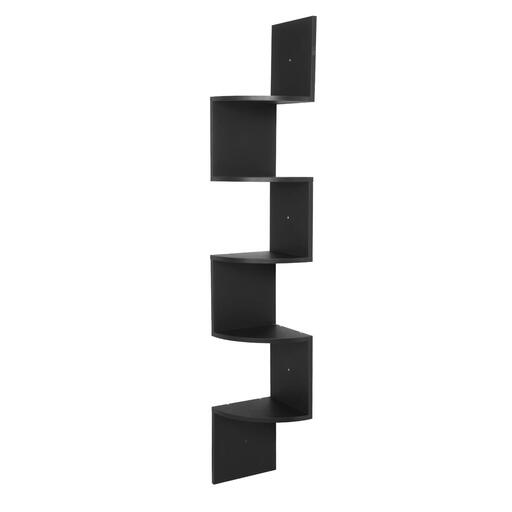
Why this product suits your needs: Measuring 25 × 25 × 156 cm, this corner shelf makes good use of a narrow section of wall. It’s ideal for books, CDs, picture frames or smaller decorative items in your living room, hallway or bedroom.
The maximum load of around 15 kg is clearly stated. This makes it easier to plan how you’ll use the shelf, rather than mistaking a decorative wall unit for heavy-duty shelving.
Five shelves, integrated hanging fittings and a pre-assembled design. Not suitable for plasterboard walls.
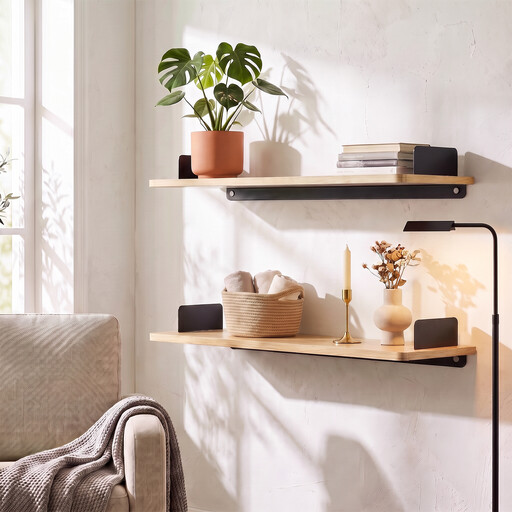
Why this product suits your needs: The combination of a rubberwood shelf and aluminium brackets makes it a good fit for living rooms, bedrooms or home offices, where you want to display books, plants and decorations close to the wall.
The stated load capacity of up to 20 kg makes the limit clear. You’ll need wall plugs that are suitable for your particular wall when fitting the shelf.
Lacquered rubberwood finish, aluminium brackets and versatile use in several rooms.
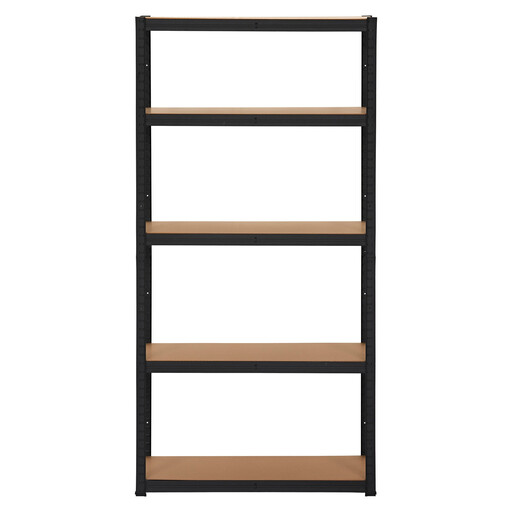
Why this product suits your needs: With five shelves, a steel frame and MDF inserts, this storage rack is designed for dry indoor spaces such as workshops, utility rooms or storage areas.
The specifications distinguish between 265 kg per shelf and a total load of 1,325 kg. The weight still needs to be distributed evenly, and the unit placed on a level surface.
Measures 180 × 90 × 45 cm, with five shelves and a powder-coated steel frame. Not designed for damp areas.
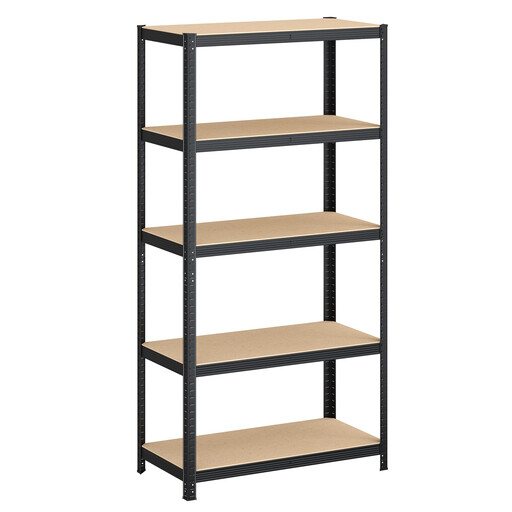
Why this product suits your needs: Measuring 50 × 100 × 200 cm, this garage shelving unit has five height-adjustable shelves and is designed for tools, equipment, provisions and other larger items.
The stated static load is 120 kg per shelf, with a total load of 600 kg. This makes clear that its capacity shouldn’t be assumed to apply to any shelving unit. Use the anti-tip kit supplied.
Tool-free assembly, shelves adjustable in 5 cm increments and the option to split the unit into two. Not suitable for very damp environments.
We’ve put together a comprehensive, regularly updated list of products that meet these strict selection criteria and fully comply with the safety regulations in force in the EU.
A metal shelving unit or a heavy-duty shelving unit with a clearly stated static load capacity is often a good choice for a garage. Check the maximum load per shelf, the total load, the floor space it needs and whether it can be fixed to the wall. If your garage is damp, also check that the materials are suitable for that environment.
It depends on the shelf, the wall material, the fixings and how the weight is distributed. The product specification alone isn’t enough to go on. A decorative wall shelf may hold considerably less than a heavy-duty wall shelf. Plasterboard requires suitable fixing systems, and some models are specifically unsuitable for it.
A corner shelf makes use of discreet alcoves, a wall shelf frees up floor space, and adjustable storage shelving can accommodate items of different sizes. Before you buy, measure the wall width, room height, usable depth and the clearance needed around doors and walkways.