
Lieferung heute & morgen

Qualitätsgarantie

Willkommens-Angebote freischalten: KOSTENLOSE Lieferung | Bis zu 80 % RABATT | Kostenlose 30-Tage-JoyPlus-Testphase
App herunterladen
A shelving unit should create order, keep your belongings on display, and suit the space available. In practice, however, inaccurate measurements, overstated load capacities, or unsuitable installation methods often lead to disappointing purchases. Whether you are looking for a bookshelf, freestanding shelving unit, wall shelf, or compact desk shelf, the key considerations go beyond colour and style. Construction, dimensions, and intended use matter just as much.
An 80 cm-wide shelving unit does not necessarily provide 80 cm of usable storage space. Frames, side panels, and rear rails can reduce the interior dimensions. Always check the actual shelf width and depth. Ring binders generally require more than 30 cm of depth, while a bathroom shelf for cosmetics or a kitchen shelf for spices can often be more compact.
Room height is also important. A 180 cm-tall freestanding shelving unit needs sufficient clearance from the ceiling, skirting boards, and, where applicable, radiators. In rooms with sloping ceilings or narrow hallways, a space-saving shelving unit that makes better use of vertical space may be more practical than a wide model.
Books, ring binders, and ceramics place considerably more weight on a shelf than lightweight decorative items. Check whether the maximum load applies to the shelving unit as a whole or to each individual shelf. The 180 cm-tall metal-frame bookshelf in the selection is rated for up to 34 kg per shelf. Weight should be distributed evenly, with heavier items placed on the lower shelves whenever possible.
If the manufacturer does not provide a specific load rating, the shelving unit should not be planned for particularly heavy items. A display shelf for plants is not automatically suitable for storing stacks of books.
A freestanding shelving unit can tip over if it is loaded unevenly or pulled from the side. For tall furniture, wall mounting with tip-over protection is therefore an important safety measure. Before purchasing, check whether mounting hardware is included and whether it is suitable for your wall type. Plugs designed for solid walls are not automatically suitable for plasterboard.
With a wall shelf or wall-mounted ledge, you must also consider the wall’s load-bearing capacity, the position of the drill holes, and the location of any cables or pipes. In rented accommodation, a small tabletop model or folding shelving unit can be a practical alternative.
A wooden shelving unit may be made from solid wood, bamboo, MDF, or chipboard. These materials differ in weight, finish, maintenance requirements, and dimensional stability. Chipboard and MDF should be protected from prolonged exposure to moisture. For a bathroom, choose only products whose care instructions and material construction are suitable for the environment.
An industrial-style shelving unit or metal-frame shelving unit often combines engineered wood with steel. This can create a clean, geometric look while supporting stability when properly constructed. A vintage shelving unit with a charred or whitewashed wood finish should be cleaned with a dry or slightly damp cloth. Abrasive cleaners may alter the surface.
Before placing your order, measure:
Open shelves are well suited to books, plants, and decorative items. A shelving unit with doors partially shields selected contents from view and dust. A combination of open and closed storage can create a more streamlined look in a hallway, bedroom, or living room.
A freestanding shelving unit can be positioned flexibly but requires sufficient floor space. A wall shelf makes efficient use of the floor area, but requires a suitable wall and careful installation. A desk shelf sits directly on the work surface and is ideal for smaller books, documents, or tech accessories. Folding models can be stored more compactly when not in use.
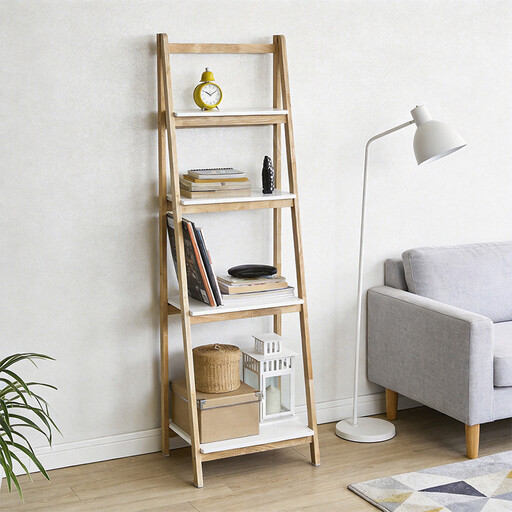
Why it suits this profile: This model is designed for smaller apartments, guest rooms, or flexible storage. Measuring approximately 42 × 140 × 34 cm, it can also be used in narrower spaces.
The product specifications state the dimensions, materials, and a load capacity of up to 15 kg per shelf. This makes planning easier than relying on a vague marketing claim about stability.
Four tiers, a folding design, a rubberwood frame, and MDF shelves. According to the description, mounting accessories and instructions are included.
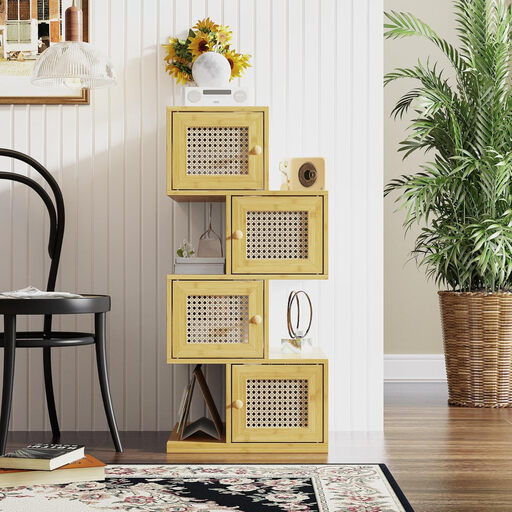
Why it suits this profile: Measuring 85 × 40 × 25.4 cm, this slim piece combines open shelves with closed storage, making it suitable for hallways, bedrooms, living rooms, or home offices.
The compact depth is clearly specified, making it possible to check in advance that the shelving unit will not protrude into walkways or obstruct other furniture.
Bamboo frame, four compartments, and rattan doors. The surface is described as easy to maintain; prolonged exposure to moisture should nevertheless be avoided.
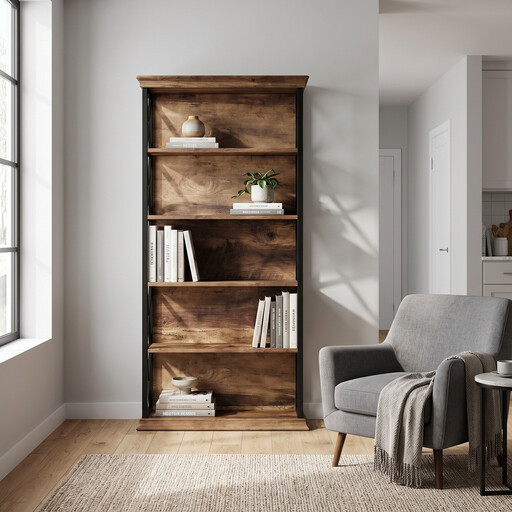
Why it suits this profile: This tall freestanding shelving unit has five tiers, makes efficient use of vertical space, and provides room for books, ring binders, and decorative items in the living room or home office.
A stated capacity of up to 34 kg per shelf makes load planning more precise. The supplied tip-over protection kit should be installed according to the instructions.
Dimensions of 80 × 30 × 180 cm, E0 MDF and a metal frame, five tiers, and X-shaped side elements. The shelving unit is supplied for self-assembly.
For smaller items, complementary solutions are available. According to the product description, a three-tier wooden stand is suitable for perfumes, cosmetics, or spices. A wall-mounted shelf with six hooks can keep keys, glasses, and small everyday essentials together in the entryway. For a desk, consider an adjustable, stackable desk shelf.
The full selection includes wooden display shelving in a range of dimensions and materials for different rooms and organisational needs.
Use the supplied tip-over protection and select wall plugs suitable for your wall type. Ensure the shelving unit is level, place heavier items on the lower shelves, and check all screw connections after installation. Proper anchoring is particularly important in rented accommodation or when installing on plasterboard walls.
A slim freestanding shelving unit, wall shelf, or folding shelving unit makes efficient use of the available space. Do not measure only the width; also check the depth and the opening radius of doors and drawers. A small storage shelf with closed compartments can also help reduce visible clutter.
Remove dust with a dry cloth and use a slightly damp cloth when needed. Avoid standing water, abrasive cleaning products, and prolonged exposure to direct sunlight unless the manufacturer’s care instructions state otherwise. In the kitchen and bathroom, protect the shelving unit from splashes.