
Lieferung heute & morgen

Qualitätsgarantie

Willkommens-Angebote freischalten: KOSTENLOSE Lieferung | Bis zu 80 % RABATT | Kostenlose 30-Tage-JoyPlus-Testphase
App herunterladen
A new shelving system promises order and structure. But reality often tells a different story: after just a few months, the shelves are sagging, the surface is peeling, or the entire structure feels unstable. Many buyers invest in solutions that later prove to be impractical or short-lived. This is often due to subtle defects or exaggerated marketing promises that aren't apparent at first glance.
This guide will help you avoid the typical pitfalls. We focus on the crucial technical features that define a durable and functional shelving system, ensuring your next purchase is a lasting investment in your home.
Before we get to the solutions, it's important to understand the problems. Pay close attention to these three points to avoid disappointment:
To avoid these problems, you should base your choice on objective criteria. The following three aspects are central to the quality and longevity of a shelf.
The material is a key determinant of your shelf's stability and lifespan. Common materials include particleboard, MDF (medium-density fibreboard), and solid wood.
Regardless of the material, two metrics are crucial: the material thickness of the shelves (at least 15 mm is recommended for bookshelves) and the manufacturer's specified maximum load capacity per shelf. A heavy bookshelf requires a much higher load capacity than a purely decorative shelf.
A true modular shelf or cube shelf is distinguished by its ability to be flexibly expanded and reconfigured. Check whether components can be purchased later and added on seamlessly. Adjustable shelves provide additional flexibility to adapt the storage space to items of different heights—from paperbacks to large binders. Such systems are also excellent as room divider shelves, as they can be accessible from both sides and designed to be visually appealing.
A tall freestanding shelf must be stable. A solid construction and a stable base are fundamental. However, the crucial element for safety is the anti-tip kit. This is a device (usually a bracket or a strap) used to anchor the shelf to the wall. This safety measure is essential, especially for tall, narrow shelves or in households with children. Before buying, check if an anti-tip kit is included and if the assembly instructions provide clear guidance on secure installation.
Based on the criteria mentioned, we have identified several products that offer thoughtful solutions for different needs and living situations.
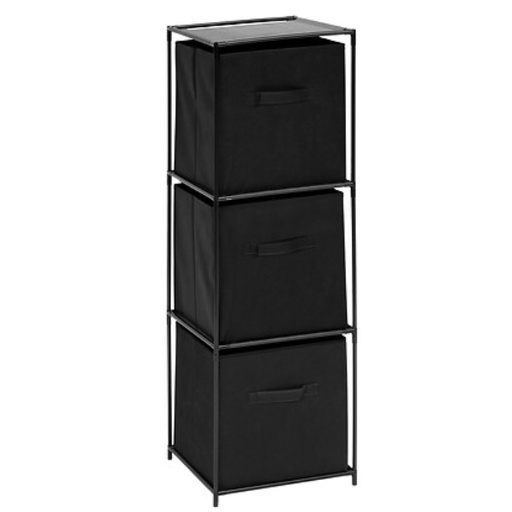
Why This Fits Their Persona: Ideal for first apartments, basements, or as a flexible storage shelf for lightweight items. Its simple assembly and low weight make it a straightforward and cost-effective solution for quick storage space.
The polypropylene and steel construction is transparently designed for lightness and doesn't create false expectations about the load capacity of a heavy bookshelf. As a true modular shelf, it avoids the trap of rigid systems.
Highly flexible interlocking system, including matching storage boxes for a ready-to-use organisational system. Easy self-assembly.
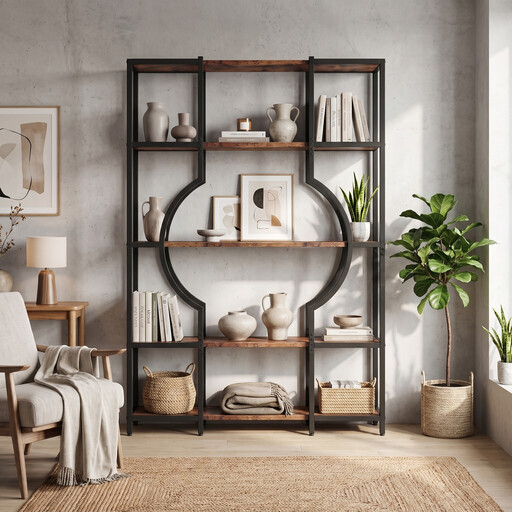
Why This Fits Their Persona: Perfect for the living room, where both stability for a book collection and an attractive design are required. The industrial look with a metal frame and wood-style shelves is a modern accent that fits well into many interior design styles.
Directly addresses the stability problem with a robust metal frame and a high total load capacity of 113 kg specified by the manufacturer. The included anti-tip kit provides the necessary safety for daily family life.
A combination of high load capacity and appealing aesthetics. The open structure with 12 compartments is ideal as a bookshelf and for decorative items.
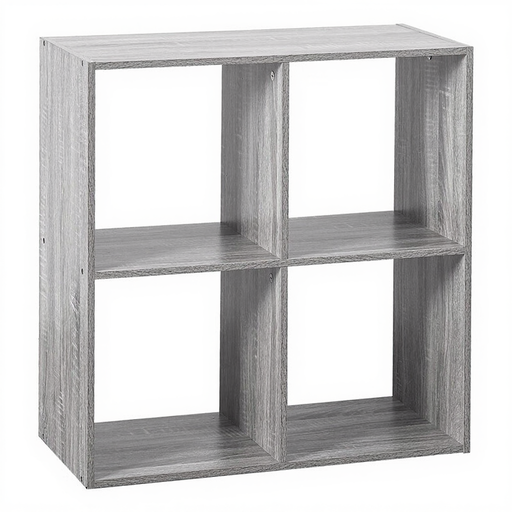
Why This Fits Their Persona: This cube shelf is ideal for creating maximum storage in a minimal footprint in small apartments, hallways, or home offices. Its simple, modern design in a grey oak finish blends unobtrusively into various environments.
As part of the "Mix N Module" collection, it is explicitly expandable, thus avoiding the limitations of a rigid, standalone piece of furniture. The instructions clearly point out the need for wall mounting, addressing the safety aspect.
Compact, square shape that can be used versatilely as a freestanding shelf or an organisational unit. The matte surface is durable and easy to clean.
We have compiled a complete, up-to-date list of products that meet these strict selection criteria and safety requirements.
Securely mounting the unit to the wall is crucial to prevent it from tipping over. Always use the anti-tip kit provided by the manufacturer. The process typically involves three steps:
There is no universal standard. The load capacity depends heavily on the material, construction, and the span of the shelves. Always consult the manufacturer's specifications for the maximum load capacity per shelf. As a rule of thumb: books are very heavy. Distribute the weight evenly and place the heaviest volumes on the lower shelves to increase stability.
Both materials are made from wood fibres pressed with adhesive, but they differ in density and quality.