
Lieferung heute & morgen

Qualitätsgarantie

Willkommens-Angebote freischalten: KOSTENLOSE Lieferung | Bis zu 80 % RABATT | Kostenlose 30-Tage-JoyPlus-Testphase
App herunterladen
A shelving unit should provide storage, help you stay organised and fit in with your existing living space. Yet some buying decisions can quickly lead to disappointment. A piece of furniture may look compact in product photos but not fit in the alcove you had in mind. Or its shelves may offer plenty of space but not be suitable for files, heavy books or plant pots.
The overall dimensions alone tell you little about how practical a shelving unit will be. Depth, the space between the shelves and the shape of the side panels also matter. A tall corner shelf may take up little floor space, but could project into a walkway. With a wall shelf, you also need to consider the available wall space, the mounting area and the opening arc of nearby doors.
Before buying, measure the space you have in mind and leave enough room to move around the shelving unit. A space-saving shelf can be a good choice for balconies and small kitchens, as long as the area where it will stand is actually free.
Engineered wood, solid wood, metal and combinations of different materials vary in weight, sensitivity to moisture and care requirements. A decorative finish does not indicate a particular load capacity. So check the maximum load per shelf before you buy.
Heavy books, jars of food or ceramic pots need a different construction from lightweight decorative items. For a plant stand on a balcony or in the garden, moisture, wind and a level surface are also important factors.
A freestanding shelving unit is not automatically tip-proof. Tall models should stand on a stable, level surface and, depending on their design, may also need to be secured to the wall. For a wall shelf, the wall material, wall plugs, screws and intended load all need to be compatible.
Look out for details such as assembly required, the fittings included and the recommended number of people for assembly. A flat-pack design may be easier to transport, but it often means more assembly work.
A bookcase should have shelves that are deep and sturdy enough for books, files or magazines. A desk shelf, on the other hand, usually needs to be smaller and should leave enough room for monitors, stationery or small plants.
A multi-tier shelving unit makes use of the room’s height. Check that you can still reach items you use often. A ladder shelf with open shelves may suit decorative objects, while a kitchen shelf should offer surfaces that are easy to reach and wipe clean.
A freestanding shelving unit can be placed wherever you like, but needs a sufficiently large, level floor area. A wall shelf saves floor space, but requires a suitable wall and careful installation. A corner shelf can make use of an otherwise unused corner, but should not be so deep that it blocks a passageway or window.
For all types, remember: do not climb on the shelving unit, do not exceed the stated load limit and, wherever possible, place heavy items on the lower shelves.
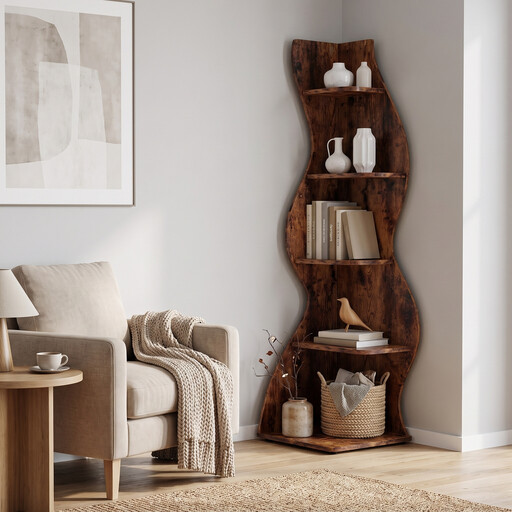
Why this product suits this type of shopper: This tall corner shelf makes use of a corner in your living room, home office or kitchen, with five shelves on a footprint of 49,78 × 47,75 cm.
The precise outer dimensions make it easier to plan where it will go. Adjustable shelves let you arrange the unit to suit books, plants or decorative items.
Five shelves, brown finish, 177,29 cm tall and supplied flat-packed for self-assembly.
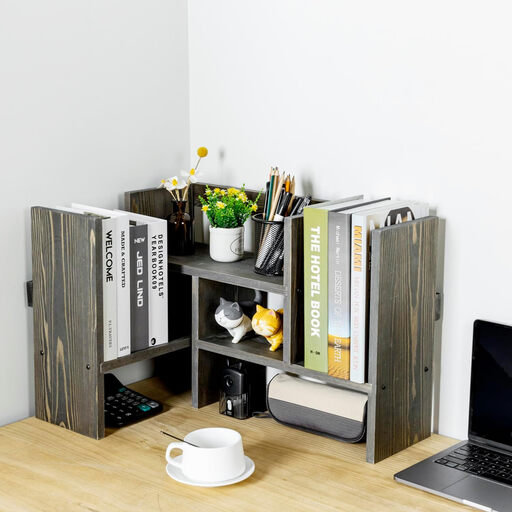
Why this product suits this type of shopper: This solid wood desk shelf is designed for home offices, studios and small spaces. It has three tiers with adjustable spacing between them.
Its compact size of 15,7 × 6,7 × 15,4 inches makes it easier to assess how much space it will take up. Convert the measurements to centimetres before buying and check that it will fit on your desk.
Solid wood, three tiers, stackable or adjustable use and a freestanding design that does not need permanent wall mounting.
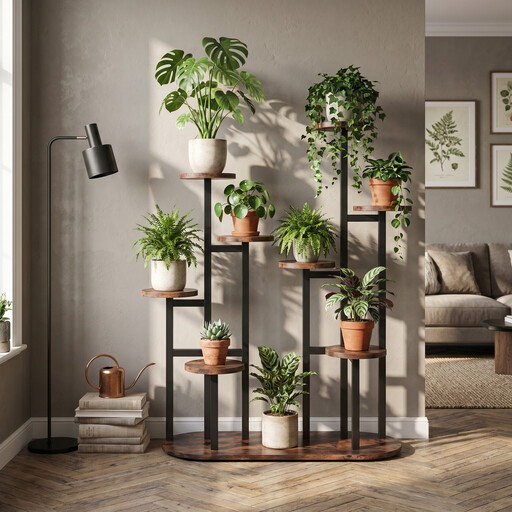
Why this product suits this type of shopper: This nine-tier plant stand is designed to display several potted plants and is suitable for indoor spaces, balconies, patios or gardens.
The recommended pot size of up to 19,8 cm and dimensions of 100 × 43,99 × 111 cm give you specific measurements to plan around. Distribute plants evenly across the shelves.
Wood-effect shelves, metal frame, nine tiers and assembly instructions; the frame is described as rust-resistant.
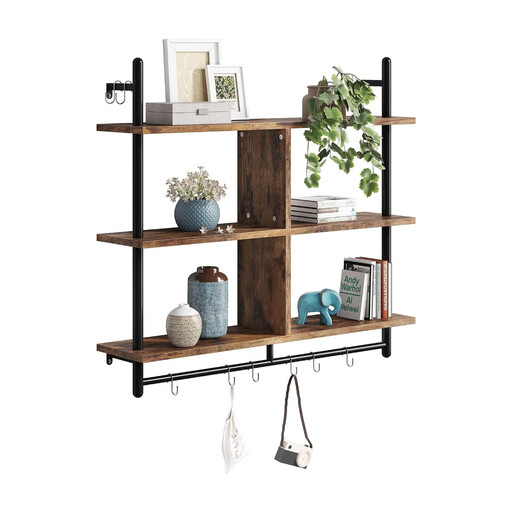
Why this product suits this type of shopper: This three-tier wall shelf is suitable for kitchens, living rooms, bedrooms, bathrooms or garages when you want to keep the floor clear.
Wall mounting is clearly stated as a requirement. Before buying, check the wall type, fixings and where you want to position the three shelves.
105 cm wide, 23,8 cm deep, metal tube frame, wooden shelves and mounting fittings included.
Read the assembly instructions all the way through before sorting the screws or drilling any holes. A second person can be helpful when assembling taller models. After a few weeks, check whether any fixings need tightening. Surfaces can usually be cleaned with a soft, dry cloth. Prolonged exposure to moisture, direct heat and strong sunlight can affect the finish, depending on the material.
For a shelving unit used for storage and decoration, distribute weight carefully: put heavy items at the bottom and light decorations at the top. If you are displaying plants, wipe away any water straight away and observe the maximum load per shelf.
We’ve put together a complete, regularly updated list of products that meet these strict selection criteria and fully comply with the safety regulations in force in the EU.
Choose wall plugs and screws to suit the wall material and intended load. Mark the drilling points with a spirit level and check for any pipes or cables before drilling. Avoid overloading the shelf, especially when storing heavy items.
Its lifespan depends on the material, load, moisture, assembly and care. A shelving unit will generally stay in good working order for longer if it stands level, is not overloaded and its fixings are checked regularly. For balconies and gardens, pay particular attention to the specific guidance on moisture and wind.
The price depends on factors such as size, material, number of shelves, build quality and type of assembly. Compare more than just the purchase price: consider any fixings you may need, the time required for assembly and whether the unit suits the space you have in mind. This can help you avoid having to replace an unsuitable model later.