
Lieferung heute & morgen

Qualitätsgarantie

Willkommens-Angebote freischalten: KOSTENLOSE Lieferung | Bis zu 80 % RABATT | Kostenlose 30-Tage-JoyPlus-Testphase
App herunterladen
A shelving unit should help you stay organised without making the room feel unnecessarily smaller. So when choosing one, it’s not just the colour and shape that matter. Unclear load limits, incorrect measurements or unsuitable installation can often mean that a shelving unit doesn’t work as expected in everyday use.
These three buying mistakes are particularly common:
First, measure the available width, height and depth. In a hallway or small bathroom, a space-saving shelving unit with a shallow depth is often a better choice than a wide piece of furniture. Check the shelf heights if you’re storing books and folders. A tall bookcase makes good use of wall space, but needs adequate anti-tip protection and a level surface to stand on.
For alcoves, consider a corner shelf or a narrow freestanding shelving unit. In the kitchen, make sure there’s also enough room to open cupboard doors, the oven and drawers. Position a bathroom shelving unit so that water won’t be in prolonged contact with moisture-sensitive engineered wood.
The material affects stability, cleaning and appearance:
Check the maximum load per shelf, not just the total load. Place heavier items on the lower shelves wherever possible. On a shelving unit with multiple compartments, distribute books, crockery and appliances evenly.
A wall shelf must be fixed to the wall with suitable wall plugs and screws. If you’re installing a hanging shelf with hooks, remember that bags, mugs and towels can create additional pulling forces. Tall furniture, such as a freestanding shelving unit, should be secured to the wall as instructed by the manufacturer. This is particularly important in households with children or pets.
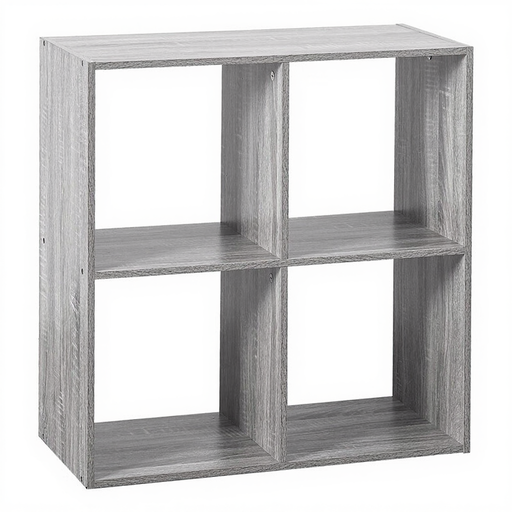
Why this product suits this need: Its square design with four compartments is ideal for books, baskets, decorative items or multimedia devices. At 67,6 × 67,6 × 32 cm, it has a manageable depth and can be used in the living room, home office or hallway.
The four clearly defined compartments make it easier to distribute the weight. Permanent wall fixing is recommended to keep the unit stable, so be sure to factor this into your plans.
Four symmetrical compartments, a matt grey oak-effect finish and compact dimensions. The shelving unit is made from engineered wood with a melamine coating.
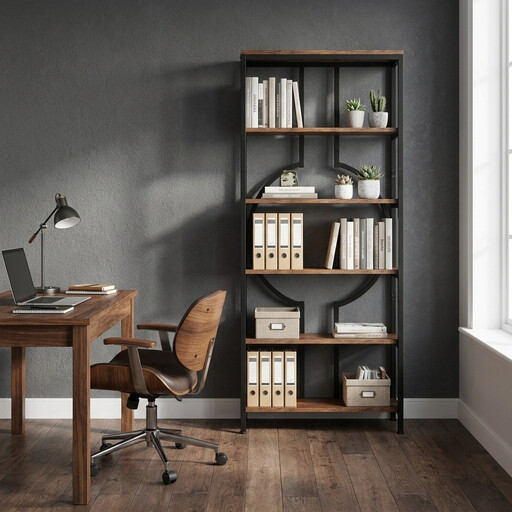
Why this product suits this need: If you need space for lots of books, plants or decorative items, this 180 cm-high shelving unit offers six open tiers. The combination of a black metal frame and MDF shelves creates a pared-back industrial look that works well in the living room or home office.
Its dimensions of 30 × 70 × 180 cm make it easy to see how much space it will need. Adjustable feet can compensate for uneven floors, but given its height, you should still use the recommended safety fixing.
Six open shelves, a metal frame, MDF shelves and height-adjustable feet. The design is versatile enough to use as a bookcase, plant stand or storage shelving.
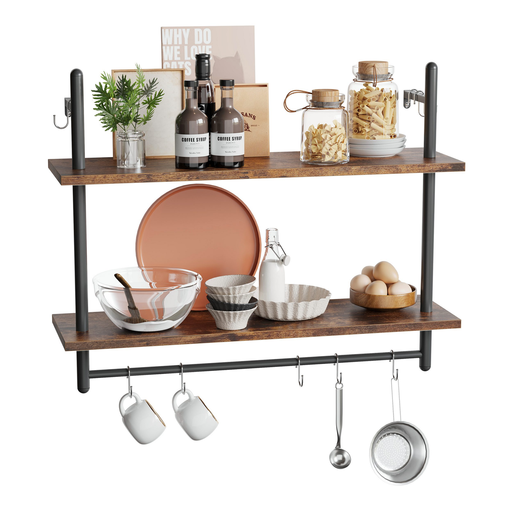
Why this product suits this need: This wall shelf makes use of wall space, combining two shelves with eight S-hooks. It’s ideal for mugs, towels, kitchen utensils, books or small tools in the kitchen, bathroom, utility room or living area.
The product details specify a maximum load of 9 kg per shelf, giving you a clear figure to plan around. For wall mounting, make sure the wall surface and fixings are compatible.
Measures 80 × 24 × 64 cm and features two tiers, eight S-hooks, a metal tube frame and coated engineered wood shelves. The open surfaces can be cleaned with a dry or slightly damp cloth.
We’ve put together a complete, regularly updated list of products that fully meet these strict selection criteria and the safety regulations in force in the EU.
First, identify the type of wall, such as concrete, brick or plasterboard. Use suitable wall plugs and screws, and check for hidden cables or pipes before drilling. Always follow the installation instructions for the product. Once installed, start by loading the shelf carefully and evenly.
This depends on the material, construction, fixings and how evenly the load is distributed. The key figure is the maximum load per shelf. If this isn’t provided, avoid planning to store heavy stacks of books, electrical appliances or filled food containers on it.
If floor space is limited, consider a narrow wall shelf, hanging shelf, corner shelf or tall freestanding shelving unit. As well as measuring the footprint, check the clearance needed for doors and windows to open. Tall furniture should be secured to the wall so you can make safe use of the available room height.