
Lieferung heute & morgen

Qualitätsgarantie

Willkommens-Angebote freischalten: KOSTENLOSE Lieferung | Bis zu 80 % RABATT | Kostenlose 30-Tage-JoyPlus-Testphase
App herunterladen
A shelving unit should create additional storage without unnecessarily taking over the room. In small homes, just a few centimetres can make all the difference to everyday practicality. At the same time, product images often make units look more spacious than their actual dimensions suggest. It is therefore worth taking a close look at the measurements, load capacity, material and assembly before buying.
A narrow shelving unit works well in a hallway, but does not automatically provide space for every item. Shoes, ring binders and larger kitchen containers require sufficient shelf width and depth. Do not just check the external dimensions; also look at the usable shelf surface.
Decorative items and lightweight accessories place different demands on a unit than books, storage jars or several pairs of shoes. A description such as ‘sturdy’ is no substitute for a specific kilogram rating. Pay attention to the maximum load per shelf and the total load capacity. Heavy items should generally be placed as low down as possible.
A tall freestanding shelving unit needs a level surface. Narrow or tall models may also require wall anchoring. Any included anti-tip fittings should be secured according to the instructions. With a wall-mounted shelving unit, you should also check whether the plugs and screws are suitable for the wall material.
Measure the available space, including skirting boards, doors and walkways. In corners, a corner shelving unit may make better use of the available space than a straight model. A narrow shelving unit with several levels is suitable for an entrance area if its depth does not restrict the walkway.
A 5-tier shelving unit or another tall freestanding model makes use of vertical space. Check the room height and whether items on the upper levels will still be easy to reach. Evenly sized shelves are practical for books and decorations; for shoes, adjustable or removable shelves may be more useful.
Wood-based materials, metal, plastic and coated textiles differ in terms of care and suitability for different uses. According to the product description, a matt surface may be cleaned with a dry cloth. For kitchen shelving units, however, it is important to know whether the surface can withstand occasional moisture. Only use the cleaning method recommended by the manufacturer, and avoid harsh products if they could damage the coating.
With a space-saving shelving unit, the compact design should not be confused with unlimited load capacity. Compare:
A lighter construction is often sufficient for shoes than for books. A stackable shoe rack should only be stacked when this use is expressly intended.
The following selection categorises the models according to specific living situations and the available product information.
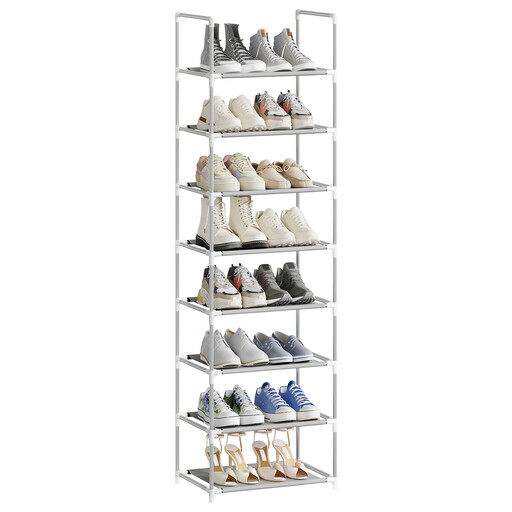
Why this product suits this profile: Measuring 41 × 28 × 140 cm, this compact shoe rack is designed for hallways, cloakrooms or narrow spaces, making use of vertical height rather than floor space.
The product information specifies eight levels, removable shelves and an anti-tip device. Each level is rated for up to 5 kg, making it easier to avoid overloading.
Tool-free slot-together assembly, a divisible design and space for up to 16 pairs of shoes, according to the supplier.
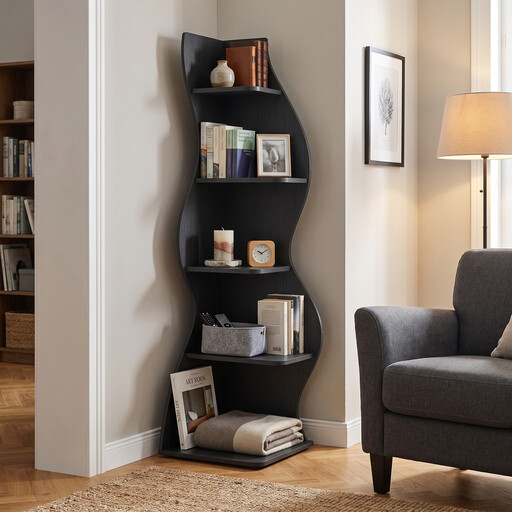
Why this product suits this profile: This S-shaped shelving unit is designed for a 90-degree corner and combines five storage surfaces with a height of 178 cm.
The specifications state a maximum load of 10 kg per shelf and include anti-tip accessories. Wall anchoring is intended to ensure safe use.
Engineered wood, a matt surface, five levels and a stated scratch-resistant finish.
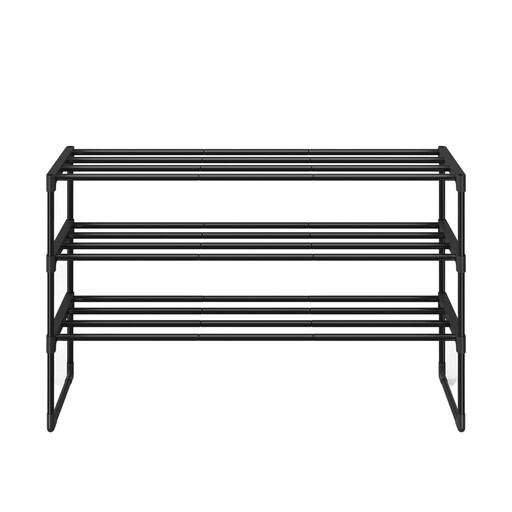
Why this product suits this profile: According to the product description, this 92 cm-wide shoe rack can be used upright, upside down or stacked, allowing it to adapt to different spaces.
The construction consists of metal tubes and plastic connectors. The stated capacity is 10 kg per level and 30 kg in total; these limits should be observed during use.
Tool-free assembly, a stackable design and dimensions of 30 × 92 × 55 cm.
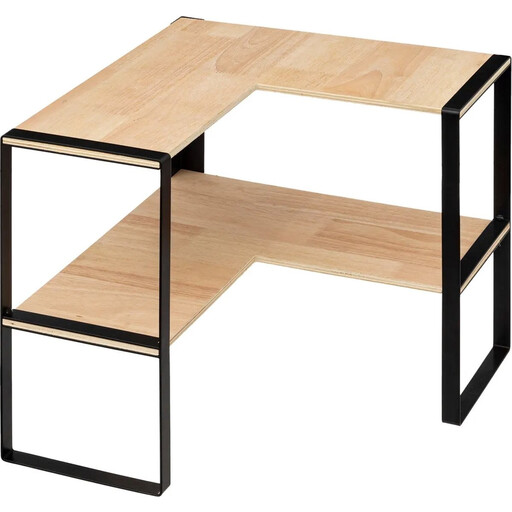
Why this product suits this profile: This two-tier corner unit is designed for worktops, cupboards or the space beneath the sink, and is suitable for spices, containers and pans.
The dimensions of 40 × 40 × 35 cm make it easy to assess the space required before buying. In the kitchen, you should nevertheless check that the surface is dry and sufficiently level.
Steel and plywood panels, two levels and intended self-assembly.
We have put together a complete, regularly updated list of products that fully meet these strict selection criteria and the safety regulations applicable in the EU.
A shelving unit is a good choice when its dimensions and load capacity match its actual intended use. For a more targeted search, you can narrow down the selection of modern shelving units by style, size and intended location.
This depends on the model, material, shelf and assembly. The stated load capacity per level is the key figure. Distribute heavy books or supplies evenly and place them on the lower shelves.
Place the shelving unit on a level surface and secure it to the wall using the supplied anti-tip protection. The wall plugs and screws must be suitable for the surface. If you are unsure, consult the assembly instructions or a qualified professional.
A narrow, tall freestanding shelving unit makes good use of vertical space. Removable or adjustable shelves are practical for shoes. The key considerations remain a suitable depth, enough room to pass through and anti-tip protection.